Clear Sky Science · en
Infection-acquired protection against SARS-CoV-2 infection and clinical severity by number of prior infections
Why repeat COVID infections still matter
As COVID-19 moves from crisis to something more routine, many people now catch the virus more than once. A key question for families and health officials alike is whether these repeat infections are getting milder and how much real-world protection they provide. This study from Managua, Nicaragua, followed hundreds of people over several years to trace who was infected, how often, and how sick they became, offering a window into what COVID-19 might look like in its long-term, endemic phase. 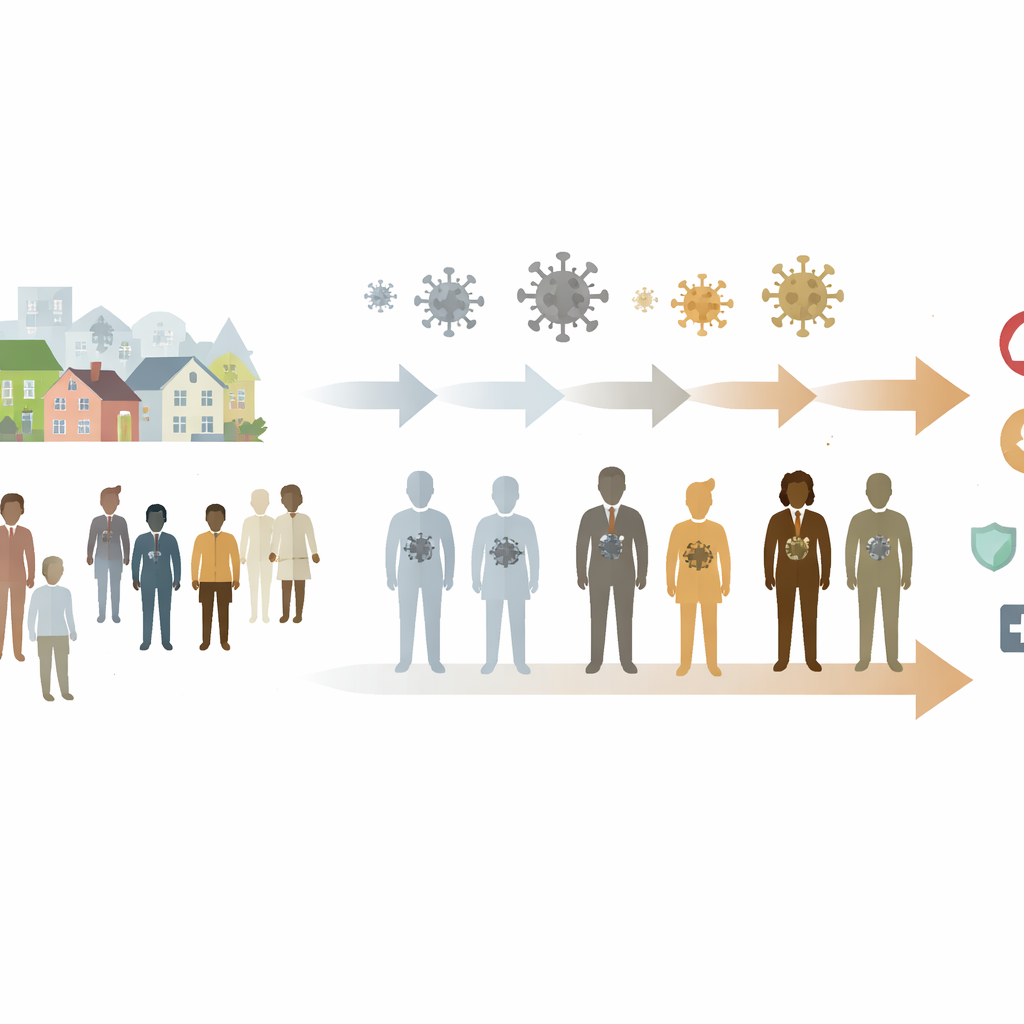
Following families through the pandemic
The researchers drew on a long-running household study that originally focused on flu and was expanded for COVID-19 in 2020. More than 2300 people, from infants to older adults, were followed in one district of Managua. Twice a year, blood samples were collected to look for antibodies, and whenever someone in a household tested positive by PCR, study staff visited everyone in the home repeatedly, collecting respiratory samples and daily symptom diaries. This intensive tracking meant the team could detect not only obvious illnesses but also silent or very mild infections, and could reconstruct who had been infected once, twice, or three or more times.
Almost everyone was eventually infected
Over roughly four years, the team documented more than 3600 SARS-CoV-2 infections in the cohort. By late 2021, more than nine in ten participants had been infected at least once; by late 2024, that figure climbed to nearly 98 percent. Reinfections were common even before the Omicron wave, and by 2024, well over half the participants had been infected at least twice. At the same time, vaccination rolled out more slowly than in many wealthier countries but still reached about 70 percent of participants by early 2022, creating a complex mix of infection- and vaccine-acquired immunity.
More past infections, fewer new symptomatic cases
With these detailed histories, the researchers asked how the number of prior infections changed the odds of getting sick again. Compared with people with no previous infection, those who had already been infected once, twice, or three or more times were progressively less likely to develop a symptomatic PCR-confirmed infection. One prior infection cut the rate of symptomatic illness by roughly 60 percent, two prior infections by about 75 percent, and three or more by about 80 percent. Protection was also seen, though with more statistical uncertainty, against the more serious moderate or severe cases. When people with two or more past infections were compared directly with those who had only one, they still had noticeably lower risk of getting infected again, suggesting that, at least up to this point, each additional infection added some protection against future infection.
Repeat infections tend to be milder
The study also examined how sick people became with their first, second, and third or later documented infections. Overall, second infections were less severe than first ones: moderate or severe illness made up about one-third of first infections but only about one-fifth of second and later infections, while truly symptom-free infections became more common with each round. In other words, once people had been infected before, they were more likely to have a "silent" case the next time and less likely to experience more serious disease. However, the benefit in lowering severity did not keep improving clearly beyond the second infection, and during the Omicron period the gap in severity between first and later infections was less obvious, perhaps because the variant itself caused milder disease or because the remaining first-time cases were already skewed toward less vulnerable people. 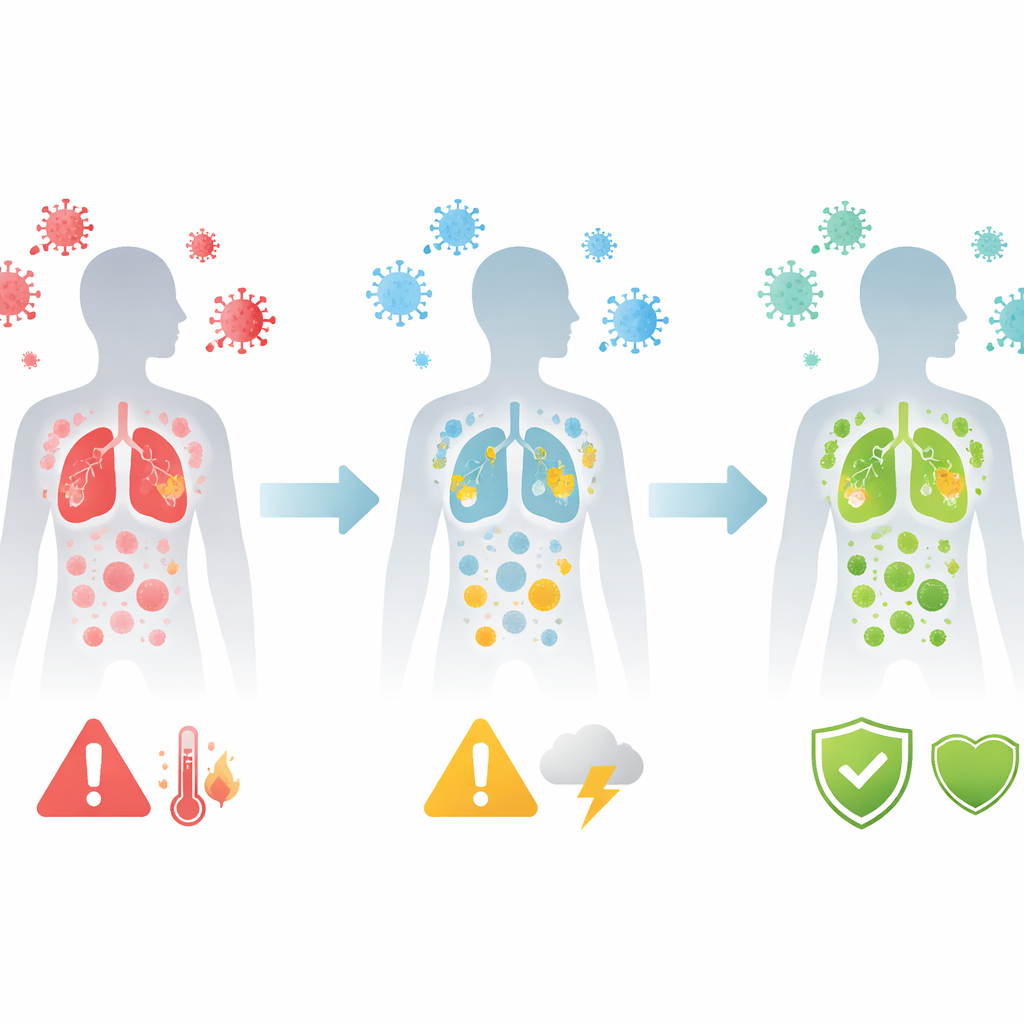
Immunity changes with time, age, and variant
Protection was strongest when a person’s previous infection involved the same sort of virus that was currently circulating, and when that infection was relatively recent. Even so, the study found that some protection remained more than a year after an earlier infection and even for people whose first encounter was with the original strain. Adults and older children showed broadly similar patterns of protection and severity, while the youngest children appeared to have weaker and more uncertain protection, potentially because their immune systems respond differently or simply because there were fewer cases to analyze. The authors also emphasize that factors like vaccination, household exposure, and changing variants are tightly linked, making it difficult to completely separate their effects.
What this means for living with COVID
For a general reader, the main message is both reassuring and cautionary. On the one hand, repeated exposure to SARS-CoV-2—through infection, vaccination, or both—does seem to make future infections less likely and, when they do occur, often milder. This pattern supports the idea that the world is moving toward an endemic phase where COVID-19 is, on average, less severe than in the early pandemic. On the other hand, the virus still causes more serious illness than the common cold coronaviruses, and the study did record hospitalizations and deaths. The authors conclude that keeping population immunity topped up, especially for high-risk groups, remains essential to limiting the ongoing health burden of COVID-19 in the years ahead.
Citation: Maier, H.E., Ojeda, S., Shotwell, A. et al. Infection-acquired protection against SARS-CoV-2 infection and clinical severity by number of prior infections. Nat Commun 17, 3686 (2026). https://doi.org/10.1038/s41467-026-70390-7
Keywords: COVID-19 reinfection, SARS-CoV-2 immunity, endemic COVID, disease severity, Nicaragua cohort study