Clear Sky Science · en
Declining grassland canopy height in China under asymmetric biomass allocation
Why shorter grasslands matter to us
Across northern China’s vast steppes and alpine meadows, the grass is getting shorter—even as these landscapes look greener from space. This quiet change in plant height has big implications for food production, wildlife, and how well grasslands cope with droughts and a warming climate. By tracking how grass spreads outward across the ground versus how tall it grows, this study reveals a subtle reshaping of some of the world’s most important grazing lands.
Measuring grasslands from the sky
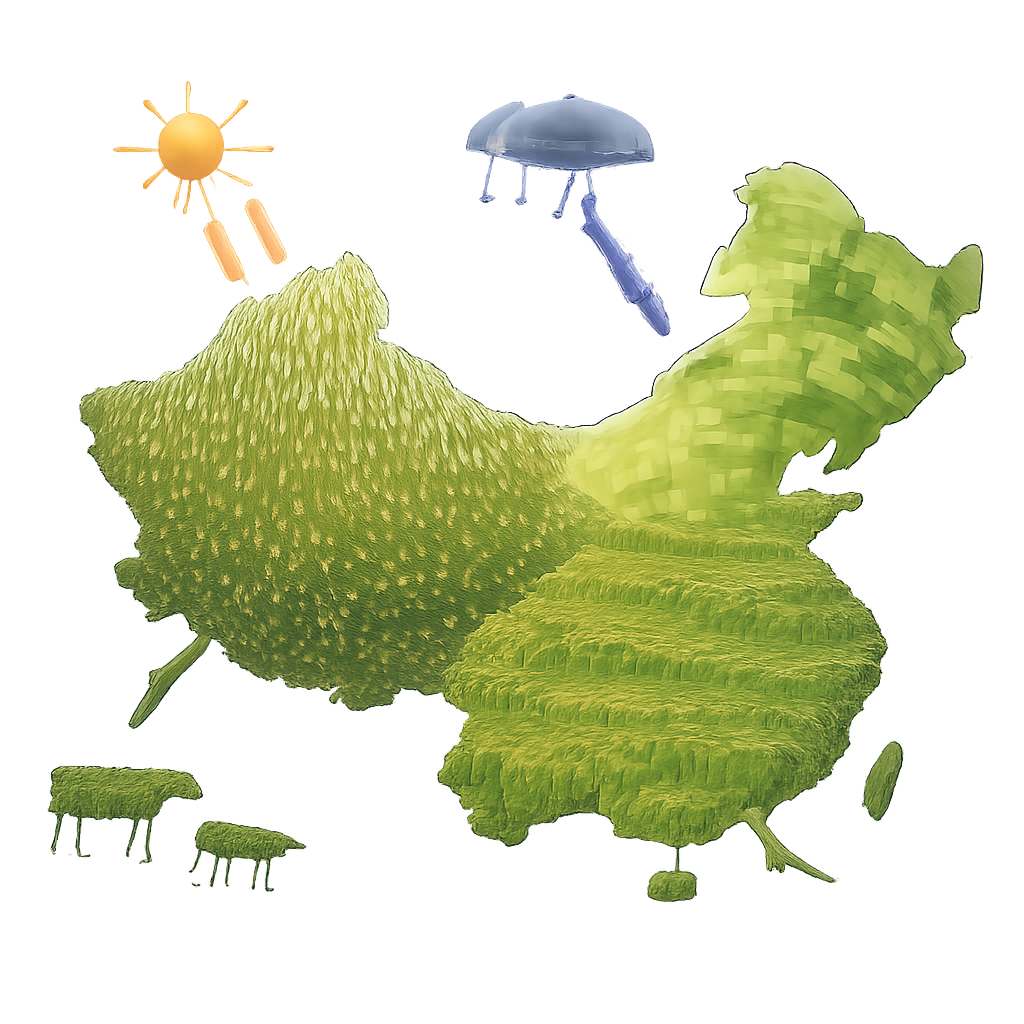
China’s grasslands cover millions of square kilometers, far too large to monitor plant height with tape measures alone. The researchers combined satellite images, climate data, and more than 24,000 field plots to estimate how much plant material sits above ground and how it is arranged. They treated total grass production as having two parts: how much of the ground is covered by plants (horizontal spread) and how tall those plants are (vertical growth). Using machine learning, they mapped aboveground biomass at 500-meter resolution from 2001 to 2022, then paired this with satellite-based estimates of vegetation cover to infer average canopy height over time.
Greener ground, shorter plants
The team found that, overall, grasslands in China have become more productive in the past two decades. Aboveground biomass increased in roughly two-thirds of grassland areas, especially in temperate meadows of Inner Mongolia and montane meadows on the eastern Tibetan Plateau. At the same time, the fraction of the ground covered by green vegetation also rose in about 70% of grasslands. In other words, there is more grass, and it is spreading across more of the surface.
When more growth does not mean taller grass
Despite this apparent good news, the vertical side of the story is less favorable. By examining how much biomass sits above each unit of covered ground, the authors inferred changes in plant height. They estimate that more than half of China’s grasslands experienced a decline in canopy height between 2001 and 2022, with an average drop of about 0.04 centimeters per year. Temperate and alpine grasslands in northern and western China showed the most consistent shortening, while a few already-dense meadows grew slightly taller. Long-term field stations confirmed a similar trend: over nearly two decades, the “vertical share” of biomass decreased even where total biomass increased.
Heat, grazing, and shifting plant communities
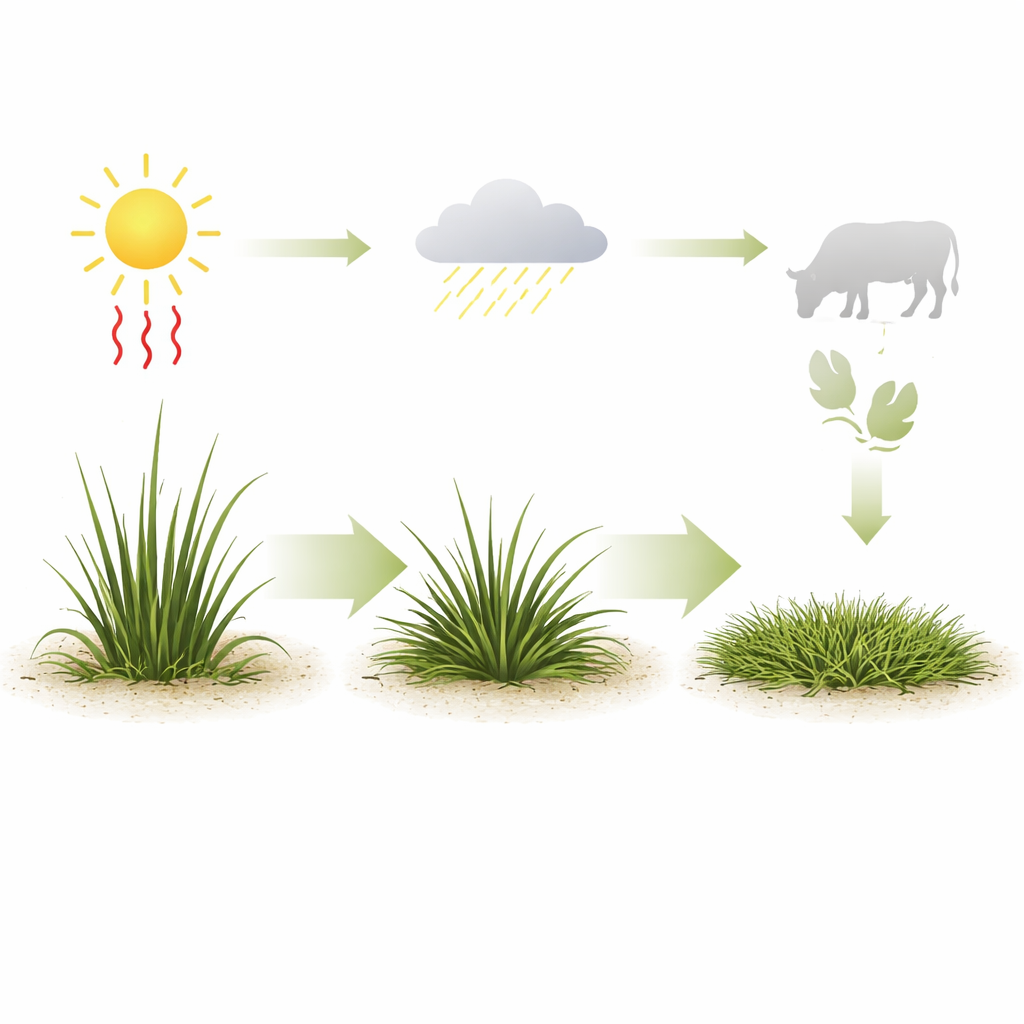
What is driving this tilt toward shorter, more sprawling vegetation? Using statistical models, the study disentangled the roles of sunlight, rainfall, temperature, rising carbon dioxide, and livestock grazing. Extra rainfall, stronger sunlight, and more carbon dioxide generally promoted both plant cover and height. In contrast, warmer air and heavier grazing tended to suppress height more than cover, favoring low, ground-hugging growth forms that better tolerate trampling and water stress. Where warming, reduced radiation, and grazing pressure coincided, grasslands increasingly invested in horizontal spread rather than vertical stature. The researchers also found that areas with fewer plant species and simpler vertical structure were more likely to show shrinking canopy height, suggesting that loss of diversity weakens the ecosystem’s ability to buffer climate swings.
What a shorter grass canopy means for the future
To a casual observer, these grasslands may look lush and thriving, but their shrinking height signals a hidden vulnerability. Shorter canopies make grazing animals work harder to find food, expose roots and soil to greater disturbance, and reduce the “layering” of plants that helps stabilize productivity in dry or extreme years. The study concludes that continued warming and intense grazing are quietly dwarfing China’s grasslands, even as they green from above. The authors argue that climate-smart grazing plans—such as rotating herds, allowing rest periods, and restoring degraded patches—will be essential to maintaining taller, more diverse grasslands that can sustain livestock and withstand an increasingly variable climate.
Citation: Li, H., Hu, X., Li, F. et al. Declining grassland canopy height in China under asymmetric biomass allocation. Nat Commun 17, 3364 (2026). https://doi.org/10.1038/s41467-026-70275-9
Keywords: grassland canopy height, biomass allocation, grazing impacts, remote sensing, climate warming