Clear Sky Science · en
Necroptosis in both tumour and stromal compartments determines responsiveness to immunogenic cell death-based immunotherapy
Why This Matters for Cancer Patients
Many people have heard that immunotherapy can help the body’s own defences fight cancer, yet for most patients with aggressive triple‑negative breast cancer, these treatments still fall short. This study explores why some tumours respond while others resist, and how a particular form of explosive cell death can be harnessed to turn the immune system into a more reliable ally against cancer.
Understanding an Especially Tough Breast Cancer
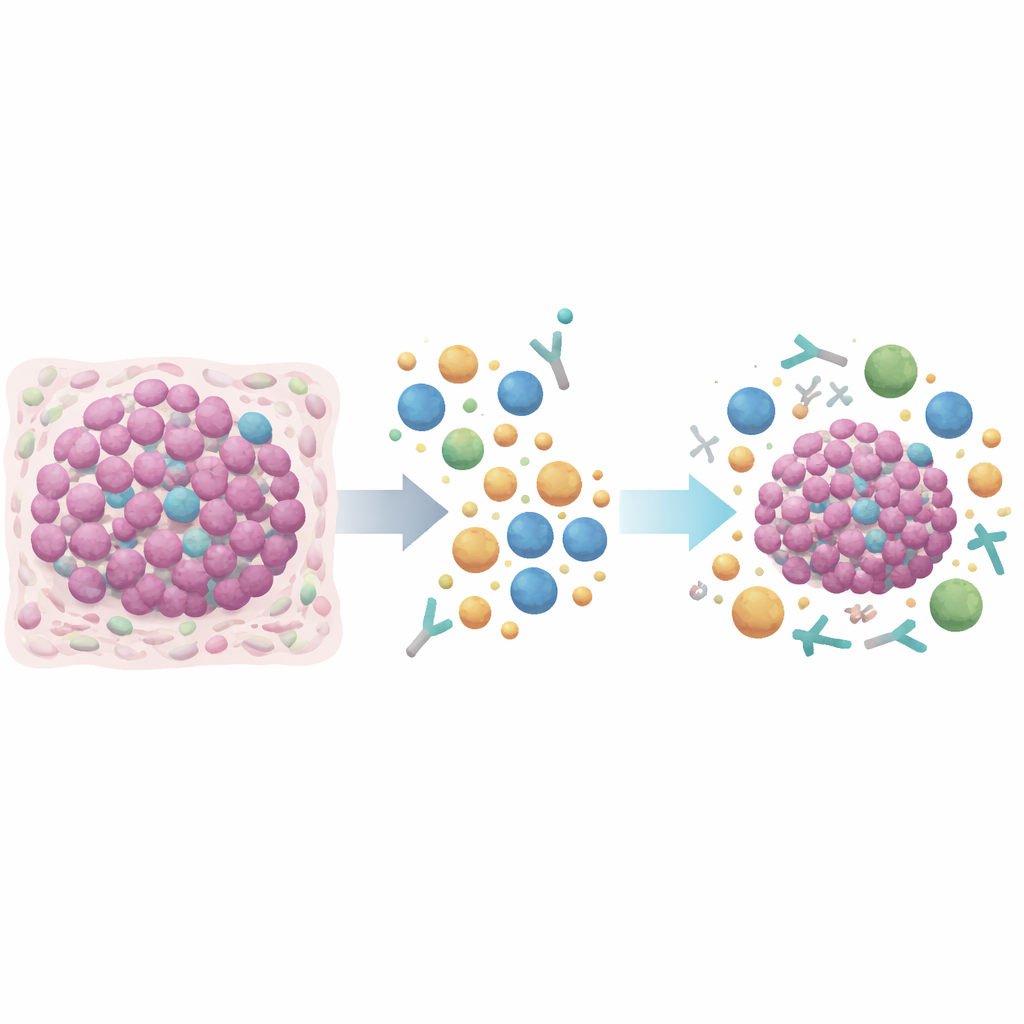
Triple‑negative breast cancer (TNBC) lacks three major hormone and growth receptors that many standard treatments target. It is often aggressive and more common in people with inherited BRCA1 gene faults. Even though certain TNBCs can look “immune‑active,” with many white blood cells inside them, most patients with advanced disease do not benefit from current checkpoint‑blocking drugs that release the brakes on T cells. The researchers set out to understand how to push these tumours from partial immune activity to full‑blown, lasting immune control.
Building Realistic Mini‑Tumours in Mice
To tackle this, the team created an unusually lifelike laboratory system. They used mice engineered to lose the Brca1 and p53 tumour‑suppressor genes in the breast, which spontaneously develop invasive cancers resembling human basal‑like TNBC. From each primary tumour, they grew three‑dimensional “organoids”—mini‑tumours that could be transplanted into the mammary tissue of healthy mice. Remarkably, each organoid line kept the original tumour’s architecture, mix of cancer and support cells, and immune makeup. Some lines were packed with immune cells and macrophages (“hot”), while others had very few (“cold”), closely mirroring the diversity seen in patients.
Turning Cell Death into an Immune Alarm
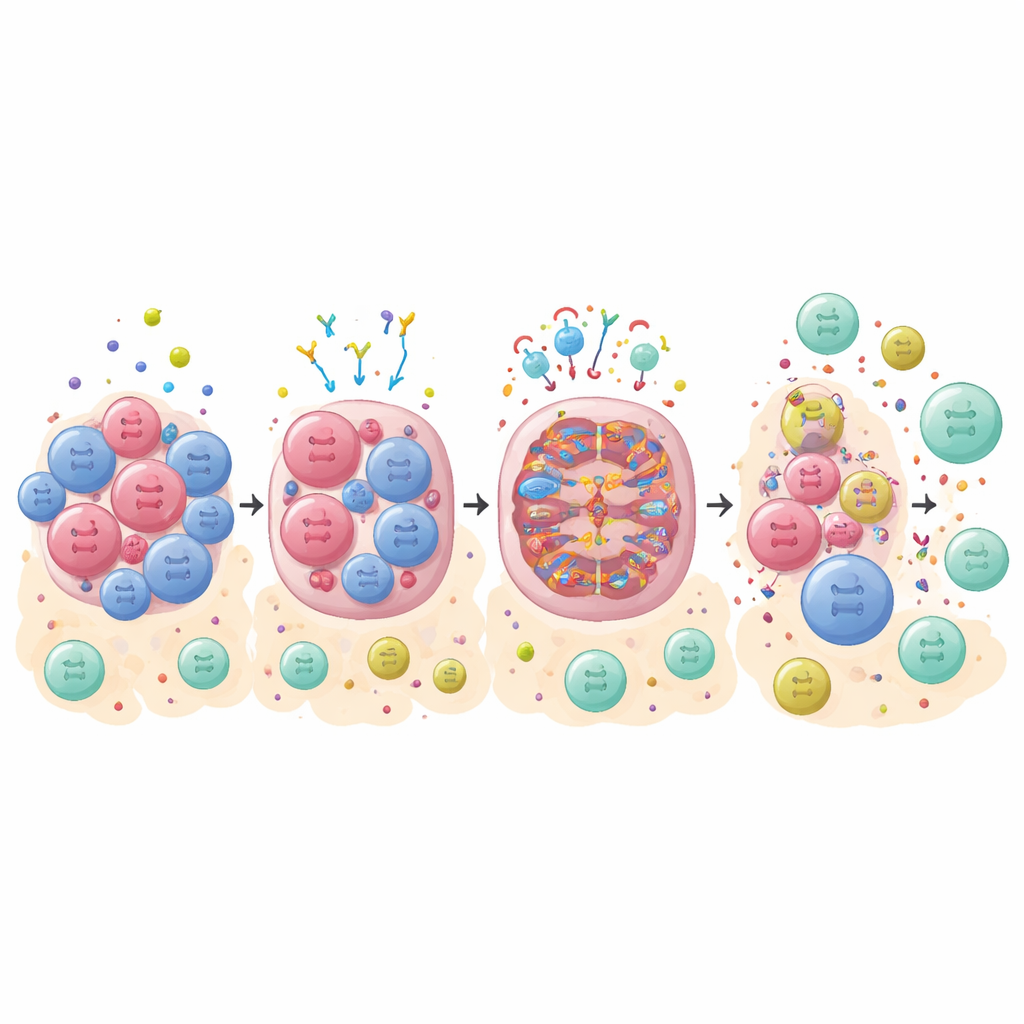
Not all cancer cell death wakes up the immune system. Quiet, orderly death often goes unnoticed, while a more violent type called necroptosis can burst cells open and release molecular alarm signals that rally immune defenders. The researchers focused on RIPK1, a key switch that can drive this immunogenic form of death. Many tumours ramp up proteins called IAPs that keep RIPK1 in check, helping them survive and evade treatment. Using a clinical‑stage drug (ASTX660) that blocks these IAPs, plus a caspase inhibitor that steers cells away from silent death and toward necroptosis, they were able to selectively kill TNBC organoids in a way that should look highly dangerous to the immune system.
Combining Targeted Death with Immune Checkpoint Blockade
In mice bearing organoid‑derived tumours, the team tested ASTX660 with or without an anti‑PD‑1 antibody, a checkpoint‑blocking immunotherapy. In highly immune‑infiltrated TNBC‑like tumours, the combination worked dramatically better than either drug alone, especially under conditions that favoured necroptosis. Many mice experienced complete tumour clearance and resisted re‑challenge with new tumour implants, indicating robust immune memory. These responders showed more cancer‑killing CD8 T cells inside tumours and fewer suppressive macrophages. In contrast, tumours with sparse immune cells barely responded, even when pushed toward necroptosis and treated with two checkpoint blockers, underscoring how crucial the pre‑existing immune landscape is.
Waking Up “Cold” Tumours with Viral Mimicry
For the less immune‑infiltrated, “cold” tumours, the researchers tried to artificially mimic a viral infection using a STING agonist, a drug that triggers innate antiviral defence pathways. While this agent alone did not kill tumours, combining it with ASTX660 and the caspase inhibitor reshaped the tumour environment. The mix drew in activated CD8 T cells, γδ T cells and natural killer cells, increased their production of key inflammatory messengers, and reduced regulatory T cells and exhausted natural killer cells. Some mice with formerly cold tumours achieved lasting tumour control, showing that “heating up” the tumour and lowering the death‑activation threshold can work together to unlock anti‑tumour immunity.
Why Both Cancer Cells and Their Neighbours Must Die
By selectively removing core necroptosis components in either the cancer cells or the surrounding stromal cells, the team showed that both compartments need to participate in this explosive death for the strongest therapeutic effect. When the RIPK1 switch or the final necroptosis executioner MLKL was lost in tumour cells, or when stromal cells could no longer undergo necroptosis, the benefits of ASTX660 plus checkpoint blockade dropped sharply and long‑term cures disappeared. This suggests that coordinated death of cancer and support cells amplifies danger signals, drives more effective T‑cell priming, and helps prevent tumour escape.
What This Could Mean for Future Patients
Overall, the study argues that simply adding a powerful drug is not enough; success depends on the type of cell death induced and on the immune and stromal context of each tumour. Therapies that unleash RIPK1‑driven necroptosis, especially when paired with checkpoint inhibitors and, in some cases, STING agonists, may convert selected TNBCs from resistant to controllable disease. But the work also shows that patients will likely need to be carefully stratified—by tumour immune infiltration, RIPK1 levels, and the composition of their tumour microenvironment—to identify those most likely to benefit from these immunogenic cell death‑based strategies.
Citation: Fernando, W., Clucas, J., Rizzo, A. et al. Necroptosis in both tumour and stromal compartments determines responsiveness to immunogenic cell death-based immunotherapy. Nat Commun 17, 3597 (2026). https://doi.org/10.1038/s41467-026-70133-8
Keywords: triple-negative breast cancer, immunogenic cell death, necroptosis, immune checkpoint therapy, tumor microenvironment