Clear Sky Science · en
Telomeric repeat-containing RNA G-quadruplexes trigger ZBP1-mediated cell death
How Cells Decide When to Self‑Destruct
Our cells carry built-in alarm systems that can sense when something has gone seriously wrong and then trigger a controlled form of self-destruction. This process helps prevent damaged or precancerous cells from turning into tumors, and it also fights infections. The study described here uncovers a surprising way in which a particular cellular sensor recognizes unusual shapes in genetic material at chromosome ends and uses this information to decide when a cell should die.
Strange Shapes at the Ends of Chromosomes
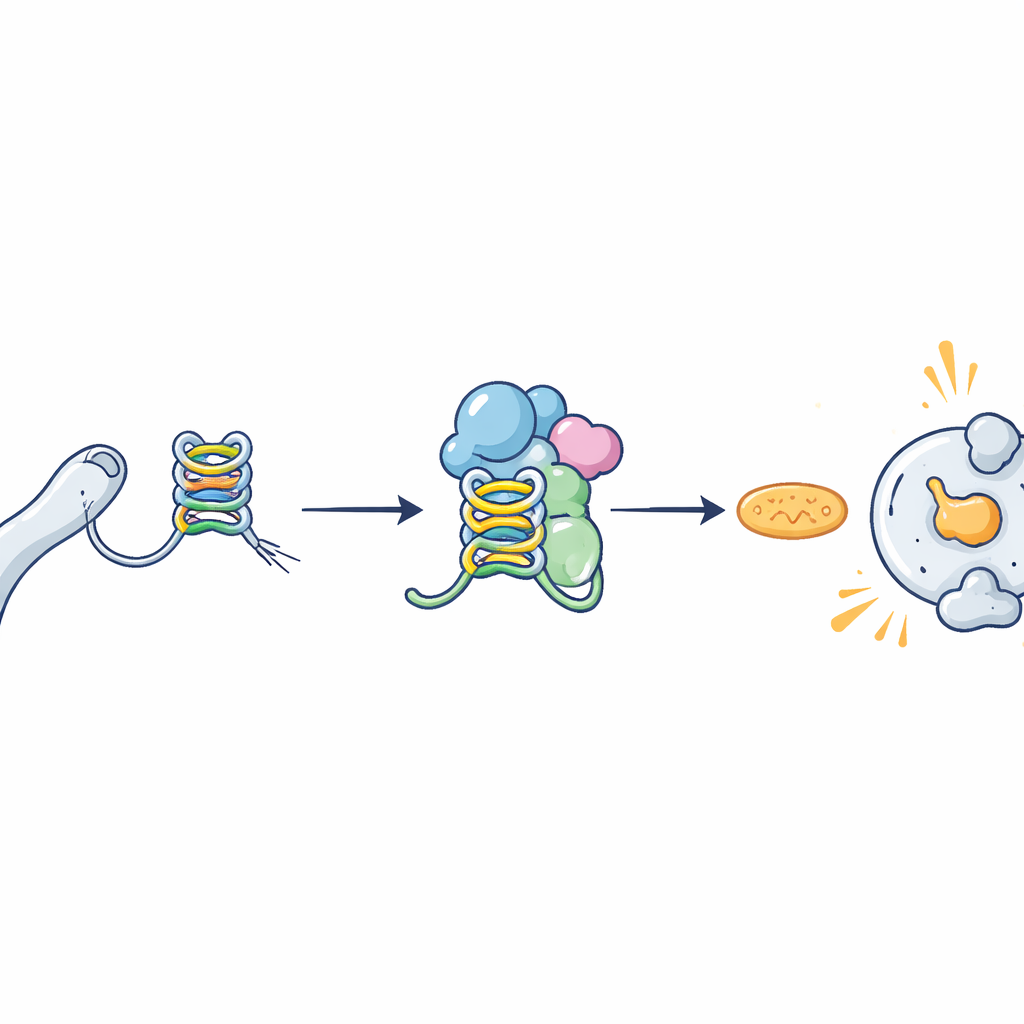
Human chromosomes end in protective caps called telomeres, made of repeated DNA sequences. These regions are copied into RNA molecules known as TERRA. Because they are rich in the building block guanine, TERRA strands can fold into compact, stack-like shapes called G-quadruplexes rather than remaining as simple strings. These unusual folds are increasingly recognized as important control elements in cells and have been linked to cancer, brain disorders, and viral infections. The researchers wondered whether such G-quadruplex shapes in TERRA might be the missing piece explaining how a cell-death sensor protein called ZBP1 recognizes troubled telomeres.
The Cell’s Structural Shape Sensor
ZBP1 is part of the innate immune system, the body’s first line of defense against danger. It patrols cells looking for abnormal genetic material and, when activated, can launch inflammatory responses and programmed cell death. A shorter version of this protein, ZBP1-S, had recently been shown to respond specifically to TERRA and to help remove cells in crisis. However, the exact feature of TERRA that ZBP1-S was sensing remained unclear. Using biochemical tests and structural modeling, the authors found that two regions of ZBP1, called Zα domains, bind tightly and directly to G-quadruplex forms of TERRA but not to mutated TERRA that cannot fold into these shapes. ZBP1-S, which carries only one of these domains (Zα2), still recognized TERRA G-quadruplexes with high affinity, especially when several G-quadruplex units were stacked together.
From Binding to a Deadly Decision
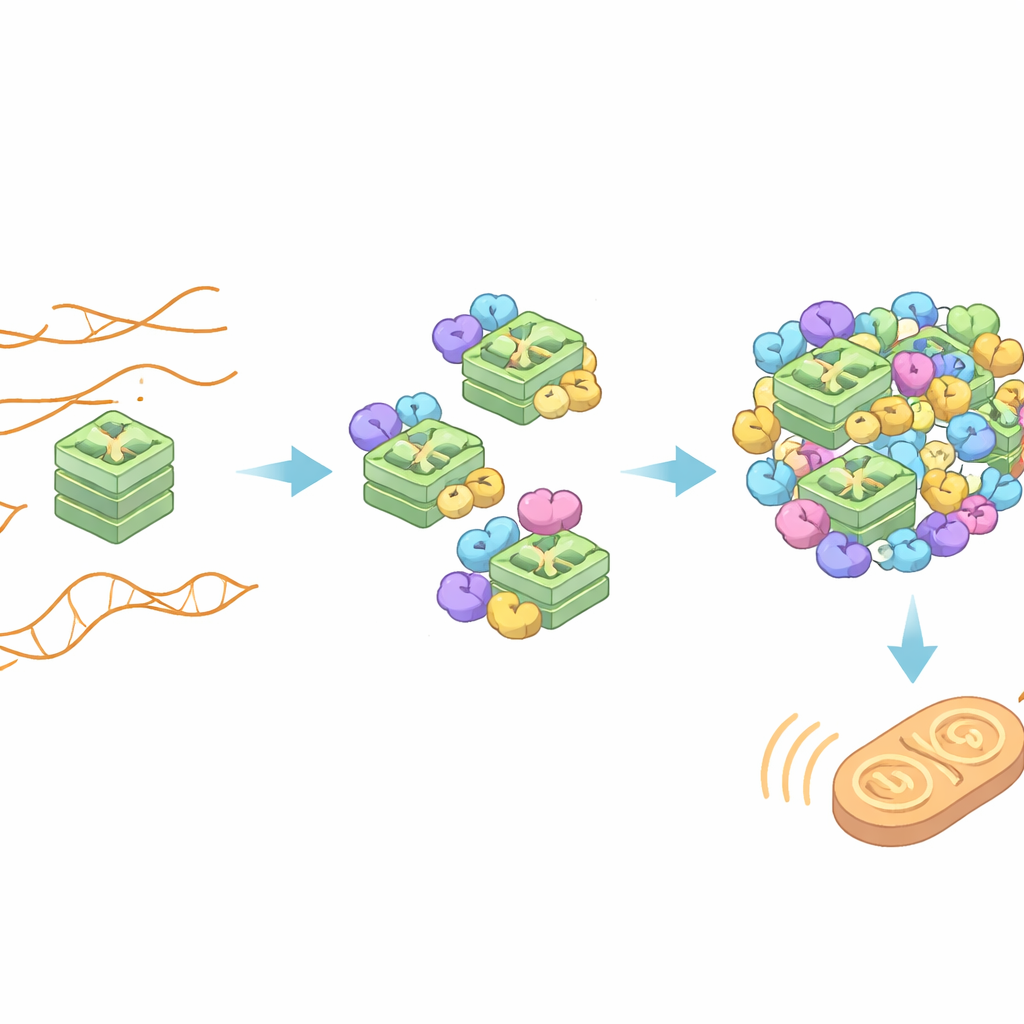
Recognizing dangerous material is only the first step; ZBP1 must also assemble into larger complexes to send a strong death signal. The team showed that when normal TERRA capable of forming G-quadruplexes was present in cells, ZBP1-S molecules clustered into long filament-like structures, a sign of activation. Mutant TERRA that could not form G-quadruplexes failed to induce this clustering. In breast cancer and other cell lines engineered to make ZBP1-S, the presence of G-quadruplex-forming TERRA switched on antiviral and inflammatory genes and led to significant cell death. These effects depended on both the Zα2 region of ZBP1-S and a downstream partner on mitochondria called MAVS, which relays the death signal.
Small Molecules That Can Turn Down the Alarm
If ZBP1-S activation depends on TERRA G-quadruplexes, then chemicals that sit on these structures might block the interaction. The researchers tested several known G‑quadruplex-binding compounds. Two of them, PDS and TMPyP4, effectively competed with ZBP1-S for access to TERRA G‑quadruplexes in test-tube experiments and in living cells. When these compounds were present, ZBP1-S failed to cluster, inflammatory gene activity dropped, and fewer cells died. Other G‑quadruplex drugs were much less effective, suggesting that how exactly a compound grips the folded RNA shape determines whether it can interfere with the ZBP1–TERRA partnership.
Broader Implications and Future Possibilities
This work reveals that ZBP1-S is not just sensing generic viral-like material; instead, it is tuned to the three‑dimensional shape of G‑quadruplexes in telomeric RNA. By latching onto these compact folds, ZBP1-S assembles into large clusters that signal through mitochondria to kill cells that may be on the road to cancer. At the same time, carefully chosen small molecules can dampen this pathway by shielding the G‑quadruplex structures from ZBP1-S. For a lay reader, the key message is that the cell’s decision to live or die can hinge on subtle twists and knots in its genetic material—and that these shapes might someday be targeted with drugs to either promote the removal of dangerous cells or prevent harmful inflammatory cell death.
Citation: Qin, G., Zhao, C., Gao, C. et al. Telomeric repeat-containing RNA G-quadruplexes trigger ZBP1-mediated cell death. Nat Commun 17, 3076 (2026). https://doi.org/10.1038/s41467-026-69989-7
Keywords: innate immunity, telomeres, G-quadruplex RNA, programmed cell death, cancer prevention