Clear Sky Science · en
Independent and joint associations of fatty liver index and physical activity with mortality in adults with hypertension: a nationwide cohort study
Why this study matters to everyday health
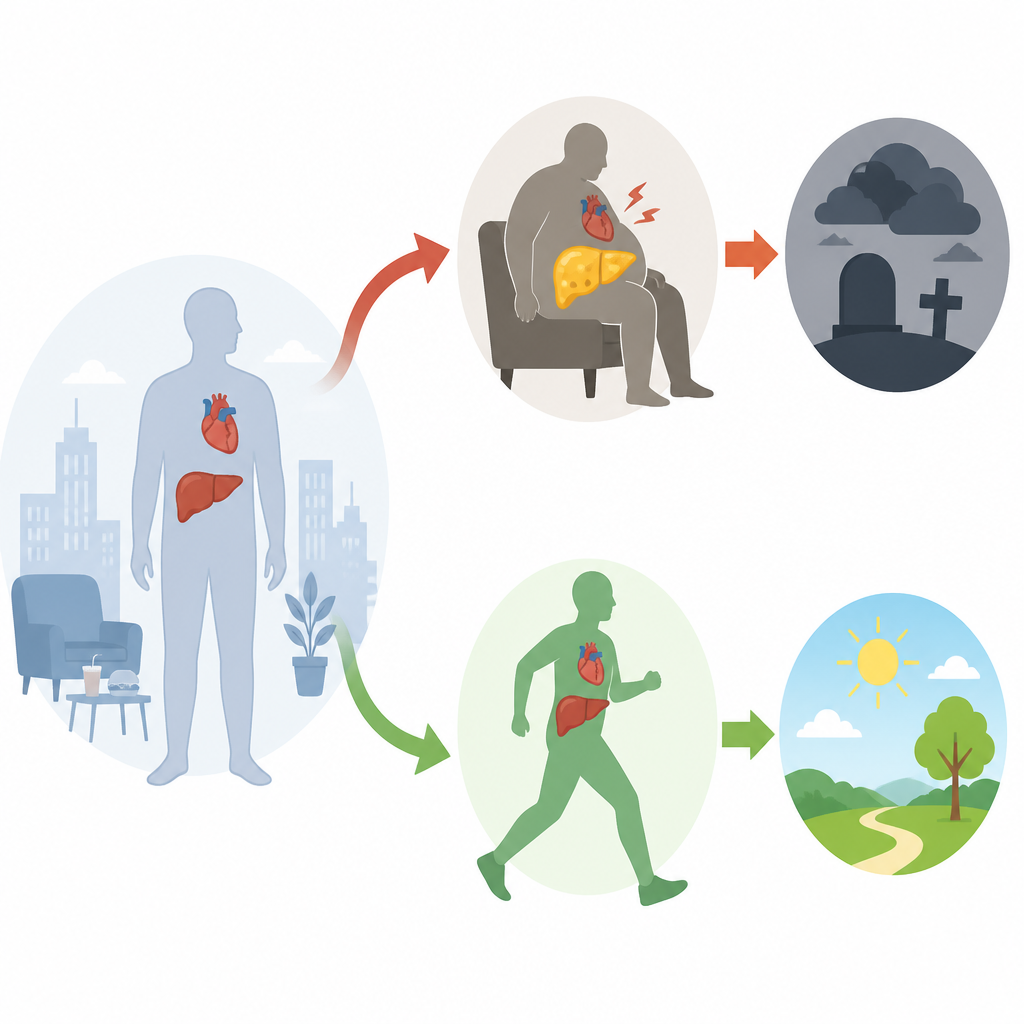
High blood pressure and excess fat in the liver are both common problems, and many people live with both at the same time without realizing it. This study asks a simple but important question for such people: can regular movement help them live longer, even if their liver is already in trouble? Using data from a very large group of adults, the researchers set out to see how physical activity and fatty liver together relate to the chances of dying from any cause or from heart and blood vessel disease.
Two common conditions that often go together
High blood pressure is one of the leading causes of heart attacks, strokes, and early death worldwide. At the same time, a growing number of people have a condition where fat builds up in the liver in the absence of heavy drinking. This is often called fatty liver and is closely linked to weight gain, diabetes, and unhealthy cholesterol levels. High blood pressure and fatty liver share many of the same underlying problems, such as low-grade inflammation and trouble handling sugar and fats. When they occur together, they may worsen each other and further raise the risk of serious health problems.
How the study was carried out
The researchers used health records from South Korea’s national insurance system, focusing on more than 139,000 adults with high blood pressure who had routine health checkups between 2009 and 2012. None had heavy alcohol use, known liver disease, or previous heart attack or stroke when the study began. Fatty liver was estimated using a standard score called the fatty liver index, which combines waist size, body mass index, blood fats, and a liver enzyme into a single number. People were grouped into low, medium, or high fatty liver burden based on this score. Physical activity was reported by participants and converted into weekly energy use, then grouped into low, moderate, or high activity levels.
What the researchers found
Over about nine years of follow-up, more than twelve thousand people died, including about two thousand from heart and blood vessel disease. Those with the highest fatty liver scores had clearly higher risks of death from any cause and from heart disease, even after taking into account age, sex, smoking, alcohol, income, diabetes, cholesterol problems, blood pressure levels, and medicines. In contrast, people who reported the most physical activity had the lowest risk of dying. The benefits of activity showed a dose–response pattern: moving from low to moderate activity lowered risk, and moving to high activity lowered it further, especially up to roughly the amount of brisk walking or similar exercise most guidelines recommend each week.
How movement and fatty liver interact
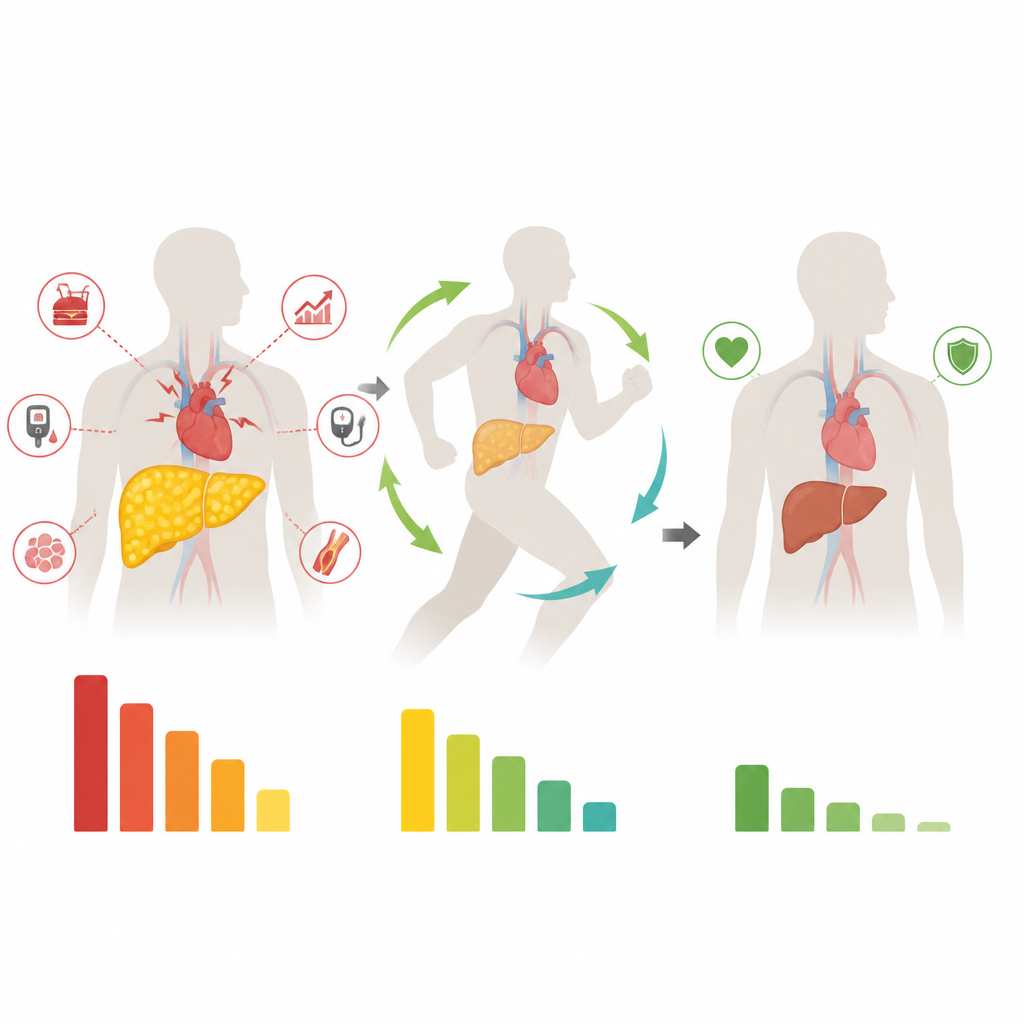
When the team looked at physical activity and fatty liver together, they found that higher activity levels were linked with lower death risk in every fatty liver group. The largest benefit appeared in people with no or little fatty liver, but even those with the heaviest fatty liver burden were better off if they were highly active than if they were inactive. This means that a person with high blood pressure and severe fatty liver who is active can have a lower risk than a similar person who rarely moves. The pattern was similar for deaths from heart and blood vessel disease, and it held up in additional checks that removed people who died early in the study.
What this means for people with high blood pressure
For adults living with high blood pressure, this study delivers a clear and practical message. Having a fatty liver adds to the danger of dying early, particularly from heart and blood vessel problems. But regular physical activity significantly cuts that risk, even when the liver is already affected. While this type of study cannot prove cause and effect, the results support current advice that people with high blood pressure should build steady movement into their daily lives. Simple activities like brisk walking, cycling, or similar exercise most days of the week may help offset the harm linked to fatty liver and improve long-term health.
Citation: Han, Y., Choi, Y. & Kim, Y.S. Independent and joint associations of fatty liver index and physical activity with mortality in adults with hypertension: a nationwide cohort study. Hypertens Res 49, 1839–1852 (2026). https://doi.org/10.1038/s41440-026-02600-0
Keywords: hypertension, fatty liver, physical activity, cardiovascular mortality, cohort study