Clear Sky Science · en
Flexible and rapid validation of structural variation using adaptive sampling
Why this matters for patients and families
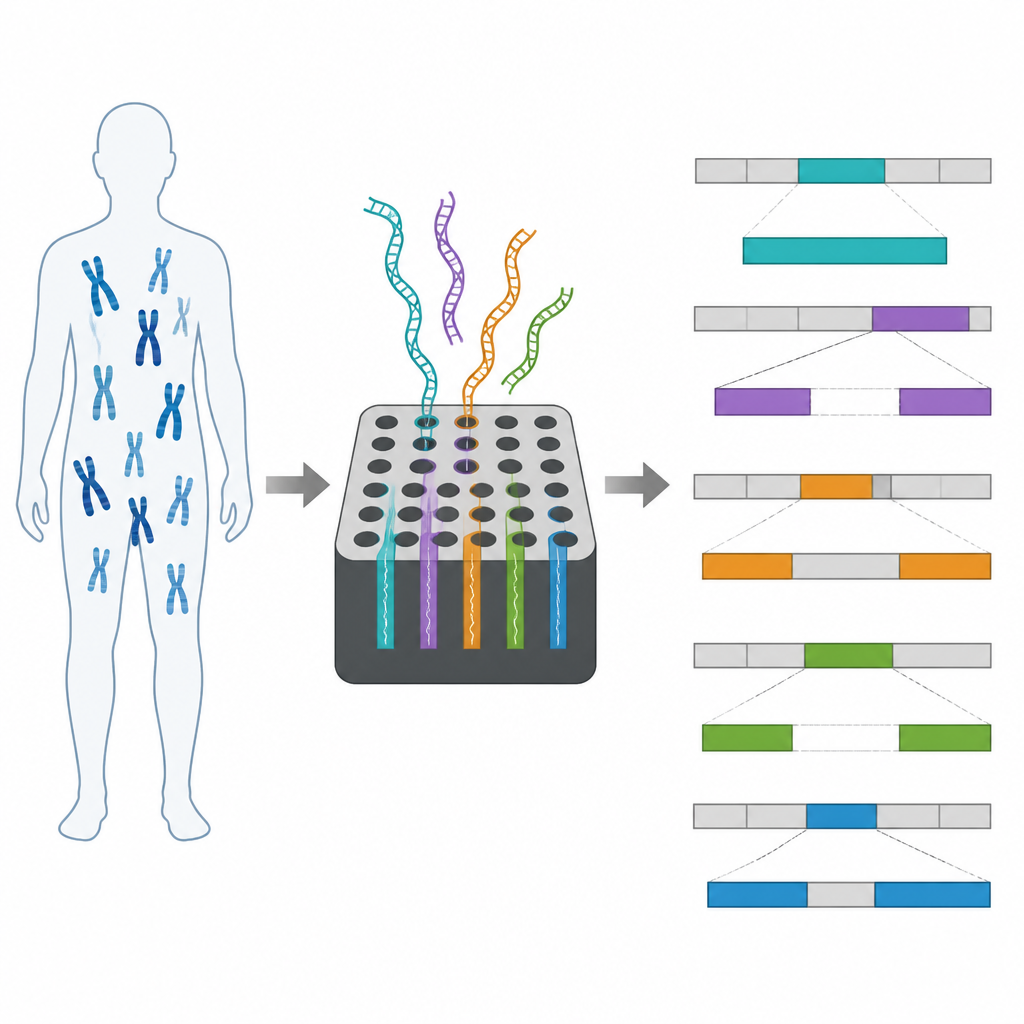
When doctors look for genetic causes of conditions such as developmental delays, birth defects, or cancer, they often find large changes in a person’s DNA but cannot see their exact shape. This study explores a new way to zoom in on those changes quickly and flexibly, helping confirm what is really going on in a patient’s genome without weeks of extra lab work.
A new way to focus on tricky DNA changes
Our DNA can carry thousands of large insertions, deletions, and rearrangements, most of which are harmless. Some rare, bigger changes, however, can disrupt how genes work and contribute to disease. Standard tools, like chromosomal microarrays or short-read DNA sequencing, can flag suspicious regions but often cannot map the precise breakpoints or the detailed layout of these changes. That missing detail can make diagnosis and counseling harder for families and clinicians.
Letting the sequencer choose what to read
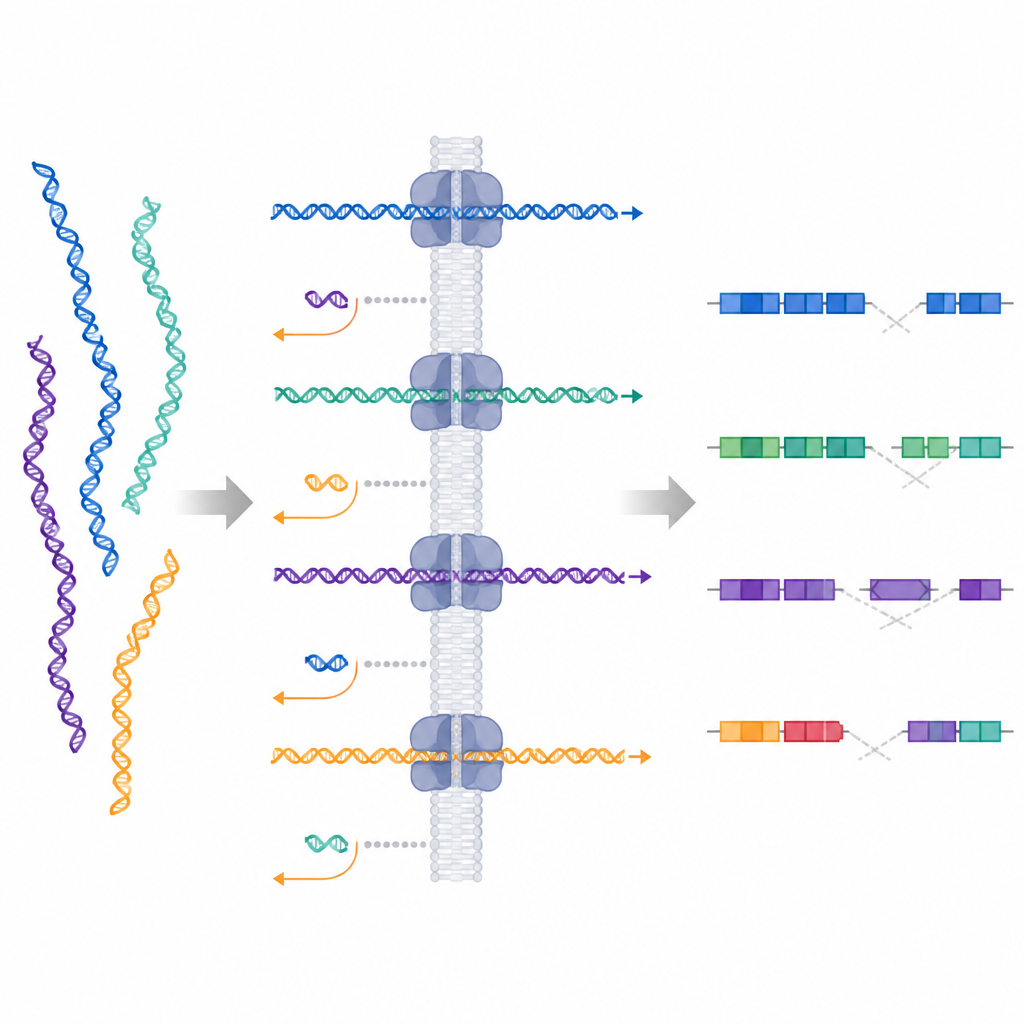
The researchers tested a technique called adaptive sampling, available on Oxford Nanopore long-read sequencers. In this approach, the instrument starts reading each DNA fragment as it passes through a tiny pore and, in real time, compares the early signal to a reference genome. If the fragment matches a region of interest, the device keeps reading; if not, it actively ejects the fragment and moves on to another. This creates a form of digital target enrichment without custom probes or lengthy lab protocols, allowing scientists to change targets simply by updating a computer file.
Putting the method to the test in real patients
The team applied adaptive sampling to 10 regions from patients whose genomes were already known to carry large structural changes, including deletions, balanced translocations, and complex rearrangements involving multiple breakpoints. Each patient’s DNA was run on a nanopore device, either on a small MinION or a larger PromethION system. The method produced long on-target reads that covered the chosen regions at around 30-fold depth, while still collecting many short off-target reads across the rest of the genome. Using these data, the researchers could confirm all 10 structural changes, and in nine cases they fully resolved the detailed architecture of the rearranged segments.
Seeing both breakpoints and copy number
Because the nanopore reads are long, many single molecules spanned the exact junctions where pieces of DNA had broken and rejoined, allowing the team to define breakpoints down to base-pair resolution in most regions. They also measured how many reads piled up across each target to infer gains and losses of DNA, which helped distinguish, for example, a true deletion from two flanking duplications. In particularly challenging locations, such as regions rich in repeated sequences, they sometimes could not pinpoint a single breakpoint but still confirmed the presence and size of the deletion. In one case where the human reference genome had a missing section, they used a newer, more complete human assembly to successfully map a translocation that was previously only roughly located.
Hidden value in the discarded data
An unexpected advantage of adaptive sampling lies in the DNA fragments that are actively rejected. These short reads, scattered across the genome, provided low but even background coverage. The researchers showed that this background signal was strong enough to detect large copy number changes, including a chromosome 4 loss and chromosome 9 gain, and even a deletion of about one million bases that had not been directly targeted. This means that, while focusing deeply on selected regions, the same run can still reveal other large DNA gains or losses elsewhere in the genome.
What this means for future genetic testing
For patients, the key message is that adaptive sampling can turn a single sequencing run into a versatile confirmation tool that is both fast and adaptable. Instead of designing custom probes or primers for each new case, clinicians can adjust target regions in software and obtain not only confirmation of a suspected change but also a clear picture of its structure, copy number, and even DNA methylation patterns. Although costs and technical limits remain, this study shows that adaptive nanopore sequencing can streamline the path from an uncertain genetic finding to a more confident explanation that helps guide diagnosis and counseling.
Citation: Paivandy, A., Lenner, F., Eisfeldt, J. et al. Flexible and rapid validation of structural variation using adaptive sampling. Eur J Hum Genet 34, 649–657 (2026). https://doi.org/10.1038/s41431-026-02039-4
Keywords: structural variation, nanopore sequencing, adaptive sampling, genetic diagnostics, copy number variants