Clear Sky Science · en
Annexin A3 potentiates lenvatinib resistance in hepatocellular carcinoma through multiple approaches amplified by a positive feedback loop
Why this research matters
Liver cancer is one of the deadliest cancers, and many patients rely on a drug called lenvatinib to slow the disease. Unfortunately, tumors often find ways to escape its effects, leaving patients with few options. This study asks a crucial question: why do some liver tumors resist lenvatinib, and can we make the drug work better using another medicine already approved for a different cancer? 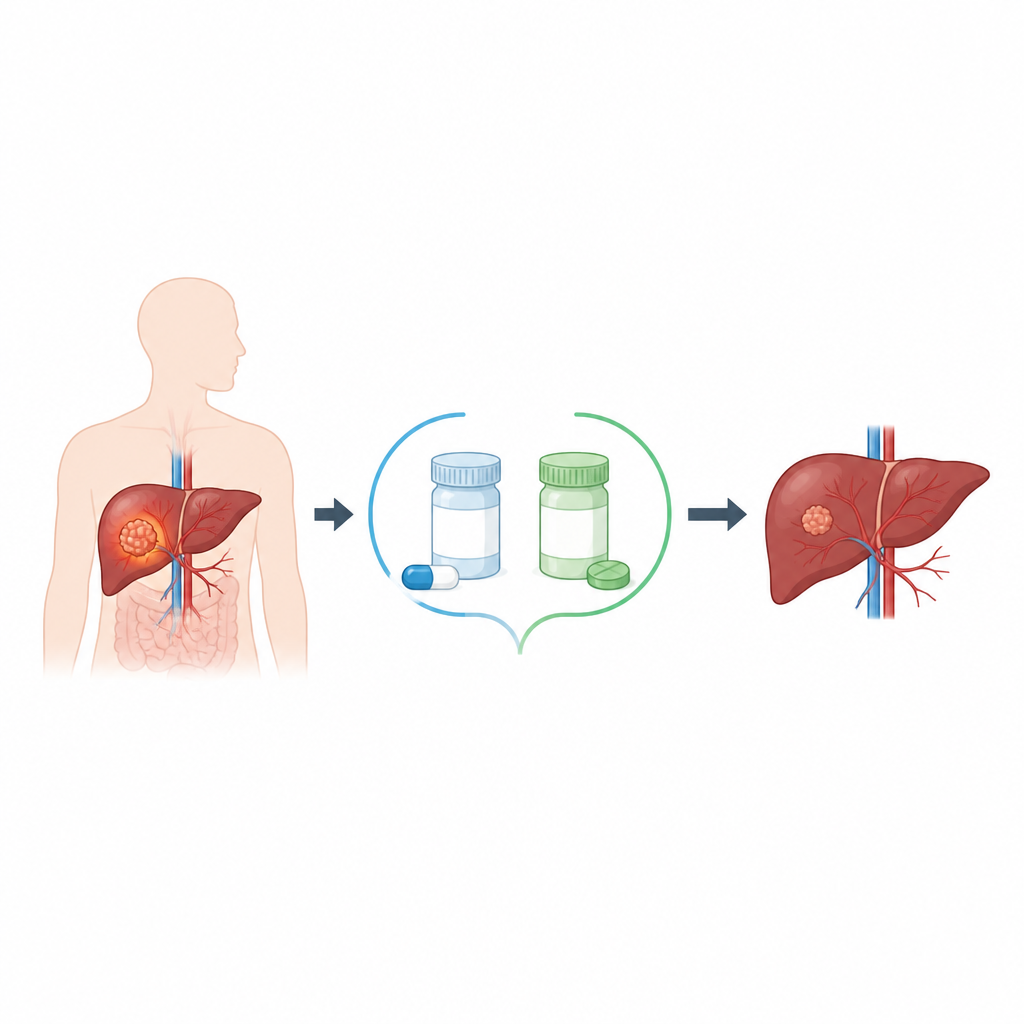
A stubborn helper inside liver tumors
The researchers focused on hepatocellular carcinoma, the most common form of liver cancer. They had previously studied a protein called Annexin A3 (ANXA3), which is often higher in aggressive tumors. In this work, they created mouse models and examined patient samples from people treated with lenvatinib. They found that tumors that no longer responded to lenvatinib consistently showed higher levels of ANXA3. Patients whose tumors had more ANXA3 tended to have poorer survival and were less likely to benefit from lenvatinib, suggesting that ANXA3 could serve as a warning sign for weak treatment response.
How tumors grow, move, and recycle to survive
To understand what ANXA3 actually does, the team manipulated its levels in liver cancer cells grown in the lab. When ANXA3 was abundant, cells survived lenvatinib better, formed more colonies, and were less likely to undergo cell death. These cells also became more mobile and invasive, a behavior linked to a process called epithelial–mesenchymal transition, in which cells loosen their attachments and move more easily. At the same time, ANXA3 boosted a form of cellular recycling known as autophagy. Rather than killing the cells, this recycling helped them cope with the stress of drug treatment, acting like an internal emergency supply system that kept the cancer alive.
Feeding the tumor’s lifelines
Lenvatinib works in part by cutting off the tumor’s blood supply, starving it of oxygen and nutrients. The study revealed that ANXA3 undermines this by encouraging new blood vessel growth. Cancer cells rich in ANXA3 released more of a signaling protein called PDGF-AA, which stimulated nearby blood vessel cells to migrate and form vessel-like tubes. When the researchers blocked the receptor for PDGF-AA on these vessel cells, this growth was suppressed; when they added extra PDGF-AA, they could restore vessel growth even if ANXA3 was reduced. In patient tumors, higher ANXA3 went hand in hand with denser blood vessels, strengthening the link between this protein and tumor lifelines.
A self-boosting loop inside cancer cells
Digging deeper, the team uncovered a self-reinforcing loop that helps tumors resist treatment. ANXA3 switched on a key growth pathway in cells known as PI3K–AKT. This pathway, in turn, activated branches that drove both cell movement and PDGF-AA production. The secreted PDGF-AA then acted back on cancer cells and blood vessel cells, reactivating PI3K–AKT and further increasing PDGF-AA output. This positive feedback loop made the tumor more capable of growing blood vessels, spreading, and enduring lenvatinib. When the researchers used a PI3K-blocking compound, they were able to weaken this loop, reducing vessel growth, cell movement, and protective autophagy. 
Pairing medicines to outsmart resistance
Because the feedback loop depends on PI3K, the scientists tested whether combining lenvatinib with Alpelisib, a PI3K inhibitor already approved for certain breast cancers, could improve outcomes. In cell experiments, the two drugs together killed more liver cancer cells than either alone, at doses that would allow Alpelisib to be kept relatively low. In mice carrying human liver tumors that were resistant to lenvatinib and had high ANXA3, the drug pair shrank tumors more effectively than single treatments, increased cancer cell death, and reduced signs of harmful autophagy, without adding noticeable liver or kidney toxicity. These results suggest that ANXA3 not only marks tumors likely to resist lenvatinib, but also points to a new combination strategy that could restore sensitivity to treatment.
What this means for patients
In simple terms, this study shows that some liver tumors enlist ANXA3 to grow new blood vessels, move, and recycle their contents, helping them escape from lenvatinib. ANXA3 sets up a circular signaling loop that continually strengthens these survival tricks. By breaking this loop with Alpelisib, the researchers made lenvatinib work better in models of human liver cancer without extra side effects. While clinical trials are still needed, the work raises the possibility that testing tumors for ANXA3 could identify patients at risk of lenvatinib resistance and that combining lenvatinib with a PI3K inhibitor may offer a more effective treatment path in the future.
Citation: Zhu, Y., Huang, Y., Song, M. et al. Annexin A3 potentiates lenvatinib resistance in hepatocellular carcinoma through multiple approaches amplified by a positive feedback loop. Cell Death Dis 17, 478 (2026). https://doi.org/10.1038/s41419-026-08735-9
Keywords: hepatocellular carcinoma, lenvatinib resistance, Annexin A3, PI3K inhibitor, Alpelisib