Clear Sky Science · en
Associations of health-related fitness and physical activity with chemotherapy outcomes in breast cancer
Why fitness matters during cancer treatment
Chemotherapy is a lifeline for many women with breast cancer, but its power comes with a catch: to work best, the full planned dose needs to be delivered on schedule. Side effects can force doctors to cut doses or delay treatments, which may reduce the therapy’s benefits. This study asks a simple, real-world question with big implications: do a woman’s fitness level and everyday movement habits around the time of diagnosis help determine how well she can stay on track with chemotherapy?
Looking closely at women starting treatment
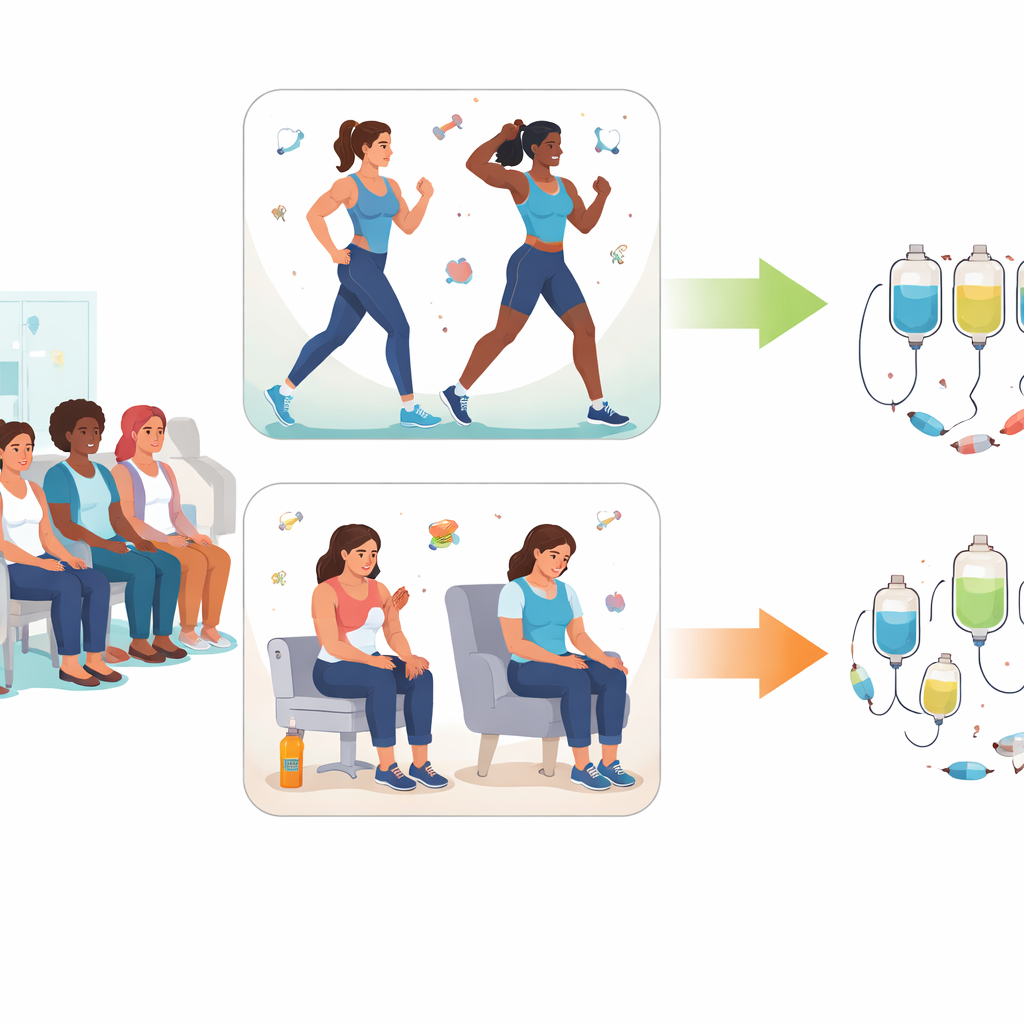
Researchers followed 890 women in Alberta, Canada, who had recently been diagnosed with early-stage breast cancer and were receiving chemotherapy either before or after surgery. Rather than relying only on questionnaires, the team directly measured several aspects of health-related fitness: aerobic fitness using a treadmill test, upper and lower body strength and endurance using weight machines, and detailed body composition using body scans to separate fat and lean tissue. They also used wearable devices to track daily steps, time spent sitting, and periods of moderate-to-vigorous activity, and asked women about their usual physical activity in the year before diagnosis.
Staying on schedule with chemotherapy
The main yardstick for treatment success in this study was “relative dose intensity” (RDI) – essentially, how much of the planned chemotherapy dose a woman actually received, taking into account any cuts or delays. An RDI of at least 85% is considered the threshold for getting the full benefit of treatment. Encouragingly, more than four out of five women in this study reached that level. When the researchers compared women who did and did not reach 85% RDI, clear patterns emerged: those with higher aerobic fitness and greater upper and lower body strength were more likely to complete chemotherapy as planned.
How body fat and muscle are linked to treatment
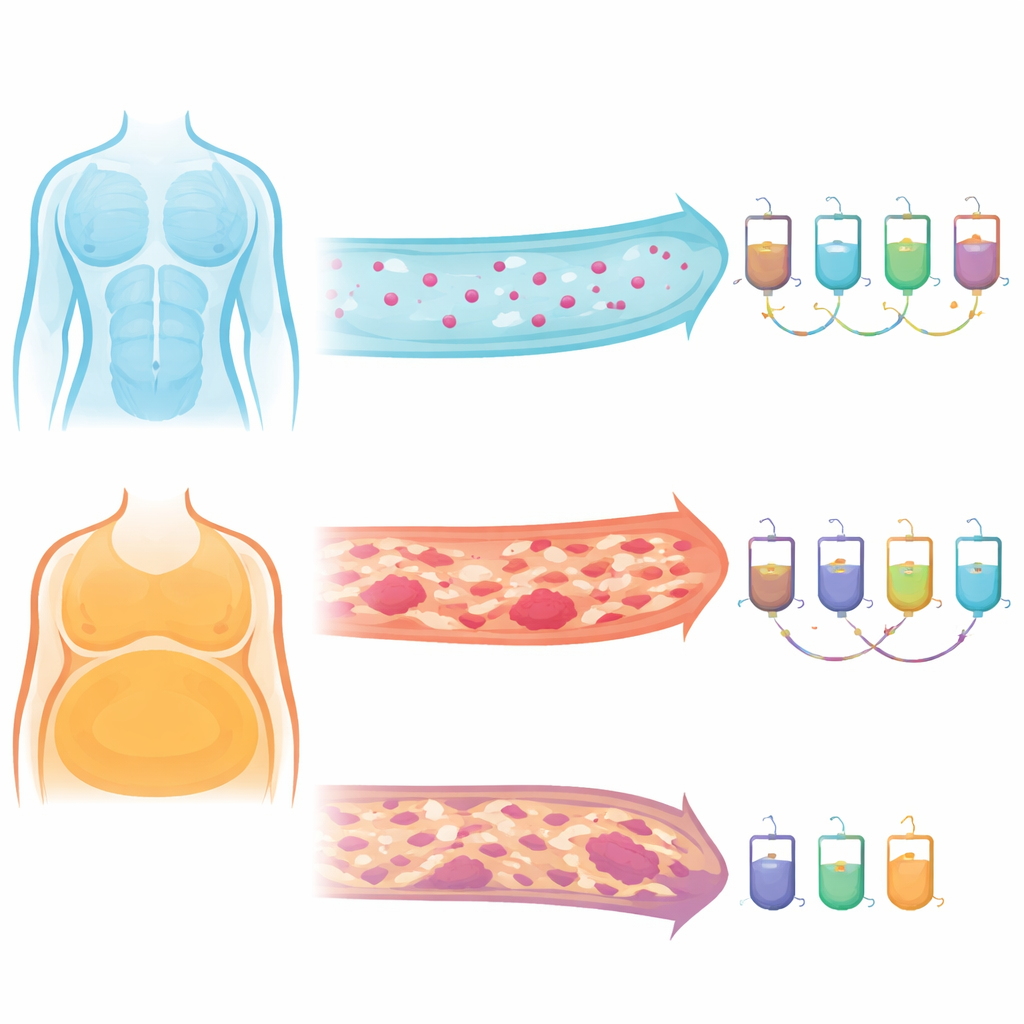
Body composition told an equally important story. Women with more lean tissue and a higher ratio of lean to fat mass were significantly more likely to achieve the target chemotherapy dose. In contrast, higher body mass index, larger waistlines, and greater fat percentage were all linked with lower odds of staying at or above 85% RDI. These findings suggest that it is not just body size that matters, but how that body weight is divided between muscle and fat. In a smaller subgroup who received chemotherapy before surgery, having a healthier balance of muscle to fat and a lower body mass index was also associated with a greater chance that no invasive cancer would be found in the breast or nearby lymph nodes afterward, a favorable sign known as a complete pathologic response.
Everyday movement, sitting time, and mixed signals
Because exercise programs are often recommended during cancer treatment, the researchers also explored how overall physical activity and sedentary time related to chemotherapy outcomes. Here, the results were more nuanced. Most measures of self-reported activity and device-measured movement, such as total steps per day or total energy expenditure, were not clearly tied to whether women completed the full chemotherapy plan. Only one measure – short bouts of more intense movement lasting at least ten minutes – showed a modest link with better treatment completion. Time spent sitting did not show a clear connection to chemotherapy dosing, although other studies suggest that very sedentary lifestyles may worsen fatigue and other symptoms that could indirectly affect treatment.
What this means for women with breast cancer
For someone facing breast cancer, these findings offer a hopeful message: aspects of fitness that can be improved – aerobic capacity, strength, and a healthier balance of muscle to fat – are associated with better ability to tolerate chemotherapy. The study does not prove that exercise alone will fix treatment problems, and it cannot yet prescribe a specific “dose” of exercise for everyone. But it adds strong evidence that entering chemotherapy in as fit a state as safely possible may help women stay closer to their full treatment plan, and in some cases may be linked to better tumor response. Together with other research, this supports the growing idea of building structured, supervised exercise and strength programs into cancer care, both before and during chemotherapy, to help patients weather treatment and maximize its benefits.
Citation: Kokts-Porietis, R.L., Morielli, A.R., Yang, L. et al. Associations of health-related fitness and physical activity with chemotherapy outcomes in breast cancer. Br J Cancer 134, 1459–1467 (2026). https://doi.org/10.1038/s41416-026-03384-3
Keywords: breast cancer, chemotherapy, physical fitness, body composition, exercise during treatment