Clear Sky Science · en
Fluoride release and mechanical properties of S-PRG fillers in dental materials: a systematic review and meta-analysis
Why smart fillings matter for everyday teeth
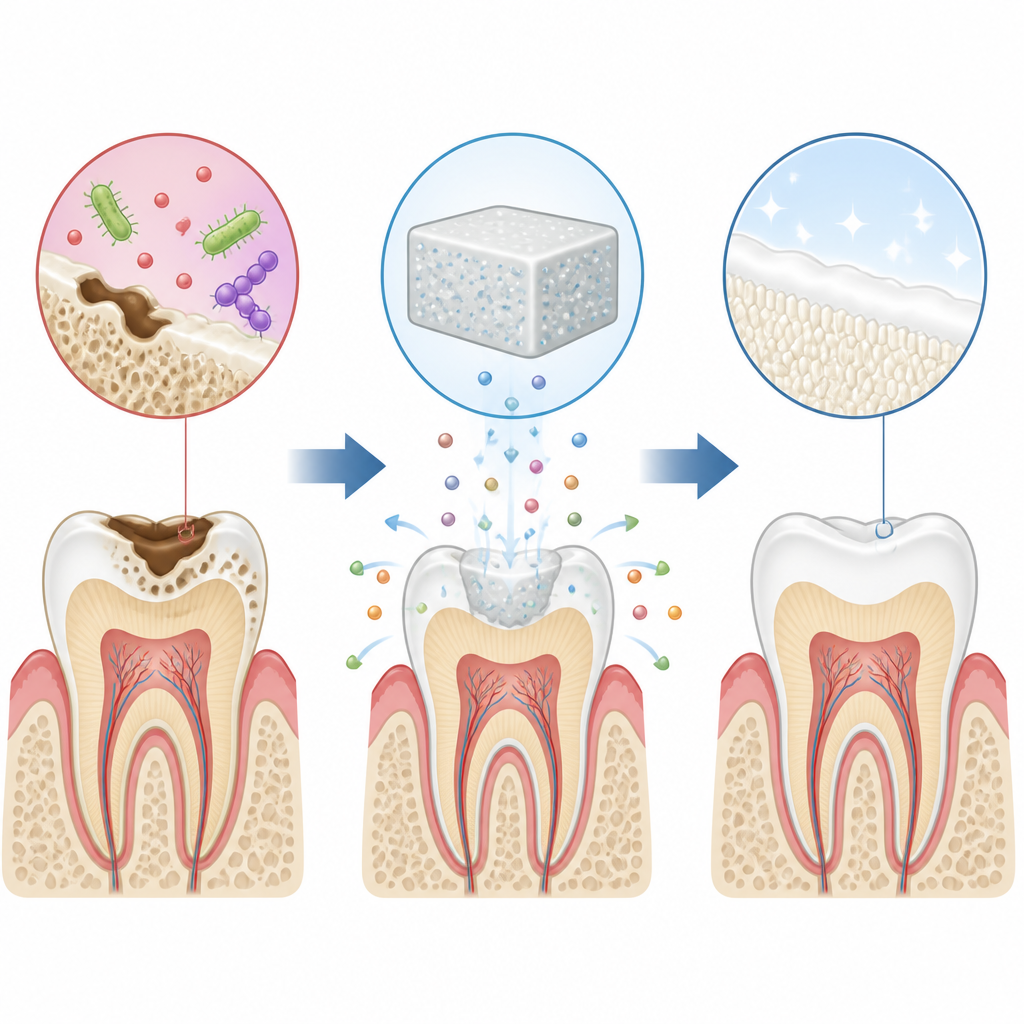
Tooth decay is one of the most common health problems worldwide, and many people will need a filling or a dental crown at some point in their lives. Modern materials do more than simply plug a hole in the tooth: some are designed to slowly release helpful minerals that can protect against future damage. This article looks at one such family of materials, called S-PRG fillers, and asks how well they release fluoride and how strong they really are when used in dental work.
A new kind of protective filling material
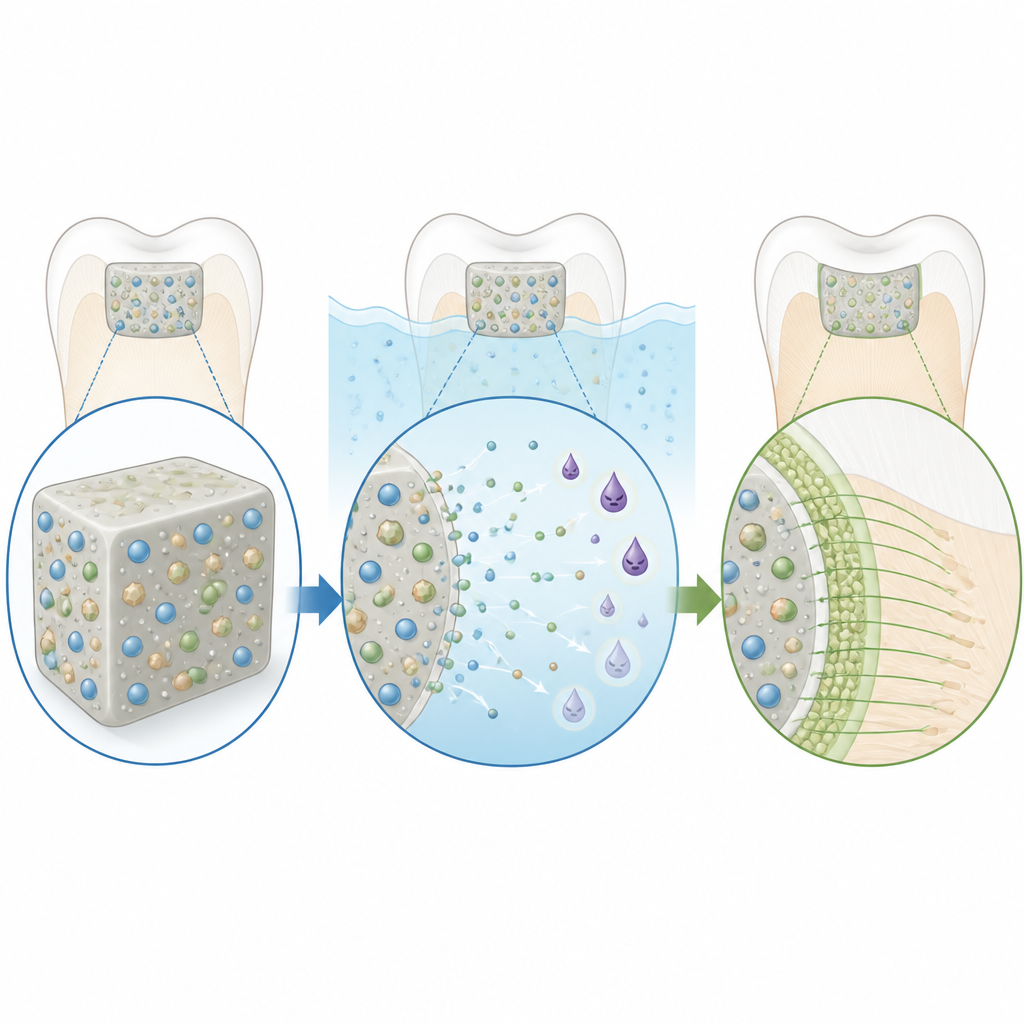
S-PRG fillers are tiny glass-based particles built into certain fillings, sealants, and other dental products. Unlike traditional materials that mostly act as passive plugs, these particles can release several useful ions, including fluoride, strontium, and borate, into the mouth. Fluoride is especially important because it helps enamel repair itself after acid attacks from sugar-loving bacteria. Laboratory and animal studies suggest that materials containing S-PRG may neutralize acids, strengthen weakened tooth structure, and even slow the growth of harmful microbes near the tooth surface.
How the researchers gathered the evidence
The authors carried out a systematic review and meta-analysis, which means they searched several scientific databases and combined the results of many separate studies. They followed strict reporting rules to make the process transparent and registered their plan in advance. Out of 216 papers found, only 18 met their detailed criteria. Most of these were laboratory experiments on small blocks of material, while just two were studies in living subjects: one clinical trial on denture wearers and one animal study on root canal sealers. The team compared S-PRG materials with a mix of other common options, such as glass ionomer cements and resin-based composites, and looked mainly at fluoride release and basic strength tests.
What they learned about fluoride release
Across the studies that reported compatible measurements, S-PRG materials behaved differently from their comparison materials in how they released fluoride, and this difference was statistically significant. In some cases, S-PRG products released more fluoride over time than standard resin fillings that normally release very little. In other cases, especially when compared with classic glass ionomer cements that are already known for strong fluoride release, S-PRG released less. Differences in test conditions, such as the surrounding liquid, its acidity, and how often the samples were “recharged” with fluoride solutions, contributed to widely varying results. Because of this, the authors judged the overall confidence in the fluoride findings to be low.
How strong and durable the materials appear
The review also examined how S-PRG materials performed in tests of strength and wear, including how well they resist bending and pulling forces. When the researchers combined data from several studies, they found that S-PRG products sometimes showed higher strength values than the materials they were compared with, and sometimes lower. The results came with very broad ranges, reflecting small sample sizes and big differences in how tests were run. Some individual experiments suggested that adjusting the amount and particle size of S-PRG could improve flexural strength and wear resistance, while others found no clear advantage over existing materials. Overall, the evidence did not show that S-PRG fillings are reliably stronger than other options in every situation.
Limits of current knowledge and next steps
One of the main messages of this article is that most of what we know about S-PRG fillers comes from controlled laboratory work rather than real-world patients. Only a handful of studies have tested these materials in the mouth, such as a denture study that found higher fluoride levels in saliva over several months, and an animal study showing less inflammation around a root canal sealer. Ethical concerns, cost, and practical challenges make such studies difficult to run, so scientists often rely on laboratory tests first. The authors stress that better designed clinical trials and standardized testing methods are needed before dentists can be fully confident about how S-PRG materials behave over years of everyday use.
What this means for people needing dental work
For patients, this review suggests that S-PRG based fillings and coatings are promising tools that may help protect teeth by releasing fluoride and other helpful ions, while offering mechanical performance that is at least comparable to many existing materials. However, because the available evidence is varied and mostly from laboratory studies, we cannot yet say that they are always the best or strongest choice. The conclusion is that S-PRG materials have clear potential, but their benefits and limits in everyday dental care still need to be confirmed by more consistent testing and well planned clinical research.
Citation: Kaur, K., Saini, R.S., Kuruniyan, M.S. et al. Fluoride release and mechanical properties of S-PRG fillers in dental materials: a systematic review and meta-analysis. BDJ Open 12, 52 (2026). https://doi.org/10.1038/s41405-026-00442-z
Keywords: dental materials, fluoride release, S-PRG fillers, tooth decay, restorative dentistry