Clear Sky Science · en
Sex-dependent modulation of social distance by lipopolysaccharide-induced inflammation in mice
Why sickness can change how close we feel
Feeling unwell often comes with more than a fever or fatigue; it can shift how much we want to be around other people. This study explores how a brief, controlled immune challenge in mice changes the way they interact with one another, and whether males and females respond in the same way. Understanding these links between the body’s defenses and social behavior may offer clues to why inflammation is tied to mood problems such as depression.
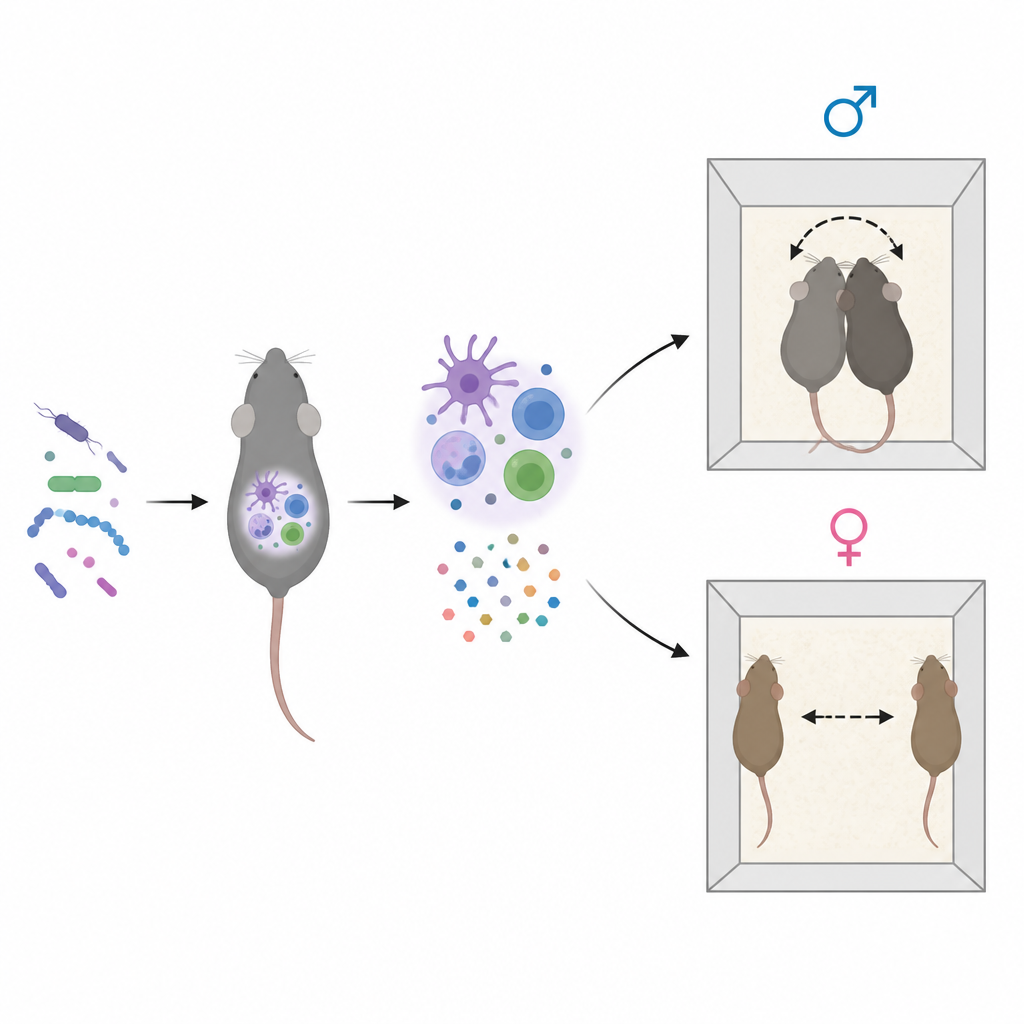
Making mice briefly "sick" in a controlled way
The researchers used a well known method to trigger temporary inflammation in healthy mice. They injected a bacterial component called lipopolysaccharide into the body cavity of male and female animals. This substance does not cause an actual infection, but it makes the immune system react strongly, much like it would during a bout of flu. The team then measured immune signals in the blood, counted key white blood cells, and tracked body weight over a week to confirm that the mice were in a physiologically altered, sickness-like state.
What happens inside the body during this response
Blood tests showed sharp rises in several pro-inflammatory molecules, including IL-1β, IL-6, and TNF-α, shortly after the injection. At the same time, the numbers of circulating T cells, B cells, neutrophils, and monocytes in the blood dropped, which likely reflects these cells leaving the bloodstream to act in other tissues or dying in the process. Both male and female mice lost weight for several days, though females tended to recover slightly faster. Even before treatment, the two sexes differed in some types of immune cells, suggesting that males and females start from somewhat different immune baselines.
How sickness shaped social space between mice
The heart of the study was a simple social test. One day after the injection, pairs of mice were placed together in an open box, either with a familiar cage mate or with an unfamiliar partner. Using video tracking, the scientists measured how far apart the animals stayed and how long they spent in physical contact. In males, inflammation led to a clear change: treated pairs stayed closer together and made more contact, regardless of whether they already knew each other. Female pairs, in contrast, showed no reliable shift in distance or contact time. No aggressive encounters were seen, so the increased closeness in males was not due to fighting.
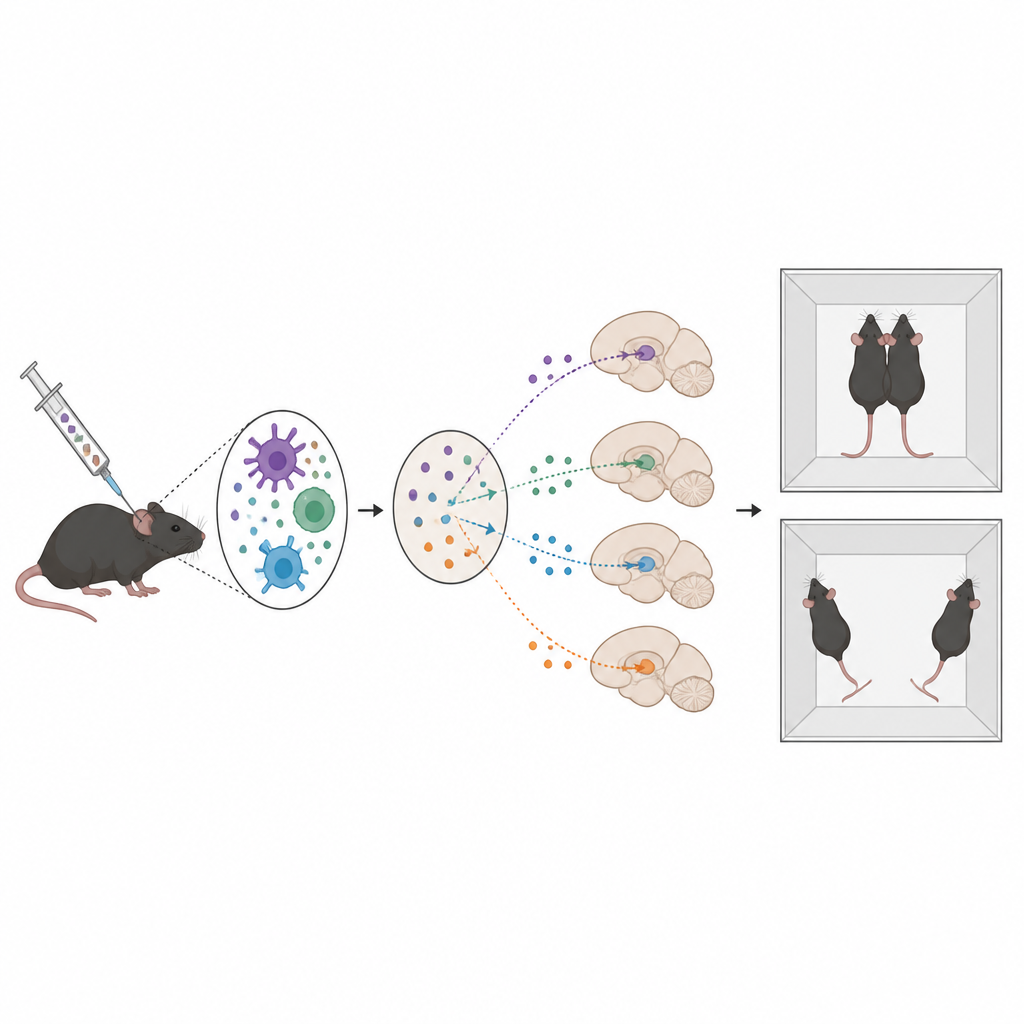
Checking other behaviors to rule out simple explanations
To see whether the social changes were just a side effect of feeling sluggish or less motivated in general, the team ran additional tasks. In a sucrose preference test, mice could choose between plain water and a weak sugar solution. After inflammation, both male and female mice licked less overall and showed a reduced preference for the sweet drink, suggesting lowered activity and pleasure. In an open-field test, both sexes walked less and produced fewer fecal pellets, classic signs of sickness. Importantly, these non-social effects were similar in males and females, yet only males changed how closely they approached one another. This pattern implies that the altered social distance is not simply due to reduced movement or reward seeking.
What this might mean for human health
Taken together, the results show that short term inflammation can reshape social spacing in a sex dependent way: sick male mice draw closer to one another, while females maintain their usual distance. Because changes in social behavior are a hallmark of many mood disorders, the work supports the idea that immune activity can feed into brain circuits that govern how we seek or avoid company, and that these effects differ between sexes. While mice are not people, such findings encourage scientists to pay close attention to sex when studying how inflammation relates to social withdrawal, low mood, and vulnerability to depression.
Citation: Yamamoto, M., Hayashi, K., Kanayama, M. et al. Sex-dependent modulation of social distance by lipopolysaccharide-induced inflammation in mice. Transl Psychiatry 16, 282 (2026). https://doi.org/10.1038/s41398-026-04026-1
Keywords: inflammation, social behavior, sex differences, mouse model, depression