Clear Sky Science · en
The social dimension of apathy: evidence for a distinct domain from 11,243 individuals across health and neurocognitive disorders
Why losing the urge to connect matters
Apathy is often described as not caring or not bothering, but this loss of drive can quietly shape people’s lives, relationships, and health. Many conditions, from depression to Alzheimer’s disease and Parkinson’s disease, feature apathy. Yet doctors have long debated whether withdrawing from friends and family is just a side effect of general low motivation or a special kind of problem focused on social life. This study tackles that question using data from more than eleven thousand people to see whether social withdrawal forms its own pattern of symptoms.
Looking at motivation in everyday life
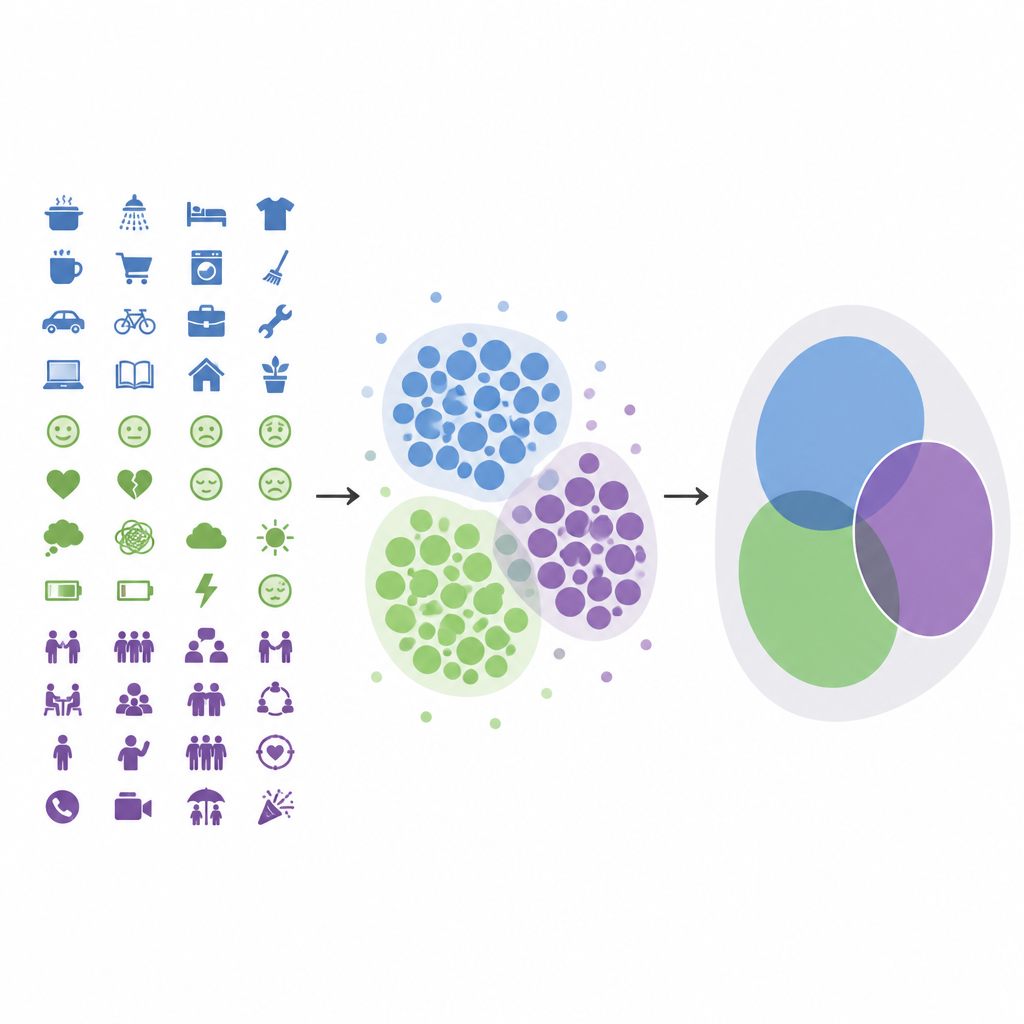
To understand apathy in detail, the researchers began with 479 healthy adults who completed three well known questionnaires about effort, interest, emotion, and social behavior. Rather than treating each questionnaire separately, the team combined all 60 questions to ask a simple but powerful question: when people answer these items, do their replies naturally group into a few core types of apathy? Using statistical tools that search for hidden patterns, they found five clear dimensions: problems with getting things done, loss of curiosity, social withdrawal, emotional blunting, and difficulties with planning and organization.

A distinct pattern of social withdrawal
Social apathy stood out from the other dimensions. Questions about starting conversations, meeting friends, or valuing social time clustered very tightly together and did not mix much with items about chores, hobbies, or feelings. People who showed this pattern were not simply low on all fronts. Instead, they displayed a focused loss of drive to reach out to others. The purity of this social cluster was higher than that of the other four dimensions, meaning that answers to these questions were explained mainly by one underlying tendency: reduced motivation to connect with other people.
Testing the pattern in illness and across ages
The team then asked whether this clear social dimension would also appear in people living with brain and mental health conditions. They studied questionnaire data from 11,243 individuals, including more than a thousand patients with disorders such as Alzheimer’s disease, Parkinson’s disease, frontotemporal dementia, autoimmune encephalitis, and small vessel disease, over a thousand people with depression, and thousands of adults without diagnosed conditions. In these groups they confirmed that items about social life formed a distinct cluster, separate from general action and emotional response. They used network maps, where each symptom is a node linked to others it tends to co-occur with. In every group, social items formed their own tightly linked island in this network.
Stable across life stages and ways of testing
The researchers also examined whether this social cluster changes as people age. Using sliding age windows from adolescence to late old age, they rebuilt the symptom networks repeatedly. At every age and in every group, a recognizable social module emerged, containing mainly social items and anchored by a social symptom at its center. This pattern did not depend on whether people completed questionnaires online or in a clinic. The stability of the social cluster, even in the presence of depression or serious brain disease, suggests that the drive to connect with others is a consistent and separable part of human motivation.
What this means for people and care
These findings suggest that losing interest in other people is not just a side effect of feeling flat or tired. Instead, social apathy appears to be its own dimension of apathy, one that can be measured reliably and that stays distinct across different illnesses and life stages. Recognizing this separate social component could help doctors and researchers better track changes in social engagement, design treatments that directly support social motivation, and distinguish social apathy from conditions like social anxiety or simple lack of pleasure. In everyday terms, the study highlights that the fading urge to connect, care, and act for others deserves attention in its own right, both in clinics and in conversations about mental and brain health.
Citation: Zhao, S., Ye, R., Tang, QY. et al. The social dimension of apathy: evidence for a distinct domain from 11,243 individuals across health and neurocognitive disorders. Transl Psychiatry 16, 263 (2026). https://doi.org/10.1038/s41398-026-04023-4
Keywords: apathy, social motivation, neurocognitive disorders, depression, social withdrawal