Clear Sky Science · en
Longitudinal investigation of the T helper (Th)1-Th2 balance and complement system in clinical high risk for psychosis cohort
Why Immune Balance Matters for Mental Health
Psychosis, which can involve hallucinations or delusional thinking, rarely appears out of nowhere. Many people go through a "clinical high‑risk" stage first, where symptoms are milder but worrying. This study asks a simple but powerful question: can subtle shifts in the immune system, long before full‑blown illness, help predict who will go on to develop psychosis? By tracking specific immune signals in the blood over a year, the researchers explore whether an imbalance in two key immune forces—and their interaction with a watchdog system called complement—may tip the brain toward or away from disease.
Two Sides of the Immune See‑Saw
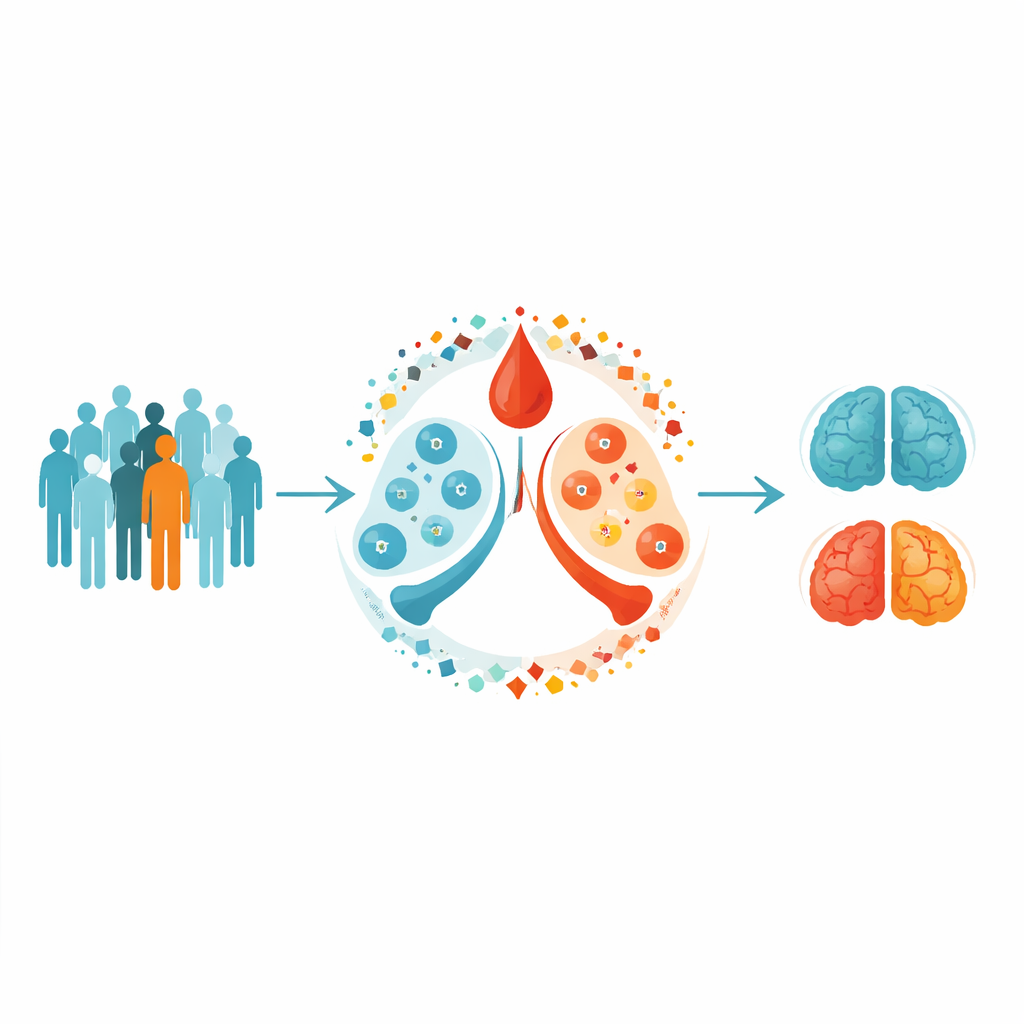
Our immune system is often described as a balancing act. One side, known here as Th1, tends to drive aggressive, attack‑style responses. The other, called Th2, leans toward calming and repair. In this study, the team used two blood markers as stand‑ins for these forces: IL‑1β to represent the Th1, pro‑inflammatory side, and IL‑6 to represent the Th2, counter‑balancing side. By standardizing each person’s levels, they could classify individuals into two broad patterns—those whose Th1 signal was stronger than Th2 (Th1 > Th2) and those whose Th2 signal outweighed Th1 (Th1 < Th2). Among people at clinical high risk for psychosis, nearly half fell into the Th1 < Th2 pattern, compared with just over a quarter of healthy volunteers, hinting that the immune see‑saw may already be tipping in high‑risk individuals.
The Complement System as Immune Traffic Control
Alongside these helper T‑cell signals, the researchers measured 13 proteins from the complement system, a network of blood‑borne molecules that help tag invaders, clear debris, and fine‑tune inflammation. Think of complement as a form of immune traffic control, directing when and where responses are amplified or shut down. At the start of the study, several complement components—especially C4, its activated fragment C4b, C5, and factor B—differed between people with Th1 > Th2 and Th1 < Th2 patterns. In those at high risk for psychosis, higher levels of IL‑6 were strongly tied to higher levels of multiple complement proteins, while the overall Th1–Th2 balance showed negative links with key complement factors. These tight connections were largely absent in healthy participants, suggesting that the normal dialogue between helper T cells and complement may be altered specifically in those on a path toward psychosis.
Following High‑Risk Individuals Over Time
The most revealing part of the work came from following 38 high‑risk participants for one year. During that period, 14 developed full psychosis. On average, the basic levels of IL‑1β and IL‑6 did not shift dramatically across the group. But when the researchers looked at immune balance patterns, a clear picture emerged: people in the Th1 < Th2 group were much more likely to transition to psychosis than those in the Th1 > Th2 group. Statistical analyses showed that this “rightward” tilt toward Th2 dominance over time was closely tied to baseline levels of C4 and C4b. In other words, how active certain complement proteins were at the outset seemed to shape how the immune see‑saw moved over the following year—and that movement, in turn, was linked to who did and did not develop psychosis.
What This Means for Early Detection
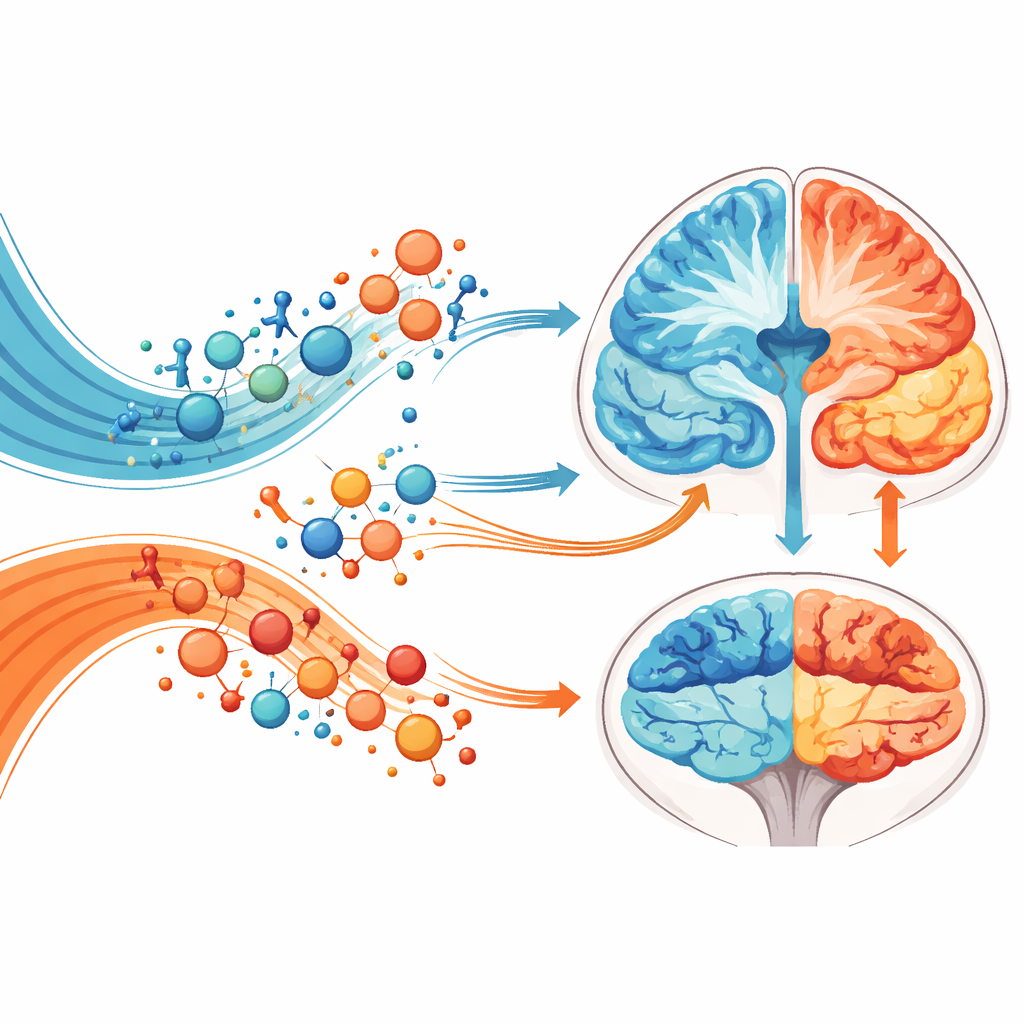
These findings suggest that psychosis may arise, at least in part, from a mis‑tuned conversation between two immune subsystems: helper T‑cell signaling and the complement network. A shift toward Th2 dominance, in the context of particular complement patterns, appears to mark a higher‑risk pathway from early warning signs to full illness. While the study is relatively small and did not track complement changes over time, it points to specific blood‑based factors—especially C4 and C4b—that could one day help identify those most in need of close monitoring or preventive care. For a layperson, the message is that mental health may depend not only on the brain itself but also on how the body’s immune “thermostat” is set well before symptoms become severe.
Citation: Zhang, T., Zhao, J., Tang, X. et al. Longitudinal investigation of the T helper (Th)1-Th2 balance and complement system in clinical high risk for psychosis cohort. Transl Psychiatry 16, 228 (2026). https://doi.org/10.1038/s41398-025-03695-8
Keywords: psychosis risk, immune imbalance, complement system, inflammation and brain, early detection