Clear Sky Science · en
Fulvestrant versus capecitabine as maintenance therapy in hormone receptor-positive, HER2-negative metastatic breast cancer after first-line chemotherapy (FAMILY): a multicenter, open-label, randomized, phase 3 trial
Why this matters to patients and families
For many people living with advanced breast cancer, the first rounds of chemotherapy are only the beginning of a long journey. Once the disease is brought under control, doctors must decide how best to keep it quiet for as long as possible while still protecting quality of life. This study asks a very practical question: after initial chemotherapy, is it better to continue with a cancer pill or switch to a hormone‑blocking injection for women whose tumors are sensitive to hormones but lack the HER2 marker?

Two different paths after first treatment
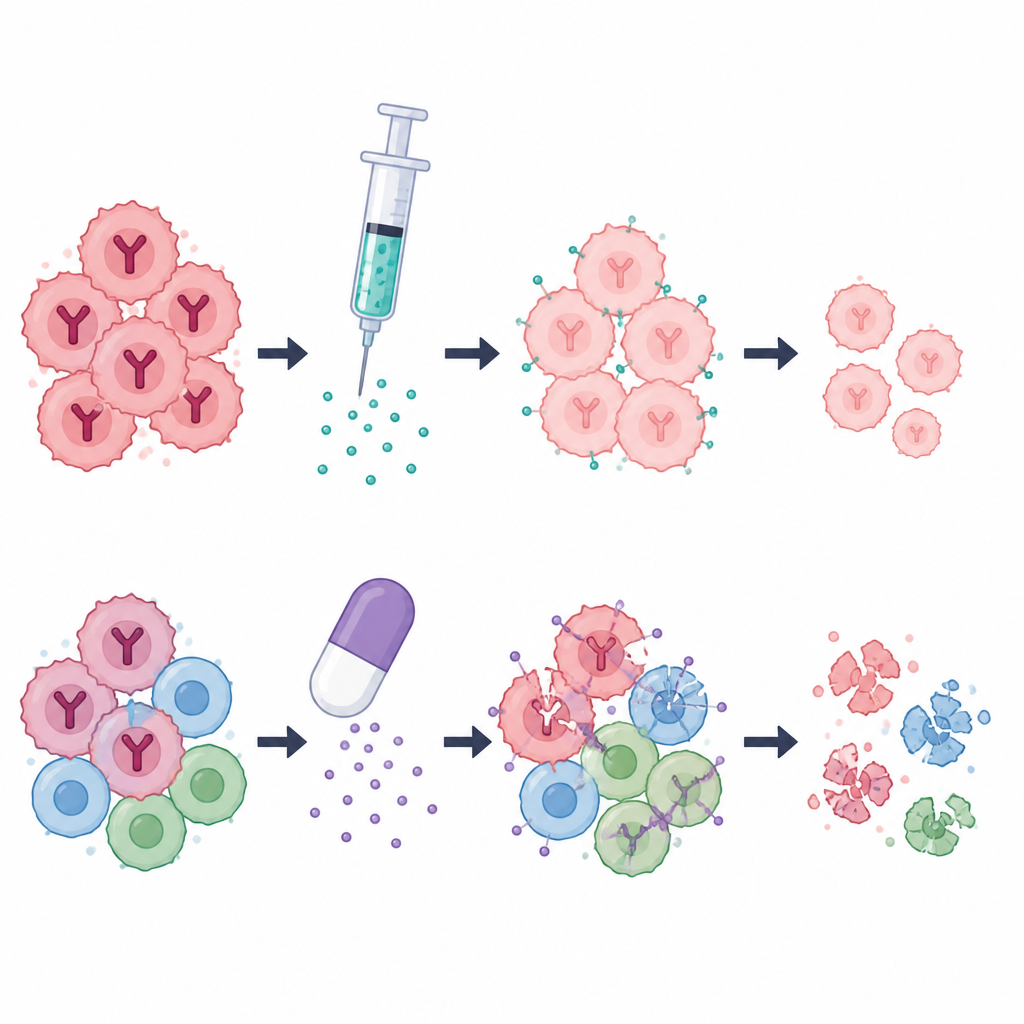
The trial focused on women with the most common type of metastatic breast cancer: tumors that respond to hormones but are HER2‑negative. In many parts of the world, including China where this study was done, these patients often receive chemotherapy first, especially when the cancer is fast‑growing or has spread to vital organs. Once scans showed that the disease had shrunk or at least stopped growing after four to eight cycles of chemotherapy, 210 women were randomly assigned to follow one of two maintenance paths. One group received fulvestrant, a hormone‑blocking injection given about once a month. The other group took capecitabine, an oral chemotherapy pill taken in repeating three‑week cycles.
Which approach held the cancer in check longer
The main measure the researchers watched was how long patients lived without their cancer worsening, a period called progression‑free survival. Over a median follow‑up of almost three years, women given fulvestrant stayed free from disease worsening for a median of 17.3 months, compared with 9.0 months for those taking capecitabine. When the time from the very start of first‑line chemotherapy was counted, women on fulvestrant had a total of 22.2 months before the cancer grew again, versus 14.4 months with capecitabine. This benefit appeared across many different subgroups, including younger and premenopausal women, those with tumors showing certain common markers, and those with disease that doctors judged as clinically aggressive.
Side effects and day‑to‑day life
Keeping cancer under control is only part of the story; the treatment also needs to be bearable over the long term. In this trial, serious side effects were less common with fulvestrant than with capecitabine. Only about 3 percent of women on fulvestrant had severe side effects, compared with about 11 percent on the pill. No one stopped fulvestrant because of side effects, while several women had to stop capecitabine for that reason. The capecitabine group had more problems such as hand‑foot syndrome, in which the palms and soles become red and painful, as well as more blood count changes and liver test abnormalities. The most frequent issue with fulvestrant was discomfort at the injection site, which was usually mild.
What this means where newer drugs are out of reach
International guidelines increasingly favor pairing hormone therapy with newer targeted drugs called CDK4/6 inhibitors, because this combination can control disease for long periods. But these medicines are expensive and not always available, especially in lower‑resource settings. The women in this trial had not received these drugs, reflecting common practice where access is limited. For such settings, the study suggests a practical path: use a limited course of chemotherapy to quickly bring the cancer under control, then switch to fulvestrant to maintain that control while reducing toxicity and clinic time compared with continuous chemotherapy.
Take‑home message for patients and clinicians
For women with hormone‑sensitive, HER2‑negative metastatic breast cancer who respond to first‑line chemotherapy, this large trial shows that moving to fulvestrant injections as maintenance can keep the disease from worsening for noticeably longer than continuing with capecitabine pills, and with fewer serious side effects. Overall survival results are still maturing, and the findings apply most clearly to patients whose tumors remain sensitive to hormone‑based treatment and who have not yet received newer targeted drugs. Even so, the work offers an important option for long‑term control of advanced breast cancer in real‑world settings where access to the latest therapies is limited.
Citation: Wu, W., Yang, Y., Chen, H. et al. Fulvestrant versus capecitabine as maintenance therapy in hormone receptor-positive, HER2-negative metastatic breast cancer after first-line chemotherapy (FAMILY): a multicenter, open-label, randomized, phase 3 trial. Sig Transduct Target Ther 11, 191 (2026). https://doi.org/10.1038/s41392-026-02720-6
Keywords: metastatic breast cancer, fulvestrant, capecitabine, maintenance therapy, hormone receptor positive