Clear Sky Science · en
Total neoadjuvant chemotherapy combined with PD‑1 blockade and IL‑2 in MSS/pMMR locally advanced rectal cancer: short-term results of a prospective, single-arm phase II study
Why this new cancer treatment approach matters
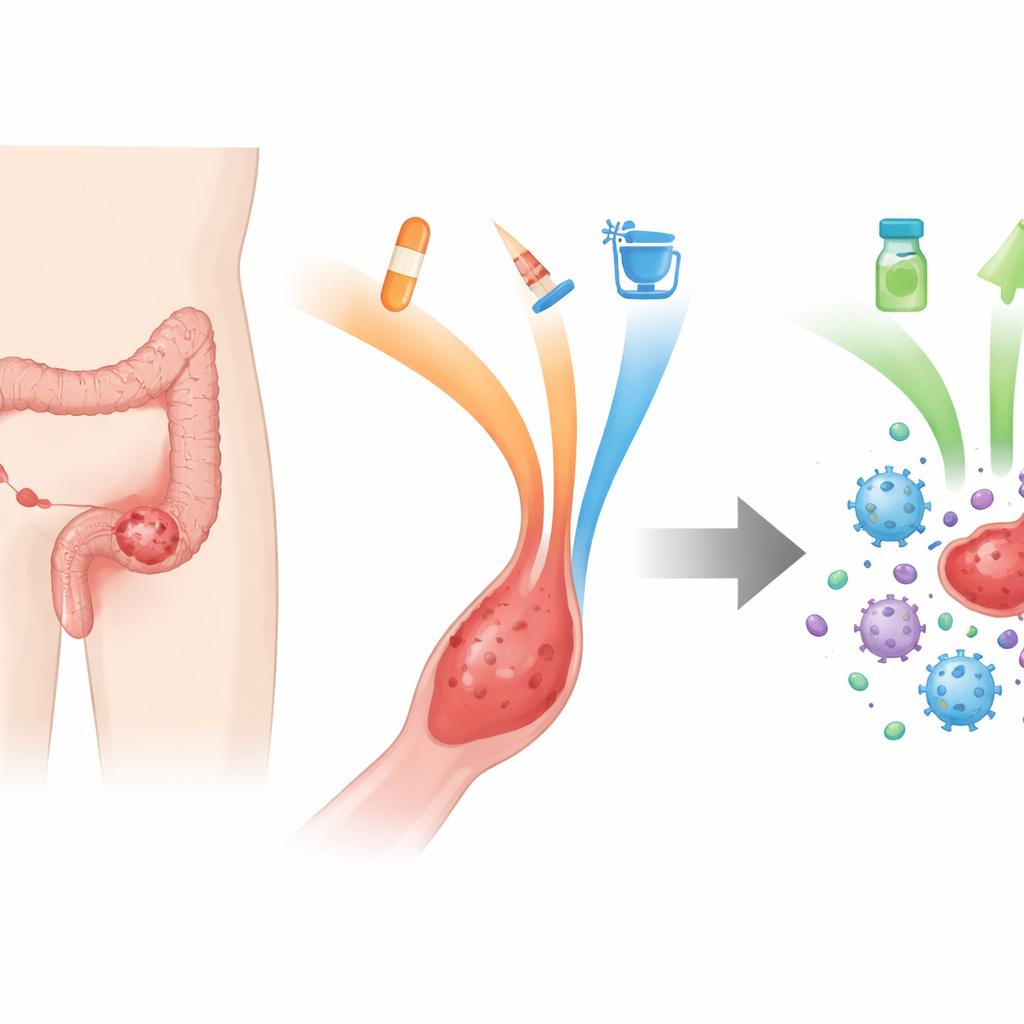
Rectal cancer is common, and for many people the standard path to a cure involves not only intensive chemotherapy and major surgery, but also radiation, which can leave lasting damage to the bowel, bladder, and sexual function. This study tested a different path for a hard-to-treat type of rectal cancer, asking a simple but important question: can we safely skip radiation and instead combine modern immune therapy with chemotherapy to shrink tumors more completely before surgery?
A closer look at a stubborn kind of rectal cancer
The trial focused on locally advanced rectal cancers that have not yet spread to distant organs but are large or deeply invasive. Most of these tumors belong to a subgroup called MSS/pMMR, which usually responds poorly to current immune “checkpoint” drugs when they are used alone. Doctors sometimes call them “cold” tumors because they do not attract many immune cells. The research team wanted to see whether pairing a PD-1 blocking antibody (an immune-unlocking drug) with interleukin-2 (IL-2, an older immune-boosting molecule) and full-dose preoperative chemotherapy could “warm up” these tumors, improving tumor kill without the need for radiotherapy.
What the trial did in real patients
This was a prospective phase II, single-arm study carried out at a single high-volume colorectal cancer center. Thirty-three adults with mid- to low-lying rectal cancers, all confirmed as MSS/pMMR and without distant spread, received six three-week cycles of a regimen known as CapOX (capecitabine plus oxaliplatin) together with the PD-1 antibody sintilimab and injected IL-2. Tumor shrinkage was checked after every two cycles; patients went on to surgery once they had finished treatment or sooner if side effects became too troublesome but the tumor appeared removable. All 33 eventually underwent standard total mesorectal excision, the operation used worldwide to remove rectal tumors with their surrounding tissue.
How well tumors responded and how patients fared
The results were striking for this difficult tumor type. Every patient had the cancer completely removed with clear margins, and 14 of 33 (42.4%) had no living cancer cells left in the removed tissue or lymph nodes—a pathological complete response. Most of the remaining patients still had major tumor shrinkage, and imaging showed the largest tumor dimension falling by a median of about 60%. Early follow-up, out to around two years for many patients, suggested strong disease control: one-year survival without recurrence was 100%, and at two years about 91% of patients remained disease-free, although these survival figures are still based on small numbers.
Side effects, surgery, and what happened inside the tumor
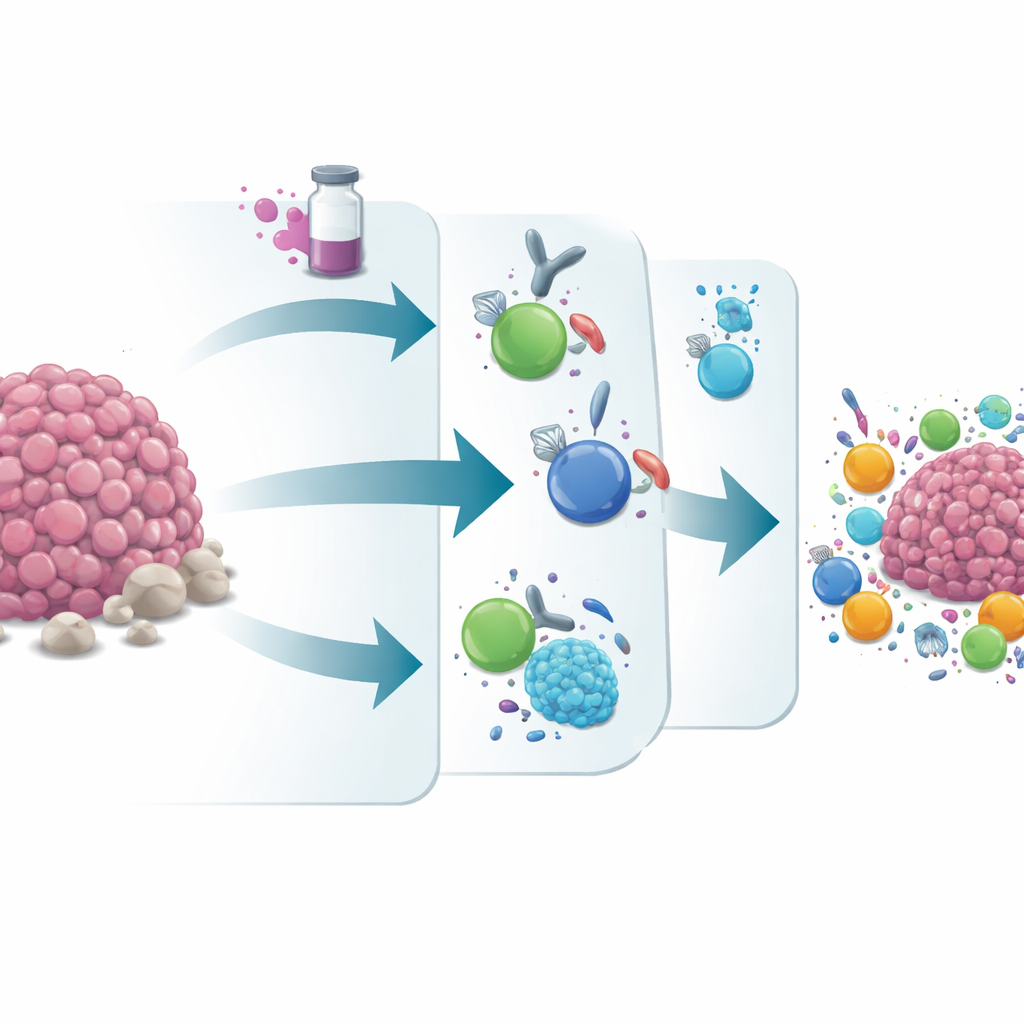
The intensified pre-surgery treatment was not free of discomfort, but its safety profile was manageable. Nearly all patients had some side effects, especially vomiting and diarrhea, but only about one in five had severe (grade 3) problems, and there were no life-threatening or fatal treatment reactions. Surgery itself went smoothly: most patients had minimally invasive operations, sphincter-sparing procedures were possible in the great majority, and there were no serious leaks at the bowel connection, a feared complication. To understand why some tumors vanished completely, the team examined blood and tumor samples. In patients who achieved complete clearance of cancer cells, they found a surge in cancer-fighting immune cells—CD8 T cells, natural killer (NK) cells, and a more active type of macrophage—both in the bloodstream and within the tumor area, accompanied by higher levels of inflammatory signaling molecules.
What this could mean for future care
For people with this common, previously immune-resistant form of rectal cancer, the study offers an encouraging glimpse of a new treatment path: strong chemotherapy plus a carefully chosen immune combination that may allow radiation to be safely omitted in many cases. A complete disappearance of tumor in over four in ten patients, together with good early control of the disease and acceptable side effects, suggests that turning a “cold” rectal tumor “hot” is possible in real-world patients. However, the trial was small, had no comparison group, and follow-up is still short, so this approach is not yet a new standard. Larger randomized studies now underway will need to confirm whether this radiation-sparing strategy truly improves long-term cure rates and quality of life.
Citation: Tang, J., Wang, L., Yang, S. et al. Total neoadjuvant chemotherapy combined with PD‑1 blockade and IL‑2 in MSS/pMMR locally advanced rectal cancer: short-term results of a prospective, single-arm phase II study. Sig Transduct Target Ther 11, 163 (2026). https://doi.org/10.1038/s41392-026-02683-8
Keywords: rectal cancer, immunotherapy, neoadjuvant chemotherapy, PD-1 blockade, interleukin-2