Clear Sky Science · en
Whole brain grey matter synaptic terminal density, age and intellectual functioning in schizophrenia: an in vivo [11C]UCB-J positron emission tomography study
Why this brain study matters
People with schizophrenia often struggle with thinking and memory, and many scientists suspect that tiny connections between brain cells, called synapses, may be involved. This study used a specialized brain scan to look at synapses across the whole brain in living people with schizophrenia and healthy volunteers. It asked two big questions: Are there fewer of these connections in schizophrenia, and do they help explain why some people have lower scores on IQ tests?
Looking at brain connections in living people
Until recently, researchers could only study synapses in detail by examining brain tissue after death. This team used a more advanced method called positron emission tomography (PET) with a tracer that latches onto a protein found in synaptic endings. By tracking how strongly this tracer bound in grey matter, the researchers could estimate overall synaptic terminal density in the brains of 43 people with schizophrenia and 26 healthy volunteers, all between 18 and 65 years old. Everyone also completed standard tests of current IQ and an estimate of their intellectual level before illness, based on how they pronounce irregular words.
Fewer synaptic terminals, but not fewer thinking skills
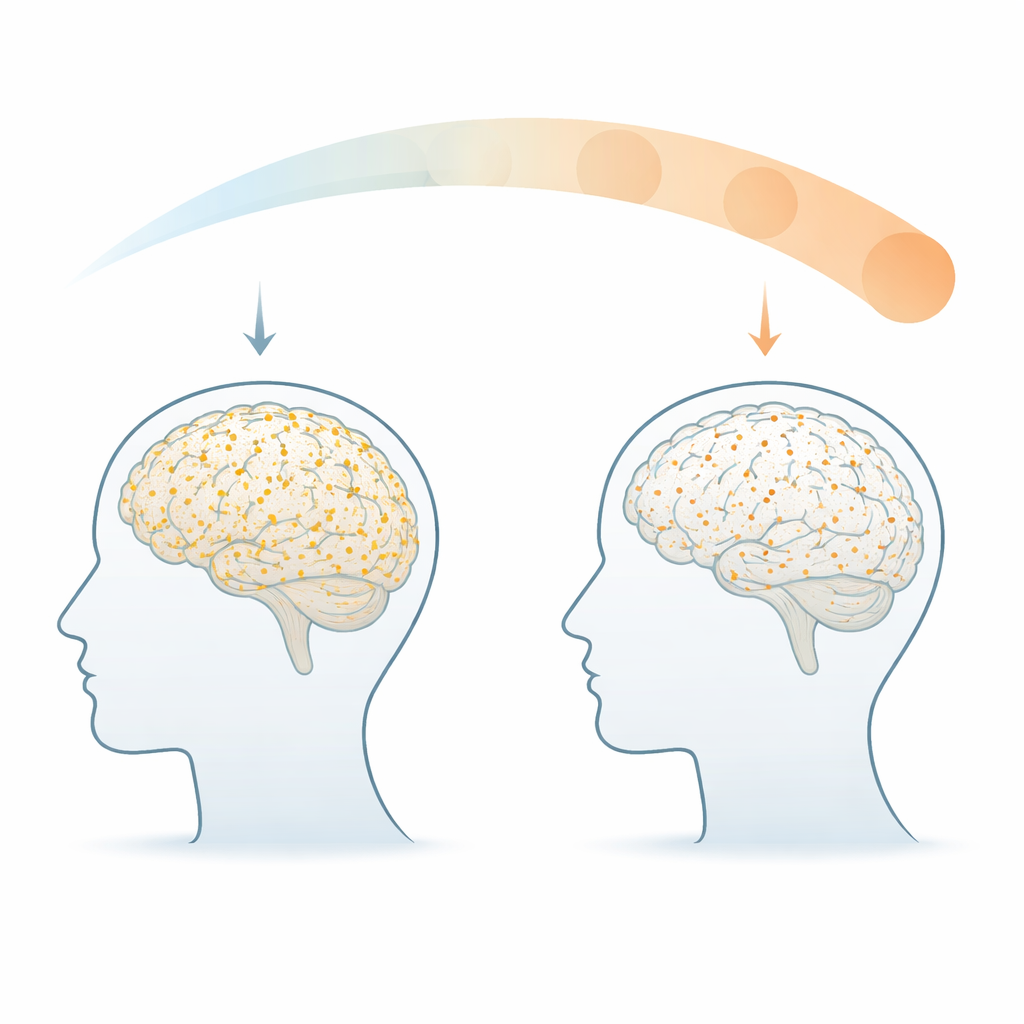
When the researchers compared groups, they found that overall synaptic terminal density in grey matter was lower in people with schizophrenia than in healthy volunteers. This adds to earlier work suggesting that schizophrenia involves a widespread loss or reduction of synapses, rather than changes limited to one or two specific brain regions. As expected from previous large studies, people with schizophrenia also had lower scores on both current IQ and estimated premorbid IQ than healthy volunteers. However, when the team looked for links between synaptic density and intellectual performance across individuals, they found no meaningful relationships. People with more synaptic tracer binding did not systematically score higher on IQ tests, whether they had schizophrenia or not.
How age shapes synapses in all of us
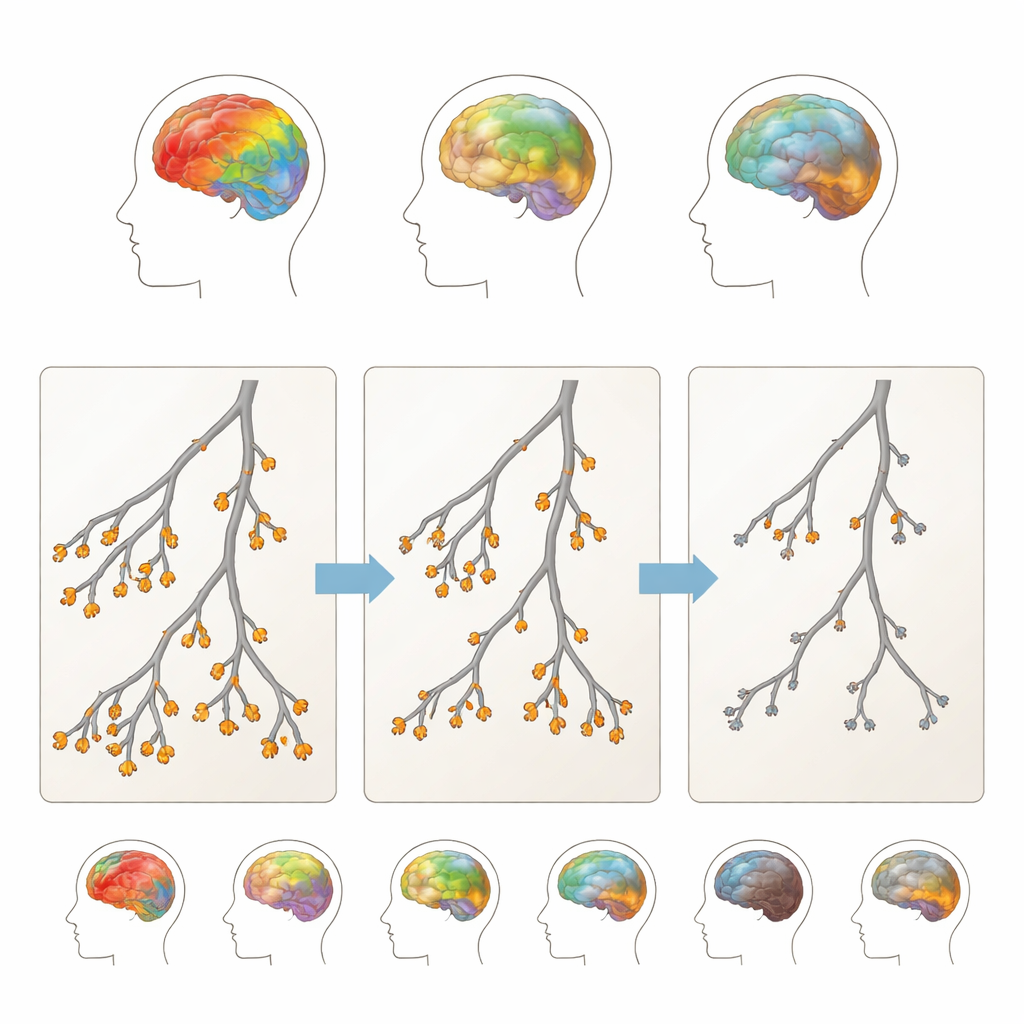
The study also examined how age relates to synaptic density. Across the whole sample, older participants tended to show lower synaptic tracer binding in grey matter, suggesting that the number of synaptic terminals gradually declines with age. This pattern held true when the schizophrenia group and the healthy group were examined separately, and the strength of the age-related decline was similar in both. In other words, people with schizophrenia appear to follow a normal aging pattern in terms of synaptic terminal loss, even though they start from a lower overall level.
What the results say about cognition in schizophrenia
One hope was that reduced synaptic density would help explain why people with schizophrenia often show lower intellectual performance, both before and after illness onset. Yet the absence of any clear link between synaptic terminals and IQ measures suggests that the story is more complex. The researchers considered many possibilities, including medication effects, illness duration, and differences in specific brain regions, but the main result remained: global synaptic terminal density does not track with how well people perform on broad measures of thinking ability.
Rethinking brain changes and thinking problems
For a lay audience, the take-home message is that schizophrenia does seem to involve a global reduction in the tiny contact points between brain cells, and these contacts gradually decrease with age in everyone. But this particular kind of synaptic change does not appear to be the direct cause of lower IQ in schizophrenia. Instead, other features of brain connections—such as how flexible they are, how signals are processed at synapses, or changes in other cell types—may play a larger role in thinking and memory problems. Future imaging tools that can capture different aspects of synaptic function may be needed to fully understand why cognition is affected in schizophrenia.
Citation: Onwordi, E.C., Whitehurst, T., Shatalina, E. et al. Whole brain grey matter synaptic terminal density, age and intellectual functioning in schizophrenia: an in vivo [11C]UCB-J positron emission tomography study. Neuropsychopharmacol. 51, 1023–1031 (2026). https://doi.org/10.1038/s41386-026-02349-7
Keywords: schizophrenia, synaptic density, brain imaging, cognitive function, aging