Clear Sky Science · en
Synergizing hypomethylating agents with off-the-shelf CD70-targeted chimeric antigen receptor-engineered natural killer T cells for the treatment of acute myeloid leukemia
Turning the Body’s Defenses Against a Blood Cancer
Acute myeloid leukemia is a fast-moving blood cancer that is especially deadly in older adults, and many patients cannot tolerate intensive chemotherapy. This study explores a two-part strategy that first “softens up” leukemia cells with existing drugs and then attacks them with a new kind of off-the-shelf immune cell therapy, offering a glimpse of how future treatments might become both stronger and safer.
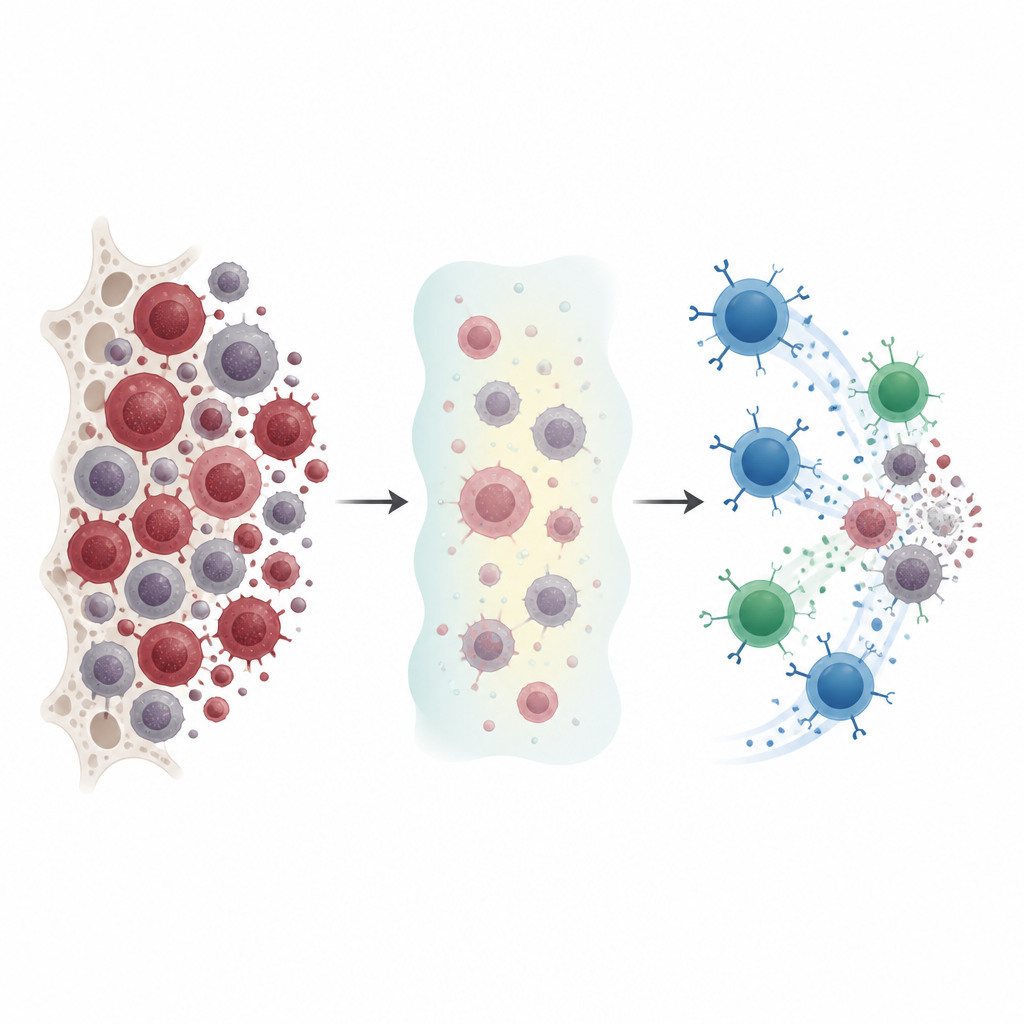
Why Current Treatments Are Not Enough
Doctors often treat acute myeloid leukemia with drugs called hypomethylating agents, which subtly reprogram cancer cells rather than blasting them outright. These medicines can slow the disease and help the immune system notice tumor cells, but remissions are incomplete and many patients relapse. The authors examined how these drugs change the surface of leukemia cells and asked whether those changes could be turned into a weakness that a tailored immune therapy could exploit.
Making Leukemia Cells Easier to Spot
Using leukemia cell lines in dishes and in mice, the researchers found that long-term, low-dose treatment with hypomethylating agents consistently made tumor cells look more “visible” to the immune system. The drugs increased levels of CD70 and CD1d, as well as a group of stress markers that natural killer cells like to attack. Even leukemia cells that started with very little CD70 could be coaxed to display much more of it after drug exposure. In mice, the same drugs both slowed leukemia growth and boosted these immune-visible flags on cancer cells in bone marrow, liver, and lung, suggesting that the treatment reshapes the tumor landscape in living organisms, not just in lab dishes.
Building Off-the-Shelf Smart Killer Cells
To take advantage of this new vulnerability, the team engineered special immune cells called invariant natural killer T cells. One product, called AlloCAR70-NKT, was grown from cord blood stem cells in a stepwise culture system, while a second was made from adult donor blood cells. Both were outfitted with a receptor that recognizes CD70 and were wired to release the growth factor IL-15 to help them persist. The cord-blood–derived cells reached very high purity, showed uniform receptor expression, and could be produced in large numbers from a single donor unit, hinting at a practical path toward frozen, ready-to-use doses for many patients.
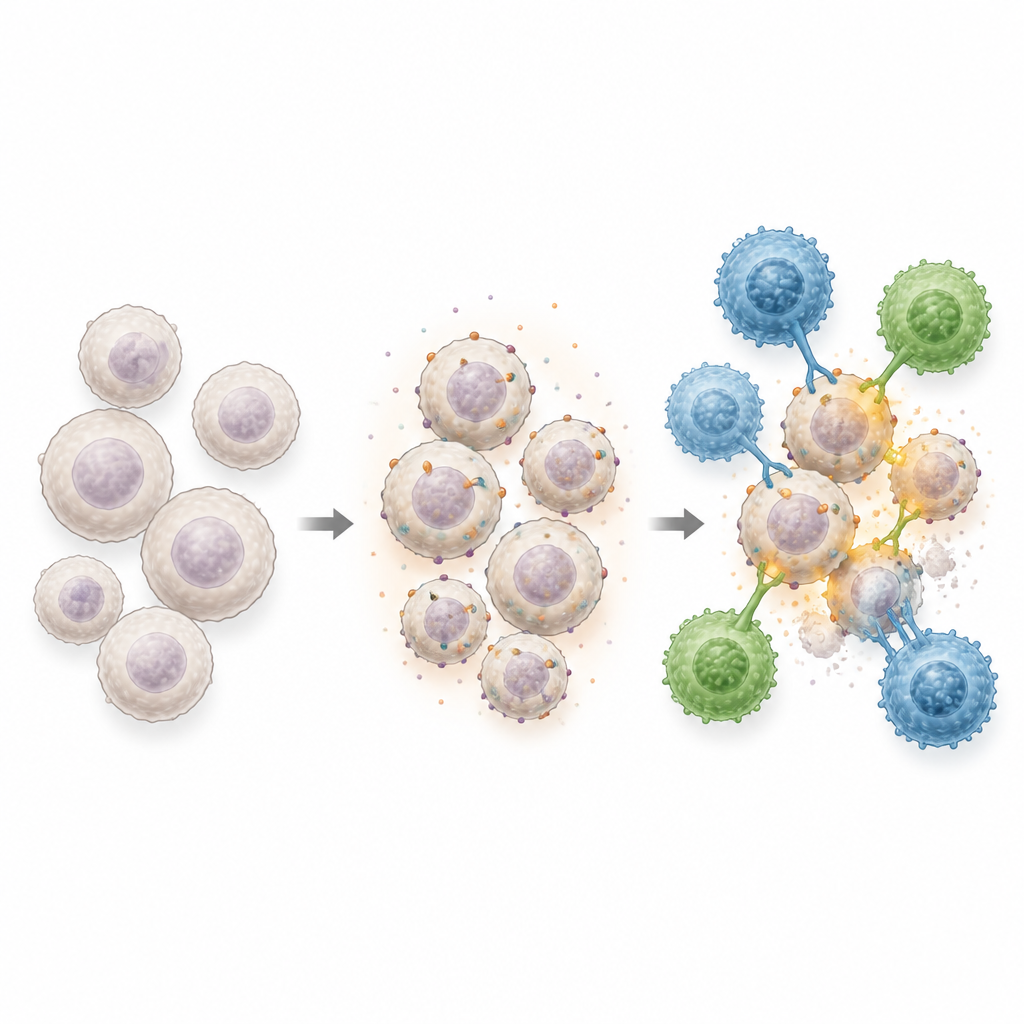
How the Combo Attacks Leukemia
In lab tests, the engineered cells readily killed leukemia cells that displayed CD70 or CD1d, and the cord-blood–derived cells could also attack through natural killer receptors, giving them three separate ways to recognize their targets. When leukemia cells were first primed with hypomethylating drugs, killing became much more efficient across cell types, especially for tumors that initially had little CD70. In mouse models seeded with aggressive leukemia, the combination of drug treatment followed by AlloCAR70-NKT cells wiped out disease, prolonged survival, and drove strong anti-tumor immune activity, even in cases where the engineered cells alone were less effective. Importantly, these engineered cells did not trigger dangerous complications such as graft-versus-host disease or cytokine storms that often limit other cell therapies.
What This Could Mean for Patients
For lay readers, the takeaway is that a familiar class of leukemia drugs can be used to paint clearer targets on cancer cells, while a new, pre-manufactured immune cell product homes in on those targets from several angles. In animals, this one-two punch not only slowed leukemia but, in some settings, cleared it without the severe side effects seen with conventional engineered T cells. While further work in patient samples and clinical trials is needed, the study suggests that pairing hypomethylating drugs with off-the-shelf engineered natural killer T cells could offer a more precise and tolerable treatment option for people with acute myeloid leukemia.
Citation: Li, YR., Shen, X., Chen, Y. et al. Synergizing hypomethylating agents with off-the-shelf CD70-targeted chimeric antigen receptor-engineered natural killer T cells for the treatment of acute myeloid leukemia. Leukemia 40, 880–893 (2026). https://doi.org/10.1038/s41375-026-02930-5
Keywords: acute myeloid leukemia, CAR-NKT cells, CD70, hypomethylating agents, immunotherapy
See more on the researcher's website: https://www.liliyanglab.com/publications/