Clear Sky Science · en
Mutational signature-based classification uncovers emerging oral cancer subtypes with distinct molecular patterns
Why this new picture of oral cancer matters
Oral cancers, especially those arising on the mobile part of the tongue, are increasingly being diagnosed in people who do not smoke, drink heavily, or carry the human papillomavirus (HPV). This challenges the familiar story that tobacco, alcohol, and HPV are the main culprits. The study summarized here digs into the DNA of these tumors to uncover hidden patterns of damage and repair, revealing that a new, previously underappreciated form of oral cancer is emerging, with its own biology and likely its own needs for prevention and treatment.
Looking inside cancer DNA for hidden clues
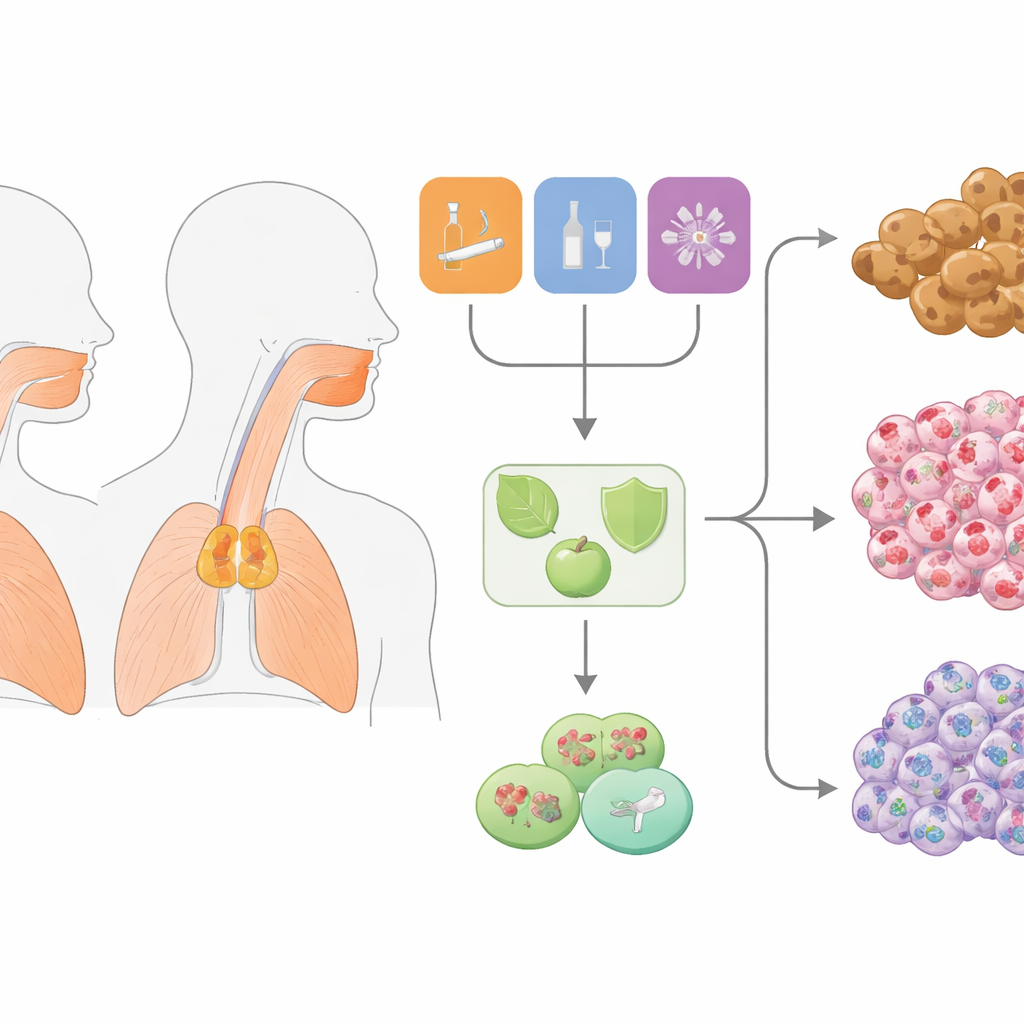
Every cancer cell carries a history of what has damaged its DNA over time. Different causes leave different “fingerprints” in the genome. The researchers analyzed the DNA from 347 head and neck tumors, mainly from the oral cavity and larynx, using public datasets from The Cancer Genome Atlas. Instead of starting from known risk factors, they let the DNA speak for itself. By examining thousands of mutations per tumor, they pulled out recurring patterns, or “mutational signatures,” that reflect whether the damage came from tobacco smoke, alcohol, internal chemical changes, or special DNA-editing enzymes. This unsupervised approach grouped the tumors into four major clusters, each dominated by a particular type of mutational process.
Four DNA-based groups, only some tied to tobacco and alcohol
Two clusters clearly lined up with traditional risk factors. One larynx-enriched group carried strong signatures linked to tobacco smoke, with very high numbers of mutations. Another cluster, found mostly in oral cavity tumors of smokers and drinkers, showed a pattern previously thought to reflect alcohol, but here more convincingly tied to the combined effects of tobacco and alcohol and to specific mouth subsites such as the floor of the mouth. Strikingly, most laryngeal cancers fell into the tobacco-dominated group, while oral cavity cancers were spread across all four clusters. This showed that even when people are exposed to the same external agents, different parts of the head and neck respond with distinct mutational processes and overall damage levels.
A new class of oral cancers without classic risk factors
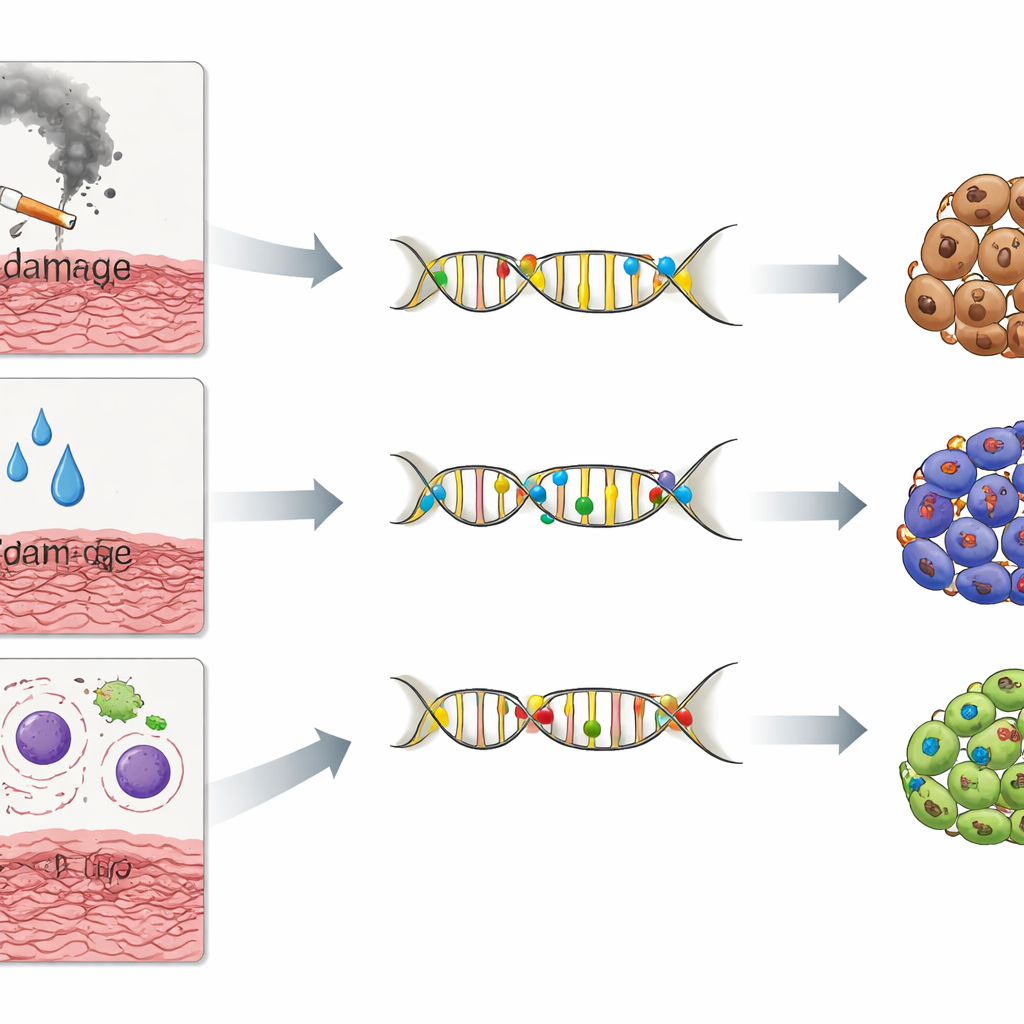
The other two clusters were enriched in patients with no identified risk factors (NIRF): non-smokers, non-drinkers, and HPV-negative. Many of these tumors arose on the mobile tongue, including in younger adults and women. Their DNA did not show strong tobacco- or alcohol-related scars. Instead, one NIRF group had high levels of a slow, “clock-like” mutation process that naturally accumulates over time as cells divide and their methylated DNA bases spontaneously change. The second NIRF group showed that same clock-like pattern plus an extra layer of intense mutagenesis driven by APOBEC enzymes—cellular proteins that normally help defend against viruses and other threats but can also misfire and damage the cell’s own DNA.
Immune escape, microbes, and altered tissue behavior
Beyond mutations, these NIRF tumors carried distinctive changes in cancer driver genes and in the way genes were switched on or off. Genes involved in presenting tumor fragments to the immune system and in triggering cell death were frequently altered, pointing to sophisticated immune evasion. DNA methylation patterns in these clusters resembled those of non-smokers, reinforcing that tobacco was not the main driver. At the same time, gene activity linked to skin-like differentiation and keratin production was boosted, and pathways associated with antimicrobial defense and responses to bacterial components, including lipopolysaccharide, were strongly activated. When the researchers examined two tongue tumors under the microscope, they saw high levels of keratin proteins, antimicrobial markers, and signals suggesting bacterial material within the tumor regions, supporting a link between tissue changes, microbes, and local immune responses.
What this means for patients and future care
In plain terms, this work shows that a growing subset of oral cancers arises without smoking, heavy drinking, or HPV, and is instead shaped by internal DNA damage processes and by how the mouth’s lining and immune system respond to microbial challenges. These NIRF tumors form a molecularly distinct entity with unique patterns of immune escape, DNA damage, and tissue behavior. Recognizing them as a separate group matters: they may not respond as well to current immune therapies that rely on intact antigen presentation, but could be vulnerable to drugs that target replication stress or specific epigenetic changes. The findings also highlight the need to uncover environmental or biological triggers beyond tobacco and alcohol—such as chronic irritation, microbiome shifts, or subtle immune disturbances—to better prevent, detect, and treat this emerging form of oral cancer.
Citation: Deneuve, S., Fervers, B., Bruno, J.S. et al. Mutational signature-based classification uncovers emerging oral cancer subtypes with distinct molecular patterns. Int J Oral Sci 18, 38 (2026). https://doi.org/10.1038/s41368-026-00437-4
Keywords: oral tongue cancer, mutational signatures, non-smoker non-drinker cancer, head and neck squamous cell carcinoma, tumor microbiome