Clear Sky Science · en
Metabolic syndrome in Australia: nationwide survey results by remoteness and Indigenous status, 2012–2019
Why this matters to everyday Australians
More and more Australians are living with a dangerous cluster of health problems often tied to excess weight around the waist. This cluster, known as metabolic syndrome, quietly raises the risk of heart disease, stroke, kidney trouble, and type 2 diabetes. The study in this article looks across the country to see who is most affected, how that has changed over time, and how place and Indigenous status shape the burden, offering vital clues for where prevention efforts are most urgently needed.
The health risk hiding in plain sight
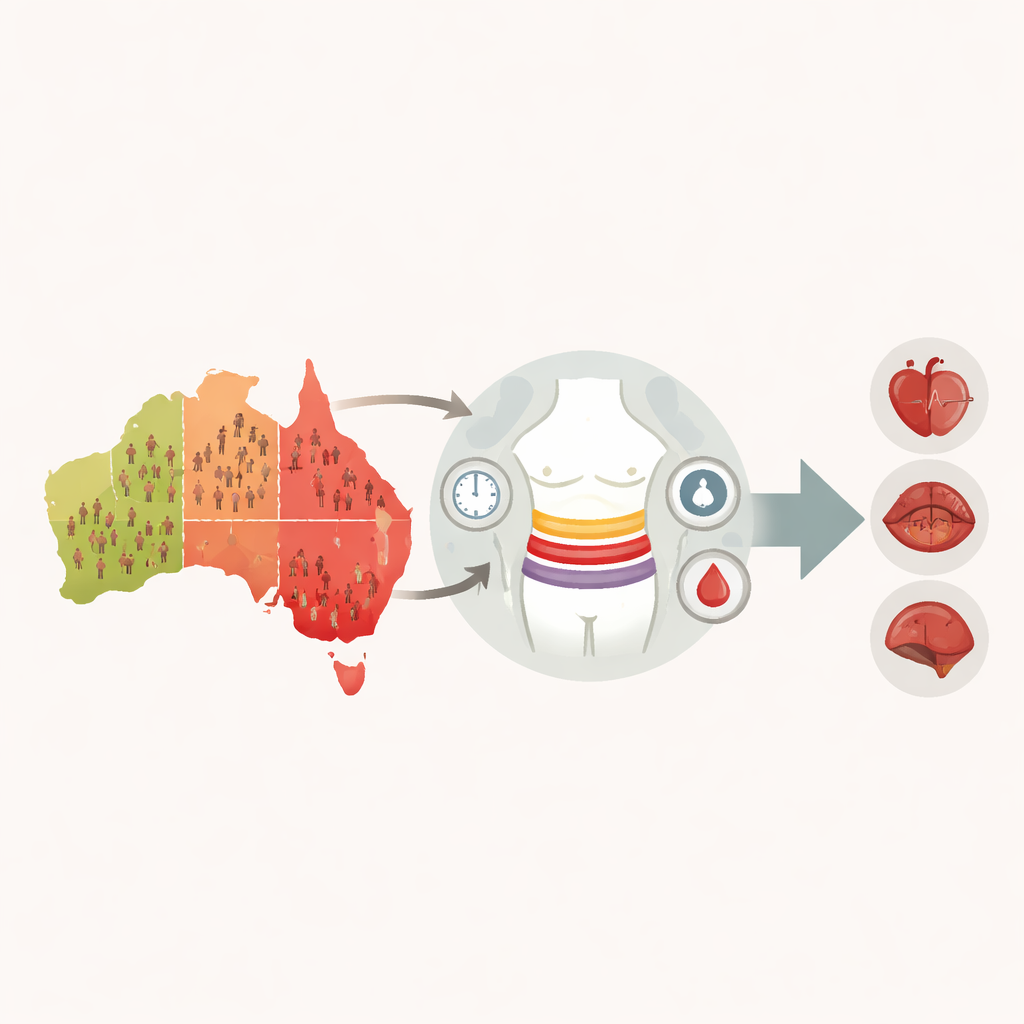
Metabolic syndrome is not a single disease but a combination of issues that tend to occur together: large waistline, high blood pressure, high blood sugar, and unhealthy blood fats. Having several of these at once greatly increases the chance of serious illness later in life. Globally, about one in four adults is affected, and Australia is no exception. The authors used large, national health surveys conducted between 2012 and 2019 to estimate how common this cluster is among adults and how it differs between Indigenous and non-Indigenous Australians and between city, regional, and remote areas.
Taking the pulse of a nation
The research team analysed data from nearly 45,000 adults drawn from two major Australian Bureau of Statistics surveys: the National Health Survey, covering the general population, and the National Aboriginal and Torres Strait Islander Health Survey, focusing specifically on Indigenous communities. Together, these surveys provided information on waist circumference, blood pressure, diabetes, and high cholesterol, along with where people live. Using these measurements, the authors counted how many adults met the definition of metabolic syndrome and then compared results over time and across four levels of remoteness: major cities, inner regional, outer regional, and remote areas.
Who is most affected, and where?
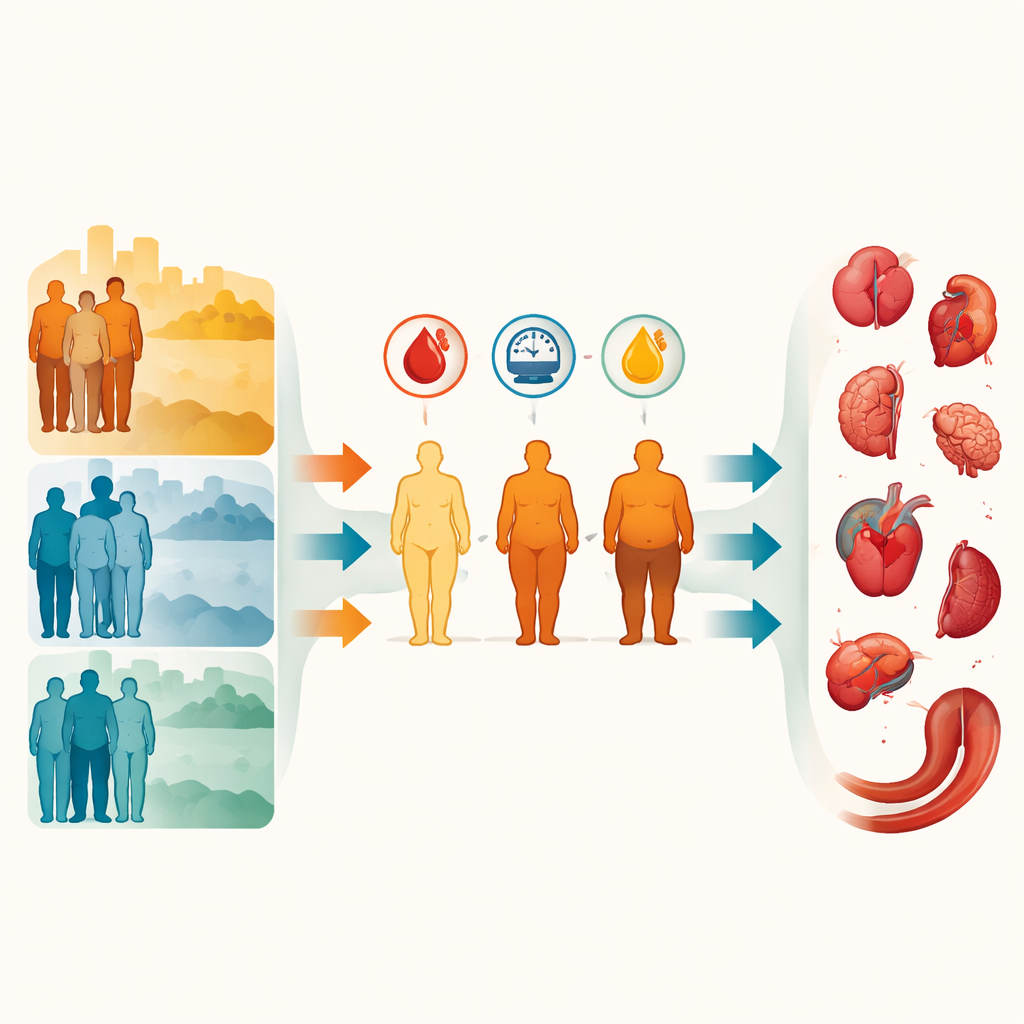
In the most recent survey years, metabolic syndrome affected 7.1% of Indigenous adults and 4.6% of non-Indigenous adults. Central obesity was by far the most common problem in both groups, affecting more than half of Indigenous adults and about two in five non-Indigenous adults. Indigenous adults also had about double the rate of diagnosed type 2 diabetes compared with non-Indigenous adults, while high cholesterol was less common. For non-Indigenous adults, high blood pressure and high cholesterol were more prominent contributors, especially in regional areas. Across both populations, people living outside major cities—particularly in regional and remote areas—had higher rates of metabolic syndrome and its risk factors than city dwellers.
Gaps that are growing over time
Trends over the seven-year period tell a worrying story about widening inequalities. Among non-Indigenous adults overall, the share with metabolic syndrome declined slightly, thanks largely to improvements in cholesterol and blood pressure control, even though central obesity crept upward. Yet this improvement was not shared evenly: in remote non-Indigenous communities, metabolic syndrome actually rose sharply. Among Indigenous adults, the pattern was reversed. Their overall rates of metabolic syndrome climbed, particularly in major cities and inner regional areas, driven by rising central obesity, high blood pressure, and high cholesterol. Remote Indigenous communities already had very high levels of obesity and diabetes, which remained largely stable but still far above those seen in cities.
Why place and history shape the numbers
The authors argue that these patterns cannot be explained by personal choices alone. Indigenous Australians face long-standing disadvantages rooted in colonisation, disrupted food systems, and reduced access to affordable healthy food, safe housing, and culturally safe health care. Many remote and regional communities, both Indigenous and non-Indigenous, struggle with high food prices, limited fresh produce, fewer health services, and unstable health workforces. These conditions make it far harder to maintain a healthy weight, be physically active, and manage conditions like diabetes and high blood pressure. At the same time, increased screening in Indigenous communities has likely uncovered more previously hidden cases, adding to the recorded burden.
What needs to change
The study concludes that metabolic syndrome in Australia is not evenly spread: Indigenous Australians and people living in regional and remote areas carry the heaviest load. While some gains have been made for non-Indigenous adults overall, these have bypassed many communities and have not narrowed the gap. The authors call for region-specific, culturally grounded strategies that focus on reducing central obesity and improving control of diabetes and blood pressure. They highlight the pivotal role of Local Health Districts and Aboriginal Community Controlled Health Organisations in co-designing programs that improve access to nutritious food, support physical activity, and ensure regular follow-up care. In simple terms, tackling this quiet but serious health threat will require meeting communities where they live and working with them to address both medical needs and the everyday conditions that shape health.
Citation: Mondal, U.K., Huda, M.M., Anyasodor, A.E. et al. Metabolic syndrome in Australia: nationwide survey results by remoteness and Indigenous status, 2012–2019. Int J Obes 50, 840–849 (2026). https://doi.org/10.1038/s41366-025-02013-y
Keywords: metabolic syndrome, Indigenous health, rural and remote Australia, central obesity, type 2 diabetes