Clear Sky Science · en
Analysis of Roman chamber pots to understand the health of the lower Danube inhabitants
What Ancient Toilets Reveal About Everyday Health
For most of history, ordinary people left few written traces of their daily lives. Yet one very humble object survives in surprising numbers: the chamber pot. This study turns those pots into time capsules, using modern lab tools to read traces of urine and feces from Roman homes along the Lower Danube. By doing so, it uncovers what kinds of gut infections plagued people living in what is now Bulgaria nearly 1,800 years ago—and how water, food, and hygiene shaped their health.
Looking for Clues in Forgotten Corners
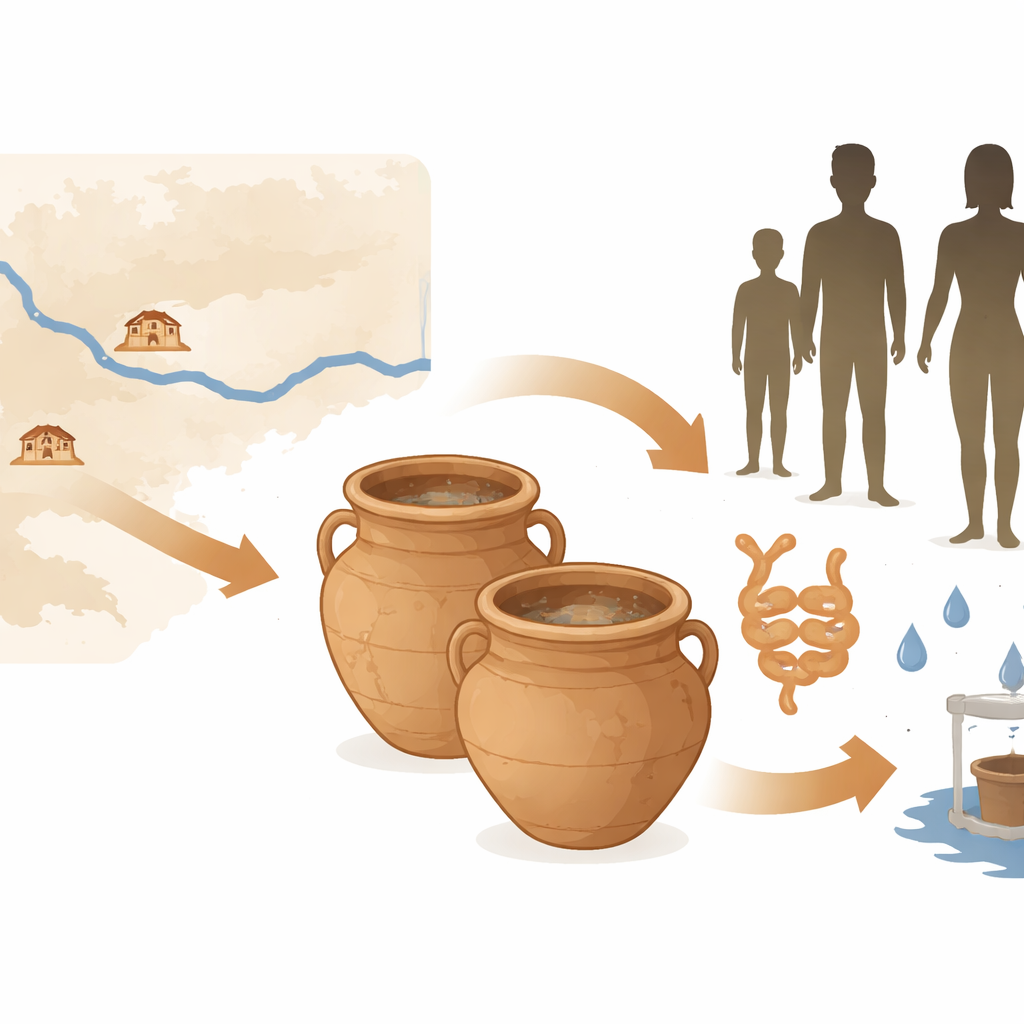
The research focuses on the Roman province of Moesia Inferior, a frontier region along the Danube River that has left few detailed written accounts of everyday life. Archaeologists recovered four ceramic chamber pots from a villa outside the legionary camp of Novae and from a pottery workshop in the city of Marcianopolis, dating from the 2nd to 4th centuries CE. Unlike open sewers or rubbish pits, these indoor pots were used only by people, not animals, and often by a small household group. This makes any parasite remains found inside a much more direct window onto human health, diet, and sanitary habits in specific homes rather than in whole cities.
Turning Mineral Crust into Medical Evidence
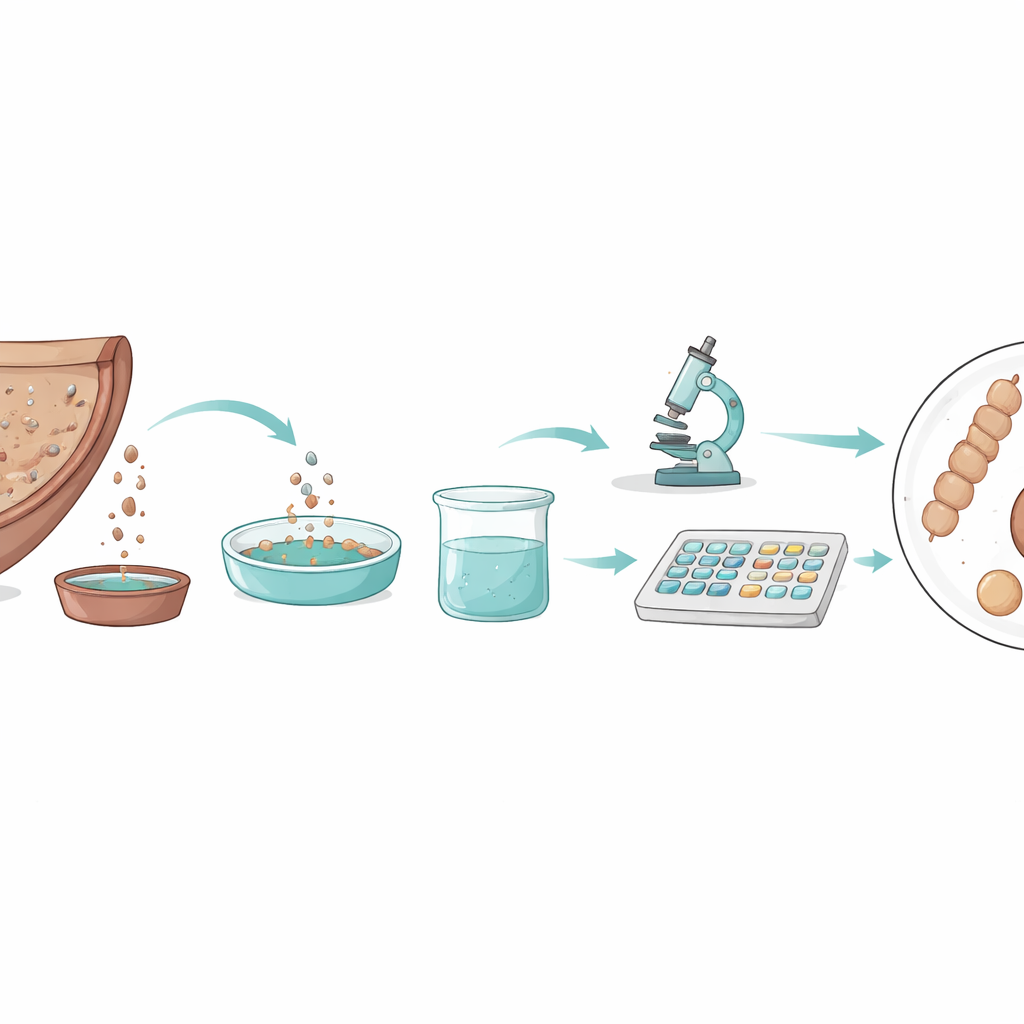
Over the centuries, residues of urine and feces on the inner walls of the pots hardened into thin mineral layers. The team carefully scraped these crusts and dissolved them in special solutions to free any microscopic remains. They then examined the samples in three ways: by microscope to look for worm eggs, by attempting to recover ancient DNA, and by using highly sensitive antibody-based tests (ELISA) that can detect telltale molecules from tiny single-celled parasites. Working under very sterile conditions helped ensure that any parasites identified really did come from Roman users, not from modern contamination.
Parasites Hiding in Plain Sight
The lab tests revealed a striking pattern. In one pot from the Novae villa, researchers found an egg of Taenia, a tapeworm passed to humans through undercooked beef or pork. The same pot, along with another from the villa, also yielded clear signals of two microscopic protozoa: Entamoeba histolytica, which can cause severe dysentery, and Cryptosporidium parvum, a waterborne parasite notorious today for causing diarrheal outbreaks. All three infections appeared in samples from the villa’s pots dating to the 2nd century CE, suggesting that at least some residents were coping with repeated bouts of intestinal illness. In contrast, the chamber pot from the Marcianopolis workshop showed no detectable parasites, hinting at cleaner water, different food habits, or simply the absence of fecal deposits in that particular vessel.
Water, Food, and the Roman Way of Life
By pairing these microscopic findings with what is known about local buildings and infrastructure, the study sketches a plausible chain of infection. The villa outside Novae drew its water from an aqueduct feeding a reservoir near the Danube. Heavy rains and flooding could have driven sewage from sewers and fields back into this supply, especially when human waste was deliberately spread on farmland as fertilizer. Cattle and pigs grazing or drinking in contaminated areas could then carry larval tapeworms back into the human food chain through meat, while parasites like Entamoeba and Cryptosporidium spread directly through drinking water and unwashed produce. The people most likely to use chamber pots—children, the elderly, and the infirm—would also have been the most vulnerable to prolonged or severe disease.
Why These Old Pots Matter Today
In simple terms, the study shows that even in a well-organized Roman military community, with aqueducts and planned streets, ordinary people still faced a constant burden of gut infections spread by unsafe water and food. The discovery of Cryptosporidium in particular is among the earliest solid evidence for this parasite in the Mediterranean, reshaping ideas about where and when it emerged. More broadly, the work demonstrates that the thin mineral films inside household chamber pots are powerful archives of past health—preserving traces of dysentery-causing microbes better than many sewer deposits. By reading these traces, scientists can rebuild a more intimate picture of how ancient people lived, what they ate, and how their environment quietly shaped their wellbeing.
Citation: Klenina, E., Biernacki, A.B., Welc-Falęciak, R. et al. Analysis of Roman chamber pots to understand the health of the lower Danube inhabitants. npj Herit. Sci. 14, 206 (2026). https://doi.org/10.1038/s40494-026-02475-x
Keywords: Roman health, ancient parasites, paleoparasitology, sanitation history, Lower Danube archaeology