Clear Sky Science · en
Attentional impulsivity, short-form video use and adolescents’ school misbehaviors: mediating role of parental media mediation
Why this study matters for families
Short video apps have become a favorite pastime for many teenagers, but parents and teachers often worry about what constant scrolling might mean for attention in class and behavior at school. This study looks at how teens’ difficulty focusing, their use of short videos, and the way parents guide media use all connect to misbehavior at school, offering clues about how families and schools can respond.
Short videos, quick rewards, and restless attention
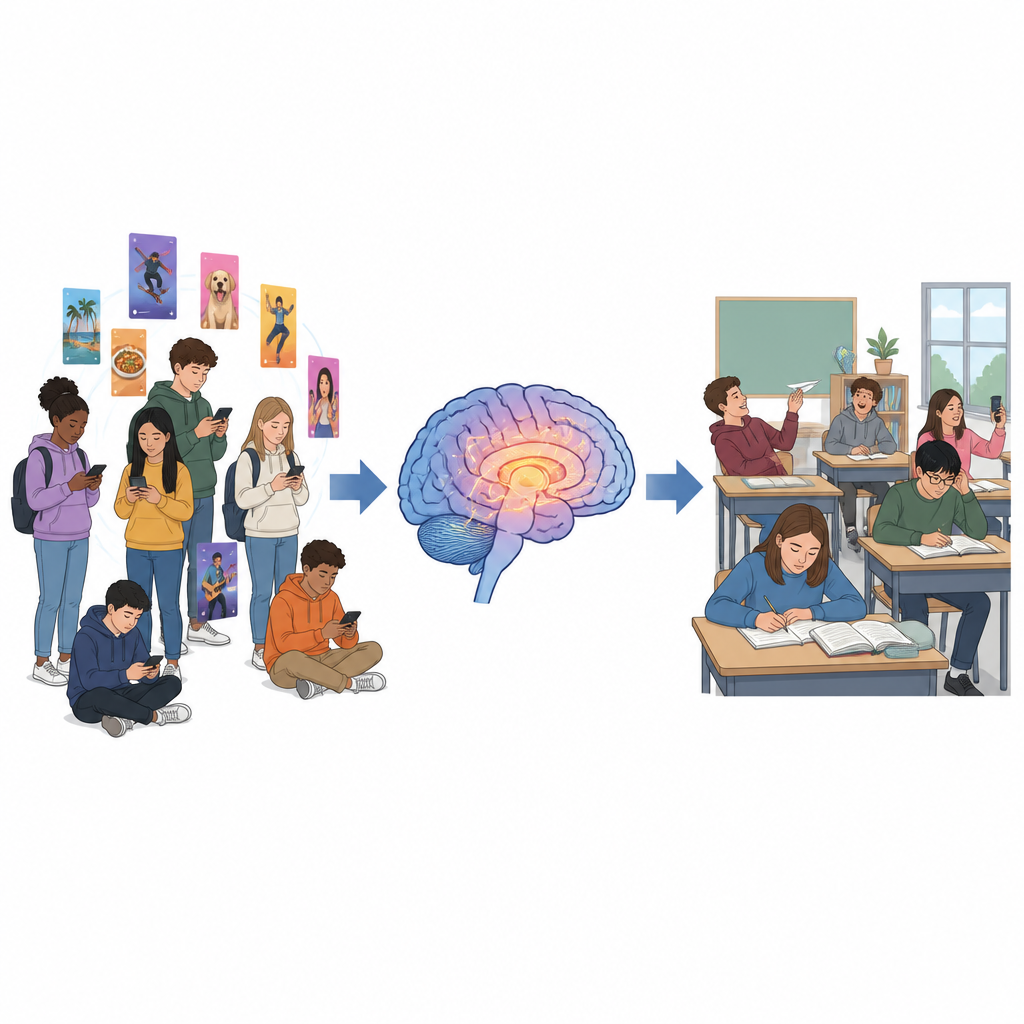
Platforms that stream very short clips, such as TikTok-style apps, are designed to deliver rapid bursts of entertainment chosen by powerful recommendation systems. Teens can watch clip after clip with little effort, receiving instant rewards in the form of funny, exciting, or emotionally charged content. The authors argue that this pattern fits especially well with a trait called attentional impulsivity, meaning trouble staying focused and resisting distractions. When the brain is drawn to immediate rewards, endlessly refreshing videos can make it even harder for teens to pull away and concentrate on longer, more demanding tasks like schoolwork.
How attention and screen time relate to school conduct
The researchers surveyed 839 adolescents in mainland China who had used short-form video apps in the previous six months. They asked teens how long they spent on short videos during weekdays and weekends, how often they engaged in different types of school misbehavior, and how strongly they agreed with statements reflecting attentional impulsivity. Using statistical models that account for factors such as self-esteem, social media habits, age, and gender, the study found that teens with higher attentional impulsivity tended to spend more time on short videos. Both greater attentional impulsivity and heavier short video use were, in turn, linked to higher levels of misbehavior at school, including teasing classmates, talking back to teachers, and breaking classroom rules.
The special role of parents’ media guidance
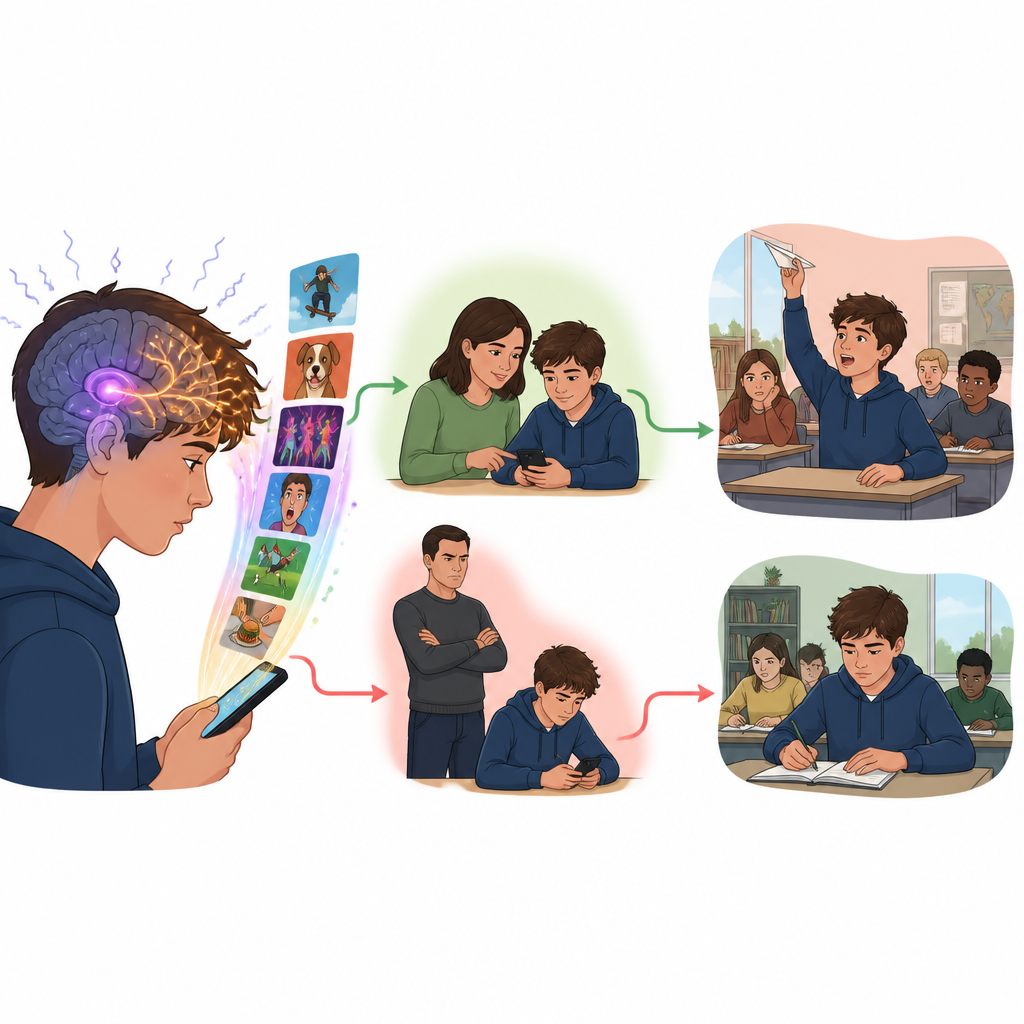
To understand what parents might do to help, the study focused on two common approaches. Active parental mediation involves talking with children about what they see online, guiding them through difficult situations, and helping them think critically about digital content. Restrictive mediation focuses on setting rules, checking devices, and limiting access or time. The researchers found that active mediation, but not restrictive mediation, softened the connection between attentional impulsivity and school misbehavior. In other words, when parents regularly discussed online experiences and supported their children’s media use, teens with attention problems were somewhat less likely to act out at school than similar peers whose parents were less engaged in this way.
Teen traits, family dynamics, and digital life
The study also uncovered patterns that help explain which teens might be most vulnerable. Poor self-esteem was related to higher attentional impulsivity, less active parental guidance, and slightly more misbehavior. Teens who felt emotionally attached to social media and wove it into their daily routines tended to show more impulsivity, greater short video use, and more school problems. Older adolescents reported more impulsivity and screen time but experienced less restrictive control from parents, while boys were more likely than girls to receive strict rules and to misbehave at school. These findings suggest that digital behavior cannot be separated from teens’ emotions, peer relationships, and family circumstances.
What the findings mean for everyday life
For parents, teachers, and policymakers, the message is not that short videos automatically cause bad behavior, but that heavy use of such apps can feed into existing attention difficulties and raise the odds of trouble at school. The study points to active, conversation-based parental involvement as a practical way to buffer these risks, especially for teens who already struggle to focus. Helping young people build self-esteem, self-control, and healthier digital habits may reduce both excessive short video use and school misbehavior, even as more research is needed to untangle cause and effect over time.
Citation: Li, L., Jia, C.X. Attentional impulsivity, short-form video use and adolescents’ school misbehaviors: mediating role of parental media mediation. Humanit Soc Sci Commun 13, 729 (2026). https://doi.org/10.1057/s41599-026-07133-y
Keywords: short-form video use, adolescent behavior, attentional impulsivity, parental mediation, school misbehavior