Clear Sky Science · en
Extraterritoriality and Western perceptions of Chinese commercial law: Mixed Court cases in George Jamieson’s translation of the Great Qing Code
How a Foreign Court Changed Ideas About Chinese Business Law
In the late 1800s, foreigners in China could be tried under their home-country laws rather than Chinese law. This arrangement, called extraterritoriality, was meant to protect Westerners, but it also quietly reshaped how Western observers understood Chinese law. This article looks closely at one key figure, British diplomat George Jamieson, to show how his work with a special court in Shanghai influenced Western views of Chinese commercial rules and even tried to steer China’s own legal reforms.
Law, Trade, and Power in a Port City
The study begins by placing Jamieson in the wider world of nineteenth-century empire and trade. Western governments often described Chinese law as harsh, backward, or unreliable in order to justify keeping their own courts in Chinese territory. Over time, this negative picture both supported and was reinforced by extraterritorial privileges. Yet opinions were not all one-sided. As foreign powers settled into the treaty ports, some Western observers became more interested in how Chinese civil and commercial disputes were actually handled. Shanghai, a booming coastal city where Chinese and foreign merchants did business every day, became a key testing ground for these legal encounters.
A Translator Who Looked Beyond the Law Book
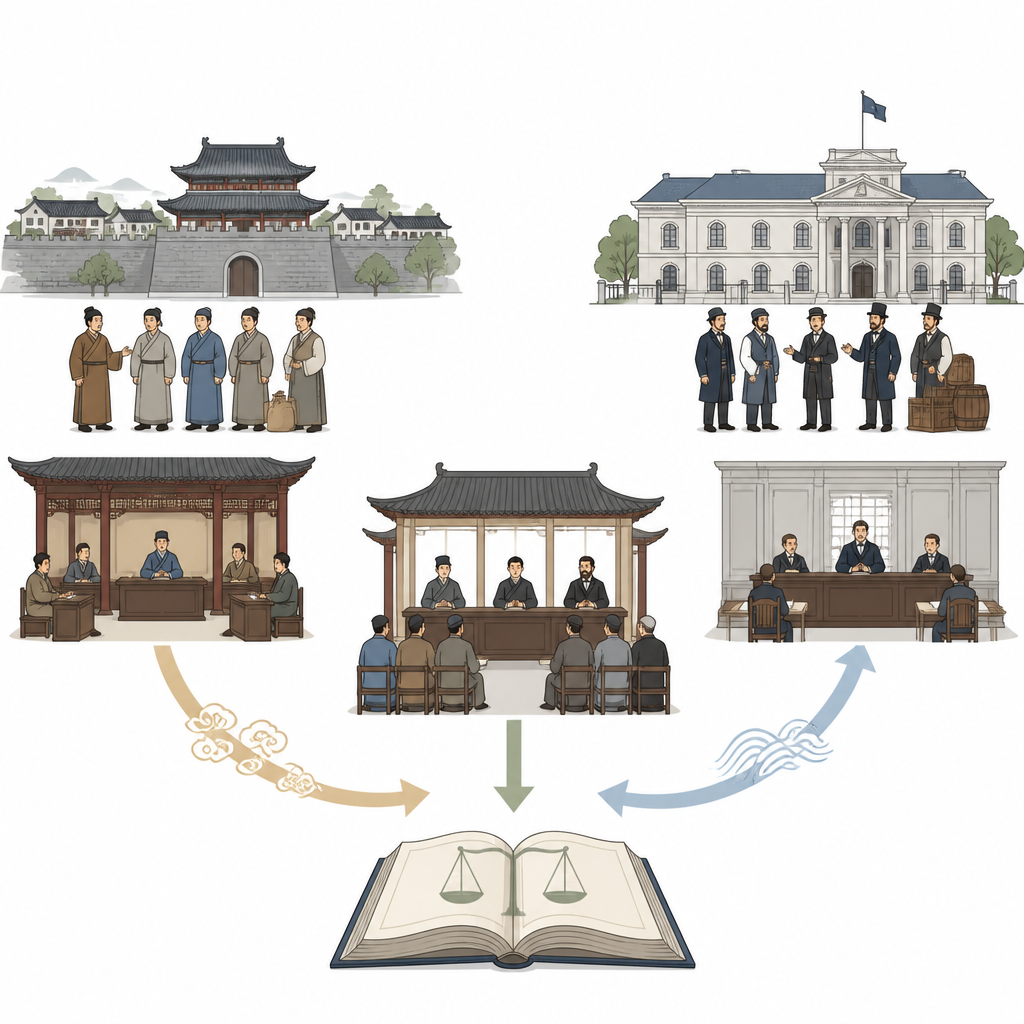
George Jamieson, a British consul who worked in several Chinese cities and later became Consul General in Shanghai, produced the second English translation of the Great Qing Code, the main law code of the Qing dynasty. Unlike earlier translators, he was troubled by how little the written code said about daily business practice. Official collections of court decisions focused on crimes and punishments rather than trade. Finding it “hopeless” to build a complete picture of commercial law from statutes alone, Jamieson turned instead to living practice: the customs that governed real business dealings in Shanghai, especially those revealed in cases from the city’s International Mixed Court.
Customs on Trial in the Mixed Court
The Mixed Court handled disputes involving Chinese residents in the foreign-run part of Shanghai, sometimes with both Chinese and foreign parties in the same case. Formally, it applied Chinese law, but foreign consuls sat alongside Chinese magistrates and brought their own legal habits into the courtroom. Jamieson, trained in English law because consuls needed legal skills to run extraterritorial courts, had been taught to treat long-standing custom as a key source of law. This background led him to pay close attention to trade customs that surfaced in Mixed Court cases, such as how merchants handled short-weight goods or verbal agreements. He watched Chinese and foreign participants argue over whether certain practices were honest custom or outright fraud, and he saw how assessors and magistrates sometimes reached different conclusions about the same facts.
Blending Local Practice with Western Rules
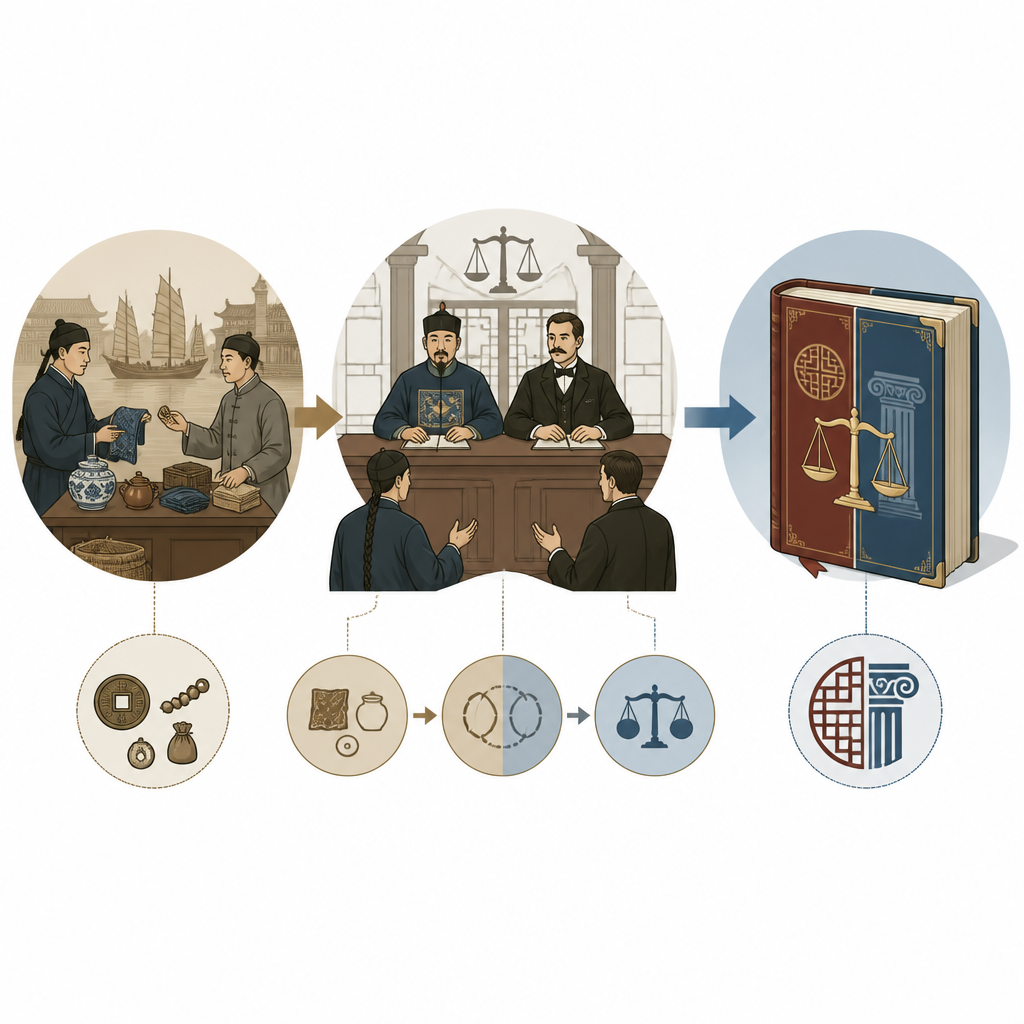
The article shows that Jamieson did more than simply report Chinese customs; he also highlighted how Western legal ideas were being woven into them. For example, some foreign assessors tried to introduce English-style rules that favored written contracts and deposits, even though Shanghai traders were used to relying on trust and spoken promises. In some cases, the court upheld a verbal agreement as binding; in others, it rejected such deals by quietly following English standards. Jamieson praised these Western-inspired changes as making trade more secure over the long term, yet he also admitted that rigidly applying English rules could clash with local practice and cause unfair results.
Trying to Guide China’s New Laws
When Jamieson gathered his translations and case notes into a book in 1921, China had overthrown the Qing dynasty and was drafting new civil laws. He clearly hoped his work would help Chinese lawmakers and students. By presenting Shanghai customs as already reshaped by Western thinking, he offered them as a model for a future national commercial law that combined local traditions with foreign principles. The article argues that this effort reveals a deeper pattern: extraterritorial courts were not just a backdrop to Western writing about Chinese law; they were active sites where law was interpreted, contested, and refashioned. Through Jamieson’s eyes, we see how power, trade, and translation together produced a new, hybrid picture of Chinese commercial law that would influence debates well into the Republican era.
Why This History Still Matters
In closing, the article suggests that understanding Jamieson’s work helps us see how legal systems are shaped by cross-border contact and unequal power. What counted as “Chinese law” in Western eyes did not come only from official codes, but from ports, newspapers, courtrooms, and personal careers built within an imperial order. Extraterritoriality, the right of foreigners to live under their own laws abroad, emerges here as a force that actively molded both Western perceptions and elements of China’s later legal reforms.
Citation: Liu, R. Extraterritoriality and Western perceptions of Chinese commercial law: Mixed Court cases in George Jamieson’s translation of the Great Qing Code. Humanit Soc Sci Commun 13, 671 (2026). https://doi.org/10.1057/s41599-026-07040-2
Keywords: Chinese commercial law, extraterritoriality, Shanghai Mixed Court, legal translation, Qing dynasty