Clear Sky Science · en
How can rural agriculture-industry-services integration help narrow the urban-rural income gap? Evidence from China
Why this matters for town and country
Across the world, people worry about the growing gap between city and countryside. This study looks at one country sized experiment in China, where researchers followed how linking farming, rural factories and local services can help villages catch up with cities in terms of income and opportunity.
Connecting fields, workshops and services
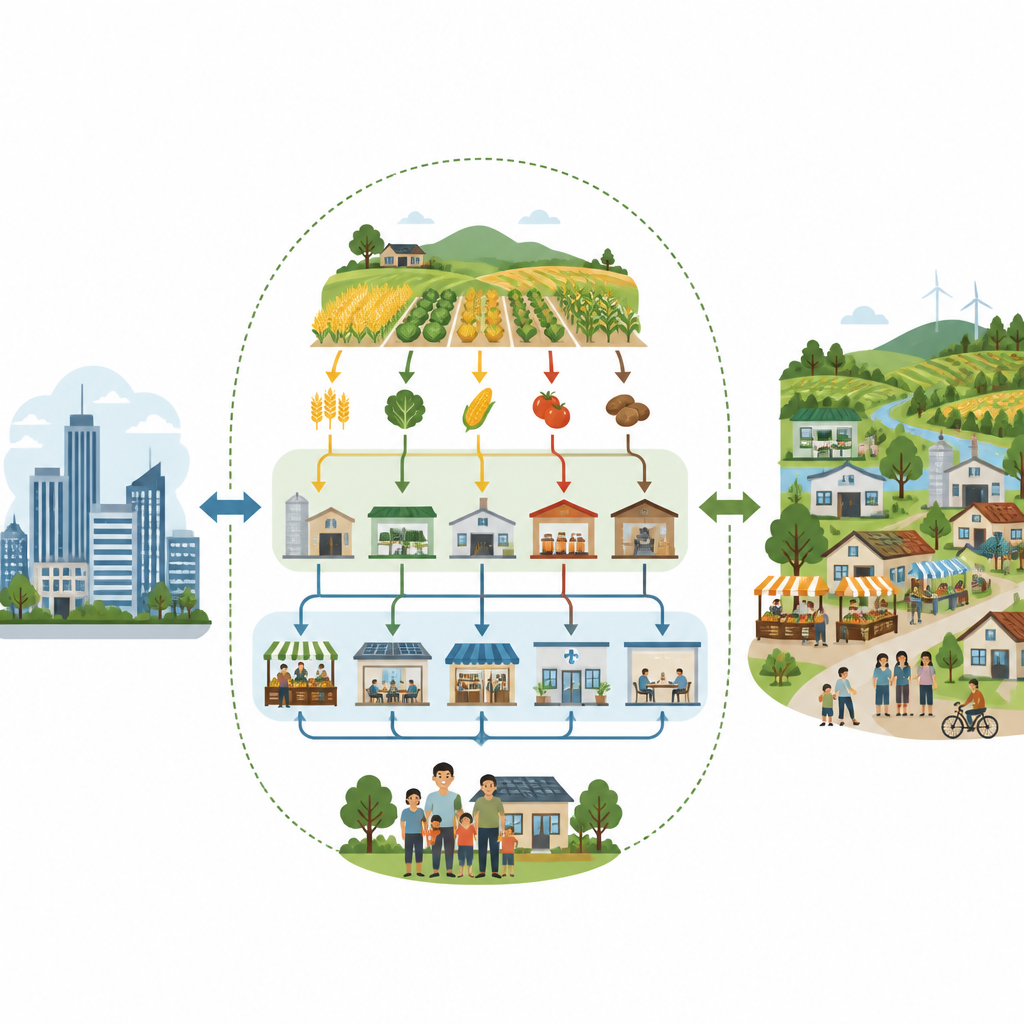
The authors focus on what they call agriculture industry services integration, which simply means letting farms, small rural workshops and service businesses grow together instead of in isolation. Think of grain that is not only sold raw, but also processed in nearby plants, branded for online sale, and tied to weekend tourism in attractive villages. By combining these activities, the same piece of land can support more jobs and revenue than traditional farming alone.
What the numbers say about rural incomes
Using data from 30 provinces in China from 2009 to 2022, the researchers tracked how this kind of integration relates to the money rural households actually take home. After accounting for other influences such as education, investment and trade in farm products, they find that regions where farms, processing and services are more closely linked tend to have faster income growth in the countryside. The process works through several channels: better use of machines and new technology, higher value products, and more chances to earn wages and business income close to home.
Who benefits most in the countryside
The story is not the same for every household. When the team looked across the income ladder, they found that better off rural families gain more from this integration than poorer families. Households that already have a bit more education, savings or social connections are better placed to move into new jobs in processing plants, tourism or online trade. For families with fewer resources, the gains are smaller, which raises concerns that village incomes could rise on average while gaps within the countryside remain or even widen.
How towns, jobs and income gaps interact
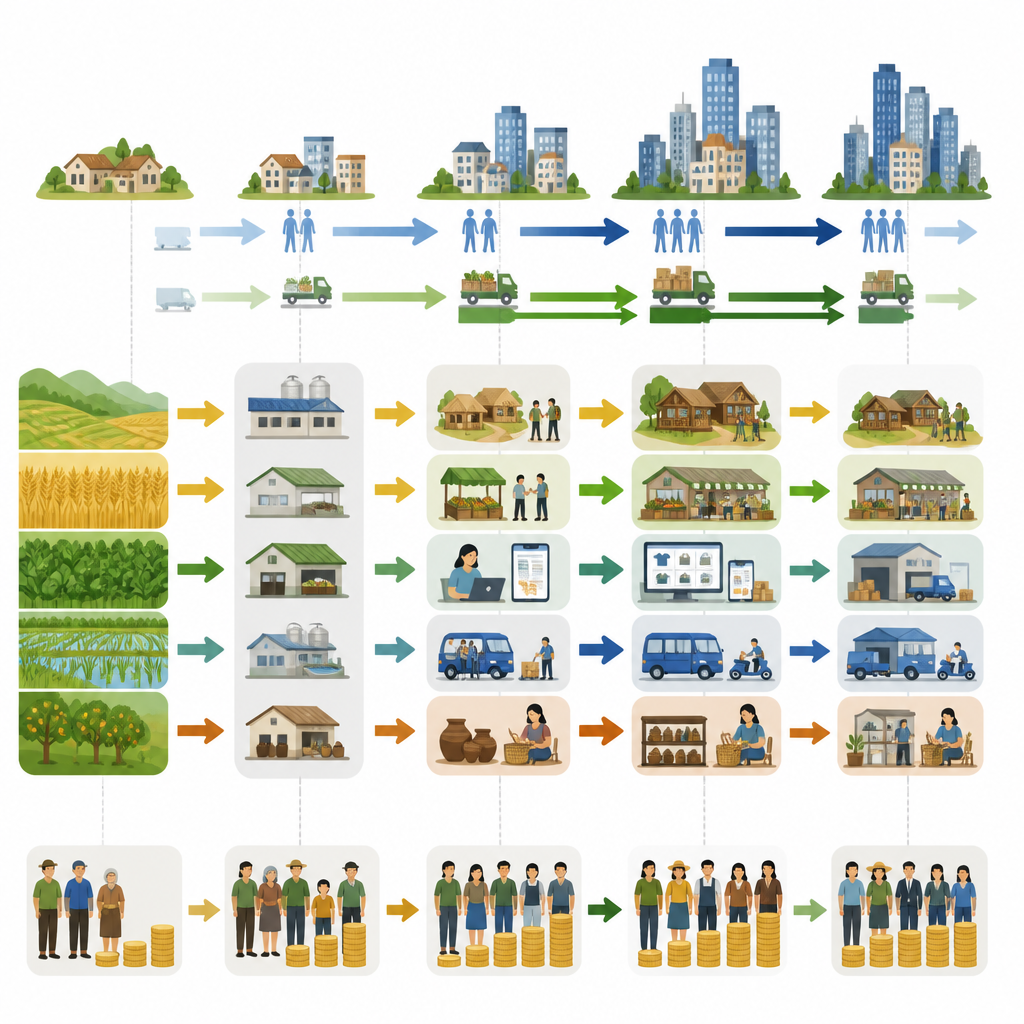
The research also examines the long running gap between city and rural earnings. Here the picture is more encouraging. On balance, integration of farming, industry and services is linked to a narrower income gap between town and country. One major reason is the rise of non farm work in rural areas, such as jobs in processing plants, guesthouses or delivery services, which usually pay better than traditional farm work. The study estimates that changes in these kinds of jobs explain about one fifth of the effect of integration on shrinking the gap.
When city growth helps and when it hurts
City growth plays a mixed role in this story. At first, urban expansion helps villages by bringing in investment, skills and customers for rural tourism and specialty foods. Up to a certain point, this raises the payoff from tying farms to industry and services. But when cities grow very large, they start to pull too many people and resources away from rural areas. The authors find that beyond a high level of urbanization, the income boost from integration starts to fade, as villages lose some of the talent and energy they need to keep new businesses thriving.
What this means for policy and everyday life
To a non specialist, the main takeaway is that the countryside can narrow the gap with cities not only by sending workers away, but also by building richer local economies around farming. Reforms that make it easier to use and trade rural land, support for small processors and tourism, and better finance and training can help turn farms into hubs for a wider range of work. At the same time, governments need to pay attention to the most vulnerable households and to very rapid city growth, so that the benefits of this new rural economy are shared more broadly.
Citation: Wang, C., Du, Y. How can rural agriculture-industry-services integration help narrow the urban-rural income gap? Evidence from China. Humanit Soc Sci Commun 13, 634 (2026). https://doi.org/10.1057/s41599-026-06893-x
Keywords: rural income, urban rural gap, China countryside, non farm employment, rural development