Clear Sky Science · en
AI chatbots in L2 writing: anxiety, usefulness, and writing outcome
Why Writing With AI Matters
For millions of students, writing in a second language—especially English—can feel overwhelming. Worries about making mistakes, finding the right words, or earning a poor grade often turn even simple assignments into stressful tasks. At the same time, AI chatbots capable of producing and improving text are rapidly entering classrooms. This study asks a timely question: when language learners use these tools for English writing, do they feel less anxious and actually become better writers, or do the tools simply become a crutch?
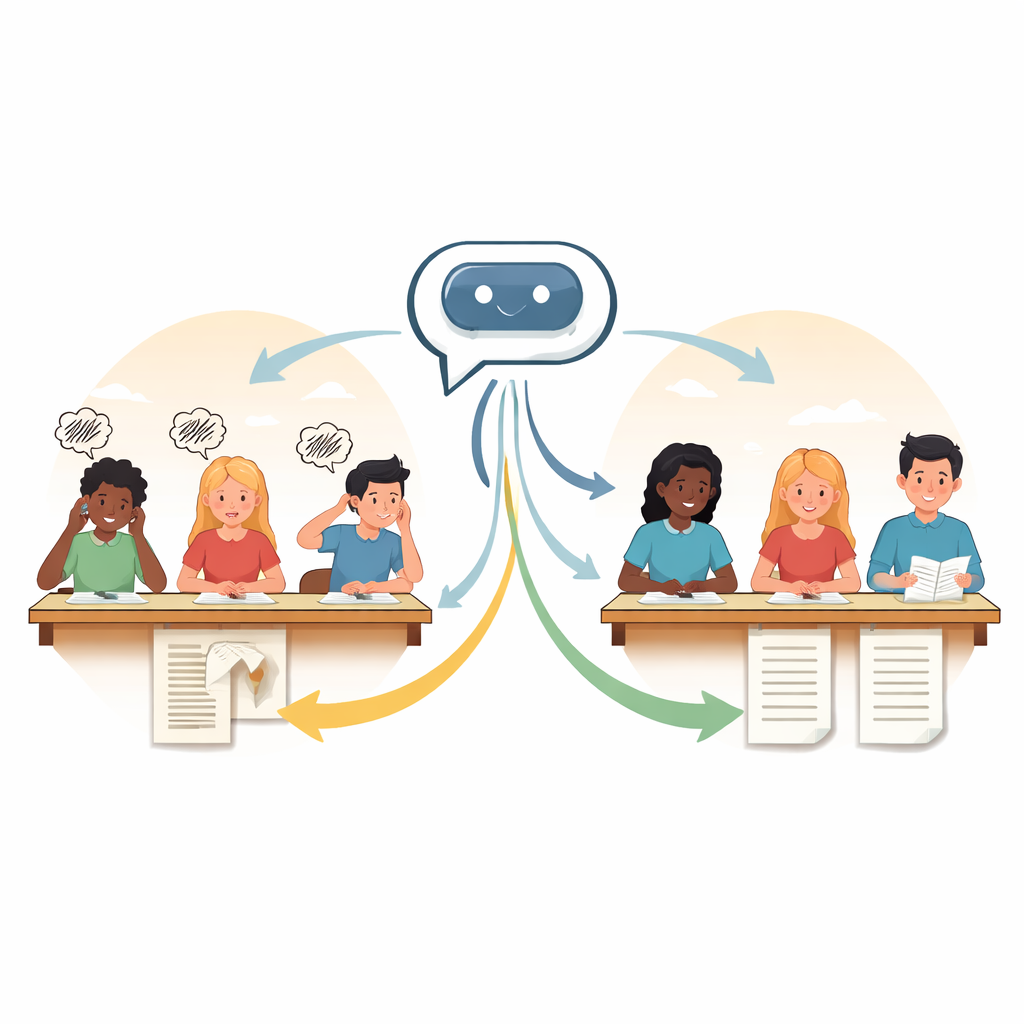
Struggling Students and Digital Helpers
The research focuses on Saudi university students who learn English as a foreign language and already have experience using AI chatbots such as ChatGPT or similar tools for writing tasks. Second-language writing is especially demanding: students must juggle vocabulary, grammar, organization, and cultural nuance, all while managing fear of criticism and low confidence. The study examines three main ingredients in this mix: how anxious students feel about writing, how useful they believe AI chatbots are, and how much they think these tools actually improve their writing. It also looks at background factors such as gender, academic year, English level, confidence, and how often students turn to AI.
How the Study Was Carried Out
The researcher surveyed 387 students from two public universities in Riyadh, all of whom had previously used AI chatbots for English writing. A detailed questionnaire measured perceived writing improvement when using AI, beliefs about the usefulness of chatbots, and two key aspects of writing anxiety: constant worry about doing poorly and the urge to avoid writing tasks. Students also rated their English proficiency, confidence, and how frequently they used AI tools. In addition, they answered open questions describing what they saw as the main benefits and drawbacks of using chatbots, and whether they planned to keep using them. Statistical analyses explored how the numbers were related, while a thematic analysis of written comments uncovered recurring patterns in students’ experiences.
What Students Gained—and What Worried Them
Overall, students reported that AI chatbots helped their writing. On average, they felt their essays became clearer, more fluent, and richer in ideas when they used AI support. They also rated the tools as generally useful, particularly for saving time, generating ideas, overcoming language barriers, and getting quick corrections or suggestions when teachers were unavailable. At the same time, students still experienced moderate anxiety about writing, especially fear of low grades and negative evaluation, though they were less likely to completely avoid writing tasks. Importantly, statistics showed that believing the chatbot was useful was a strong predictor of feeling that one’s writing had improved, whereas anxiety itself did not significantly explain differences in perceived improvement.
Who Benefits Most From AI Writing Help
Contrary to some expectations, gender and year of study did not meaningfully change the way students experienced AI-supported writing. However, English proficiency and usage patterns did matter. Students with stronger English skills tended to feel less anxious and saw AI as slightly less essential, perhaps because they already had more confidence in their abilities. Those who used chatbots more often, on the other hand, were more likely to report better writing outcomes and to view the tools as valuable partners in the writing process. In their own words, students praised AI for providing around-the-clock help, richer vocabulary, and faster drafting. Yet they also noted serious concerns: repetitive or unoriginal answers, occasional errors or irrelevant responses, difficulty with complex or idiomatic language, and the risk of becoming overly dependent on AI instead of developing their own thinking and expression.

Finding a Healthy Balance With AI
The study concludes that the key to successful AI-supported writing lies less in eliminating anxiety and more in ensuring that learners see the tools as genuinely useful aids. When they do, they are more willing to engage, revise, and practice—and they feel their writing improves. Yet the findings also warn against uncritical reliance on chatbots. Educators are encouraged to design tasks where students first produce their own drafts and then use AI for feedback, refinement, and idea expansion, rather than as a shortcut. Thoughtful guidelines, adaptive support for different proficiency levels, and clear discussion of AI’s limits can help students benefit from faster feedback and greater confidence while still building the independent writing skills they ultimately need.
Citation: Almusharraf, A. AI chatbots in L2 writing: anxiety, usefulness, and writing outcome. Humanit Soc Sci Commun 13, 393 (2026). https://doi.org/10.1057/s41599-026-06816-w
Keywords: AI chatbots, second language writing, writing anxiety, language learning technology, student perceptions