Clear Sky Science · en
“Under the Shadow of Uncertainty”: the mediating role of job stress and the AI self-efficacy as a shield in cybersecurity behavior
Why your job worries matter for digital safety
As workplaces rush to adopt artificial intelligence and other advanced technologies, employers often focus on firewalls and software to keep hackers out. Yet this study shows that a very human issue—how secure people feel in their jobs—can quietly weaken or strengthen an organization’s digital defenses. When employees are anxious about losing their jobs, that worry can sap the mental energy needed to spot phishing emails, update software, or follow safe data-handling routines. The research also finds a hopeful twist: workers who feel confident using AI tools seem better able to protect company data, even when they are under stress.
From job fears to everyday security slips
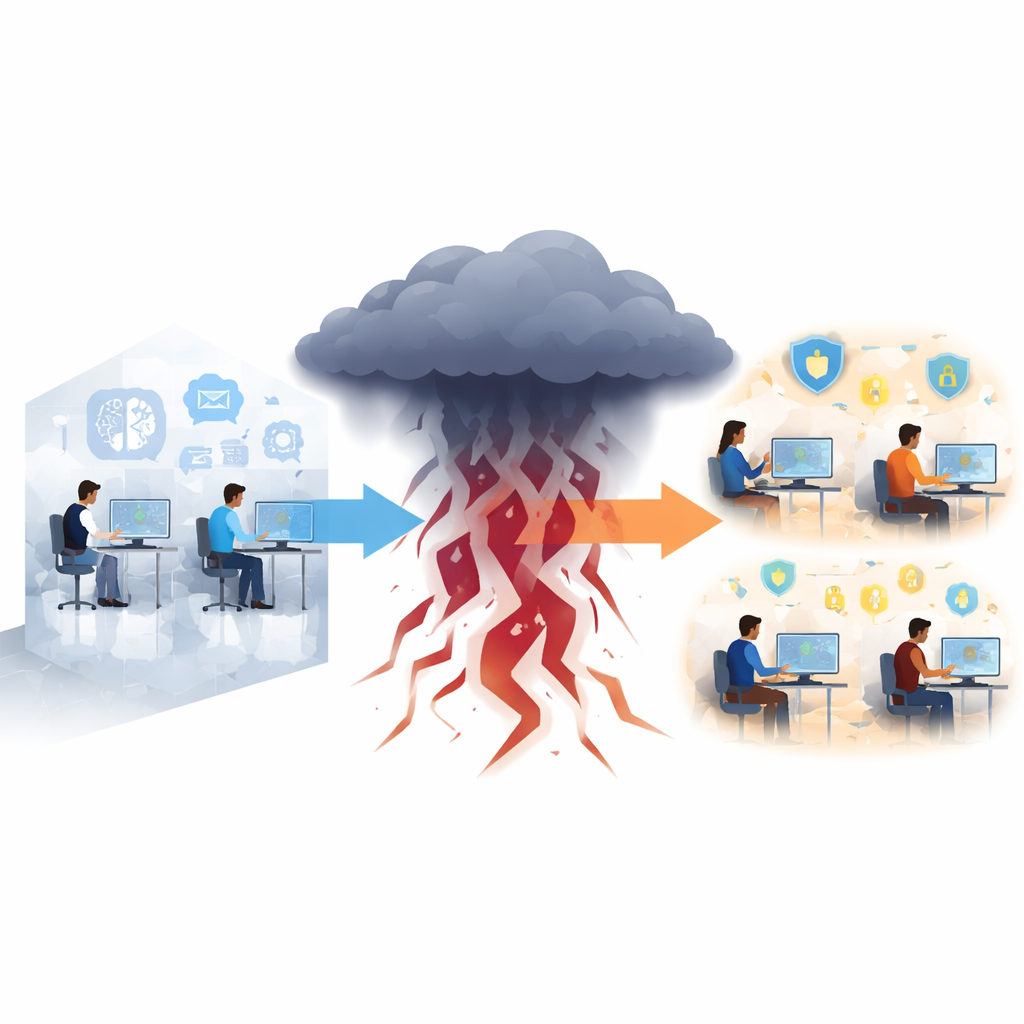
Cyberattacks rarely start with a Hollywood-style heist; more often they begin with a tired employee clicking the wrong link or ignoring a security update. The authors argue that job insecurity—worrying that one’s position might disappear—can nudge people toward these small but risky lapses. In an age of automation and economic uncertainty, such fears are increasingly common. When people are preoccupied with proving their value or worrying about the future, they may still obey the bare minimum rules set by their company, but are less likely to go the extra mile: double-checking suspicious messages, backing up files, or reporting odd computer behavior.
Stress as the hidden pathway
To understand how job worries translate into digital risk, the researchers surveyed 373 employees in South Korea over three separate time points. First, they measured how insecure people felt about their jobs and how confident they were using AI tools. Several weeks later, they assessed job stress, and later still they measured everyday cybersecurity habits, such as keeping antivirus software updated or avoiding unknown links. The key finding was subtle but important: job insecurity by itself did not directly predict poor security behavior. Instead, it raised employees’ stress levels, and that stress, in turn, lowered the quality of their cybersecurity practices, especially the more effortful, proactive ones.
How tech confidence can act like armor
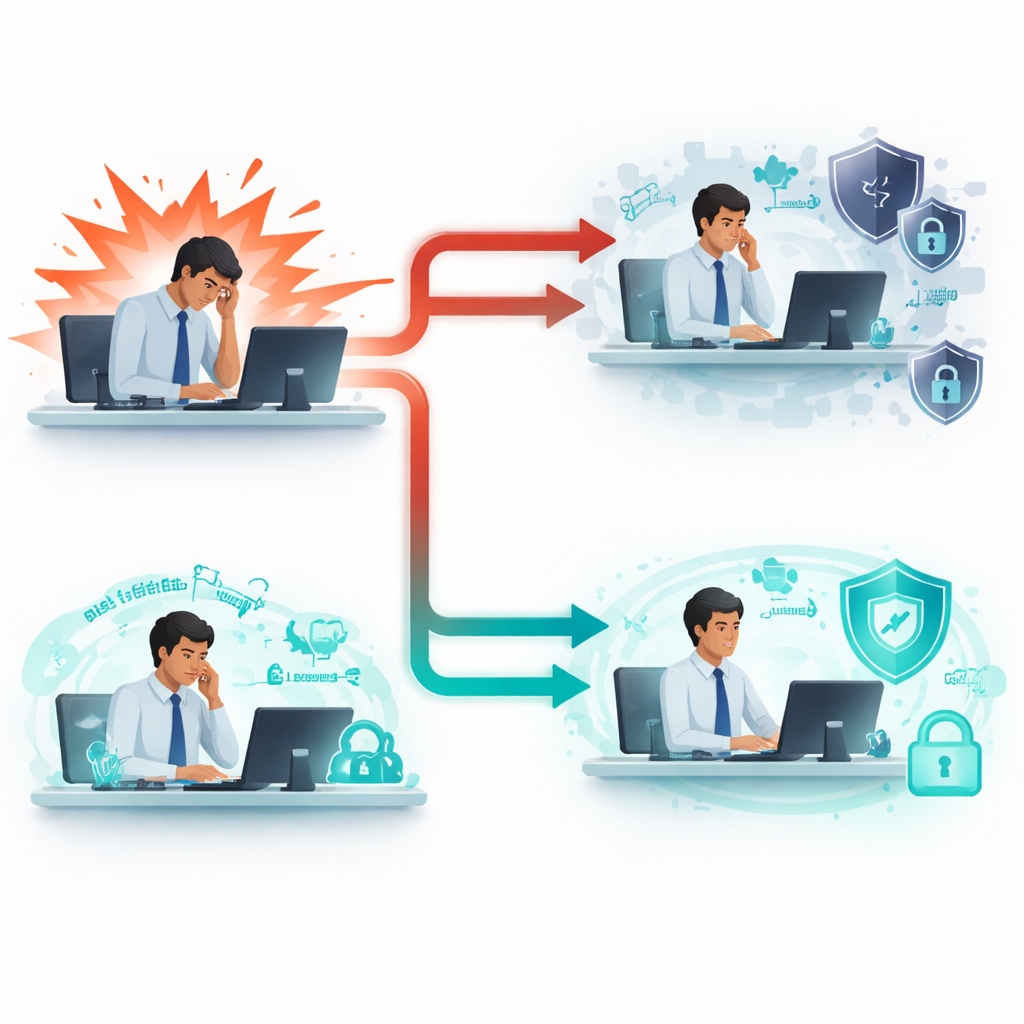
Not everyone reacted to stress in the same way. Workers who felt highly capable of using AI tools seemed more resilient. Even when they were stressed, their cybersecurity behavior dropped far less than that of colleagues who lacked such confidence. In practical terms, people who are comfortable with AI-based systems can carry out security tasks—like monitoring for unusual system activity or applying updates—with less mental strain. Their technological know-how acts as an extra resource, helping them stay vigilant even when other pressures are high. The study suggests that AI competence is more than a productivity booster; it can serve as a psychological shield that keeps security habits from crumbling under stress.
What this means for managers and workers
These results carry clear lessons for organizations. First, focusing only on technical defenses misses a key vulnerability: employees who are anxious and exhausted. Efforts to reduce unnecessary job uncertainty and manage stress—through honest communication, fair workloads, and support services—are likely to improve cybersecurity as well as well-being. Second, investing in training that builds employees’ confidence with AI and other digital tools can make security behavior more robust, particularly during turbulent times when stress is hard to avoid. Rather than treating cybersecurity as a matter of rules alone, the study suggests viewing it as the outcome of how people feel about their future at work and their comfort with the technologies around them.
In plain terms: calmer, confident people protect data better
For a lay reader, the story is straightforward. When people fear for their jobs, they become more stressed. That stress drains the focus needed to spot online dangers, so security routines become rushed or sloppy. However, workers who feel skilled with AI tools are better able to keep up safe habits even when they are under pressure. In short, calmer and more technologically confident employees are the ones most likely to keep hackers at bay. Companies that want strong digital defenses should therefore care not only about their software, but also about whether their staff feel secure, supported, and capable in an AI-rich workplace.
Citation: Kim, BJ., Kim, O.H. & Kim, E.I. “Under the Shadow of Uncertainty”: the mediating role of job stress and the AI self-efficacy as a shield in cybersecurity behavior. Humanit Soc Sci Commun 13, 354 (2026). https://doi.org/10.1057/s41599-026-06730-1
Keywords: job insecurity, cybersecurity behavior, job stress, AI self-efficacy, digital workplace