Clear Sky Science · en
Platform gig work conditions and workers’ perceptions of decent work: a configurational and necessity perspective
Why app-based jobs matter for everyday life
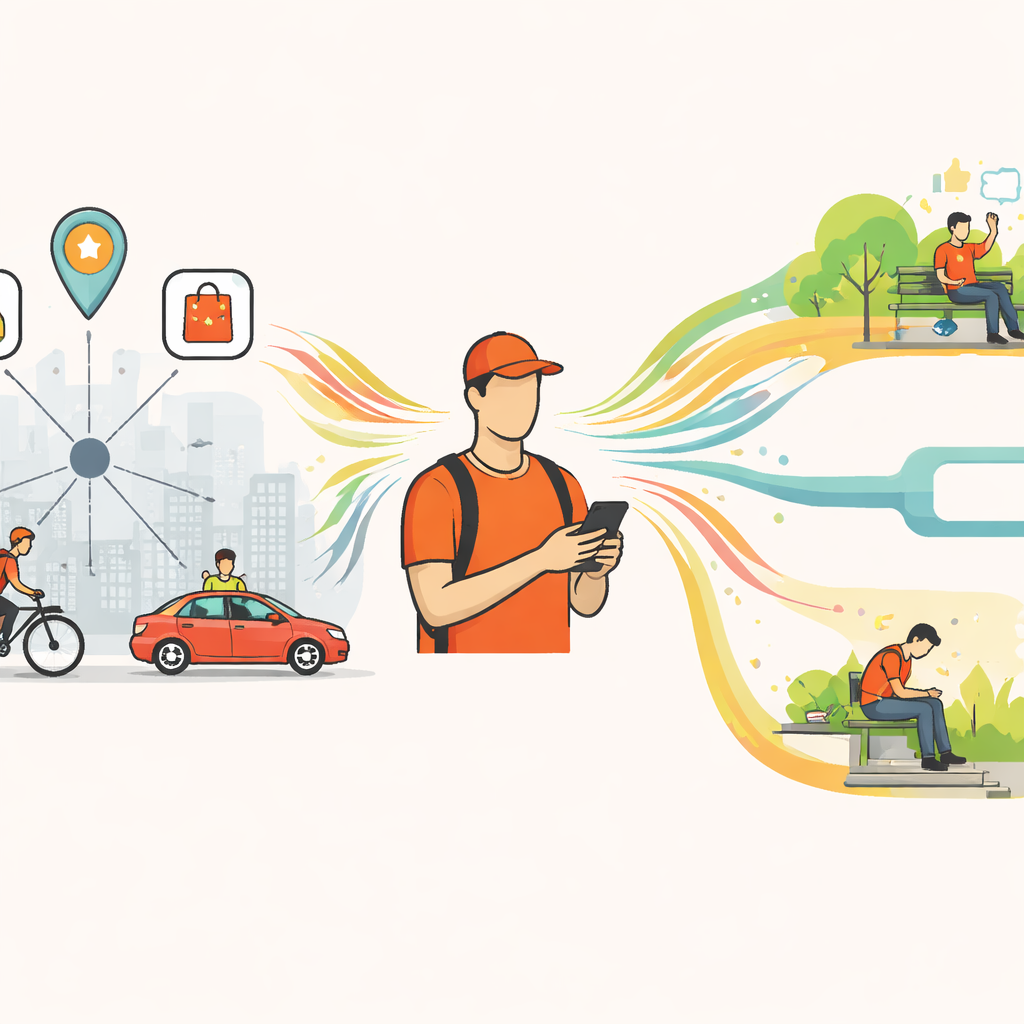
From ordering dinner to hailing a ride, many city routines now depend on gig workers who log into apps instead of clocking into factories. Yet behind this convenience lies a basic question: do these jobs feel like “decent work” to the people doing them? This article looks inside China’s booming platform economy to explore how food delivery riders and ride-hail drivers judge the quality of their own jobs, and why some see their work as fair and dignified while others feel exhausted and insecure.
How people’s feelings differ from official job rules
International organizations usually talk about decent work in terms of rules on pay, hours, and safety. Those are important, but they are hard to track in a fragmented app-based labor market where work is sliced into tiny tasks and managed by hidden algorithms. The authors instead focus on perception of decent work: how fair, secure, and respectable workers themselves feel their jobs are. Prior research has shown that when workers feel their jobs are decent, they are less likely to quit and more likely to go the extra mile, making this a key lens for understanding today’s gig economy.
The invisible forces that shape gig workers’ days
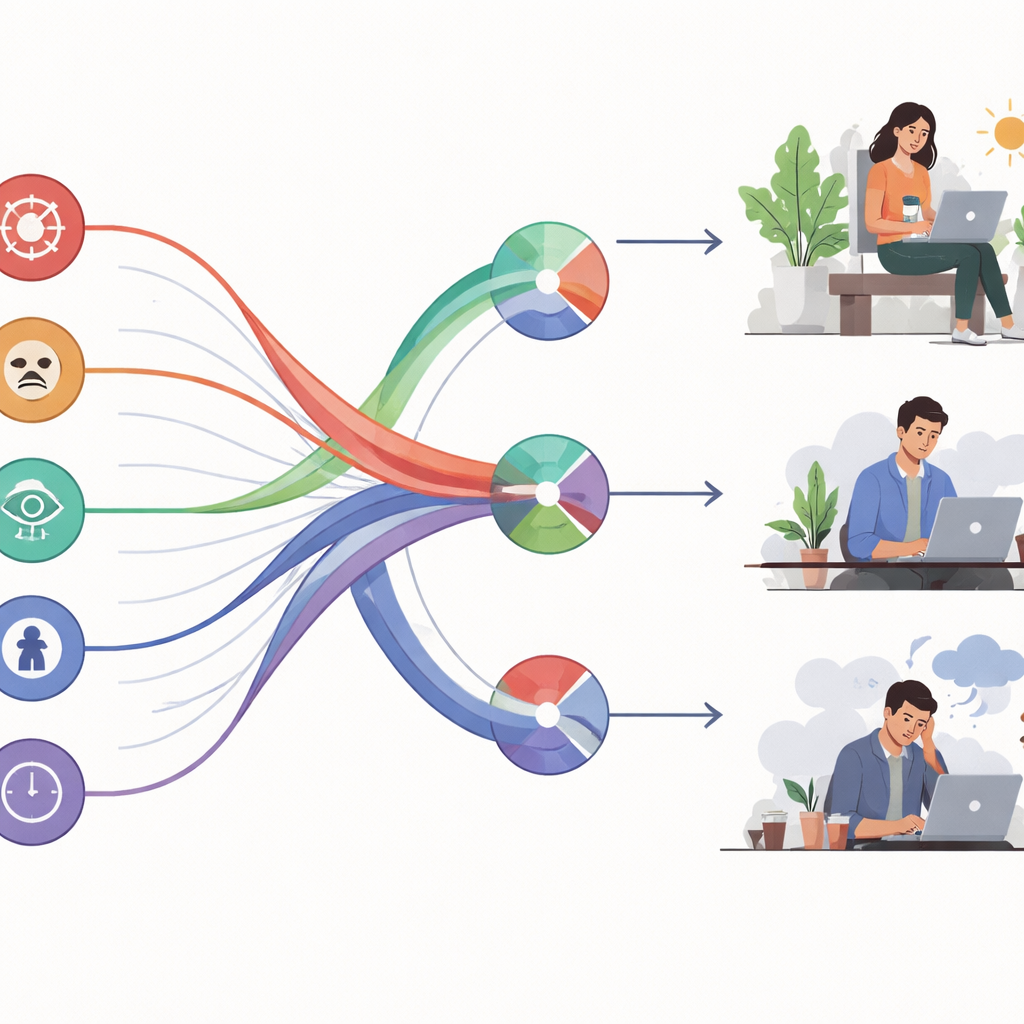
The study examines six forces that together color gig workers’ experiences. Some are structural: how strongly they feel controlled by the app’s algorithm, how many hours they work, and how aware they are that smart technology and robots (grouped under the term STARA) might one day replace them. Others are emotional: whether they mostly fake friendly feelings on the surface or genuinely try to feel positive when serving customers, known as deep acting. Finally, identity matters: gender can influence how people interpret long hours, customer demands, and family needs. Drawing on a social information processing view, the authors argue that workers constantly read signals from technology, customers, and society, and then mentally assemble these signals into an overall judgement of how decent their work is.
A new way to map complex job experiences
To capture this complexity, the researchers combine two relatively new analytical tools. Fuzzy-set Qualitative Comparative Analysis (fsQCA) looks for different combinations of conditions that can all lead to a high sense of decent work, recognizing that there is rarely just one path to a good outcome. Necessary Condition Analysis (NCA) checks whether any single factor must be present at a minimum level for workers to feel their jobs are decent. The team surveyed 316 Chinese platform workers over two time points, measuring how strongly they felt each of the six forces and how they rated their overall work situation, from pay and job security to social respect and prospects for advancement.
Many paths to feeling that work is “good enough”
The results show that no single factor—such as low surveillance or short hours—was strictly required for a positive judgement of work. Instead, several distinct “recipes” emerged. One pattern involved women who engaged in deep acting, rarely needed to fake their emotions, and were not very aware of technological threats. These workers tended to report high job dignity even if algorithms guided their tasks. Another pattern paired low awareness of future automation with shorter working hours, easing both physical strain and worries about being replaced. A third pattern, the most common, combined deep acting with long hours: here, earning more money and building genuine rapport with customers seemed to offset fatigue, as long as workers did not dwell on automation risks or feel forced into constant surface-level fakery.
What this means for workers, platforms, and policy
These findings suggest that decent work in the platform economy is not simply a matter of raising wages or adjusting a single rule. Instead, workers’ sense of fairness and dignity arises from how structural conditions, emotional strategies, and social identities line up. Keeping fears about technological replacement at bay, creating room for more authentic emotional interactions, and recognizing gendered care burdens can all support better experiences, even before formal regulations catch up. In plain terms, the study shows that app-based jobs can feel respectable and worthwhile, but only when the mix of technology, time pressure, and emotional demands allows workers to see themselves not as expendable cogs, but as valued human beings.
Citation: Liu, L., Wang, Y., Xiao, T. et al. Platform gig work conditions and workers’ perceptions of decent work: a configurational and necessity perspective. Humanit Soc Sci Commun 13, 359 (2026). https://doi.org/10.1057/s41599-026-06702-5
Keywords: gig work, platform economy, decent work, algorithmic management, emotional labor