Clear Sky Science · en
Ammonia marine fuel can reduce or increase reactive nitrogen pollution depending on emissions controls
Why Cleaner Ship Fuel Still Needs a Closer Look
Global shipping keeps the world’s goods moving, but it also pumps large amounts of pollution into the air and oceans. Ammonia made with renewable energy has been promoted as a promising new fuel because it contains no carbon, raising hopes that it could slash climate-warming emissions from ships. This study shows that the story is more complicated: while ammonia can help cut climate pollution, it can also create a different kind of problem for the planet’s nitrogen balance unless its emissions are tightly controlled.
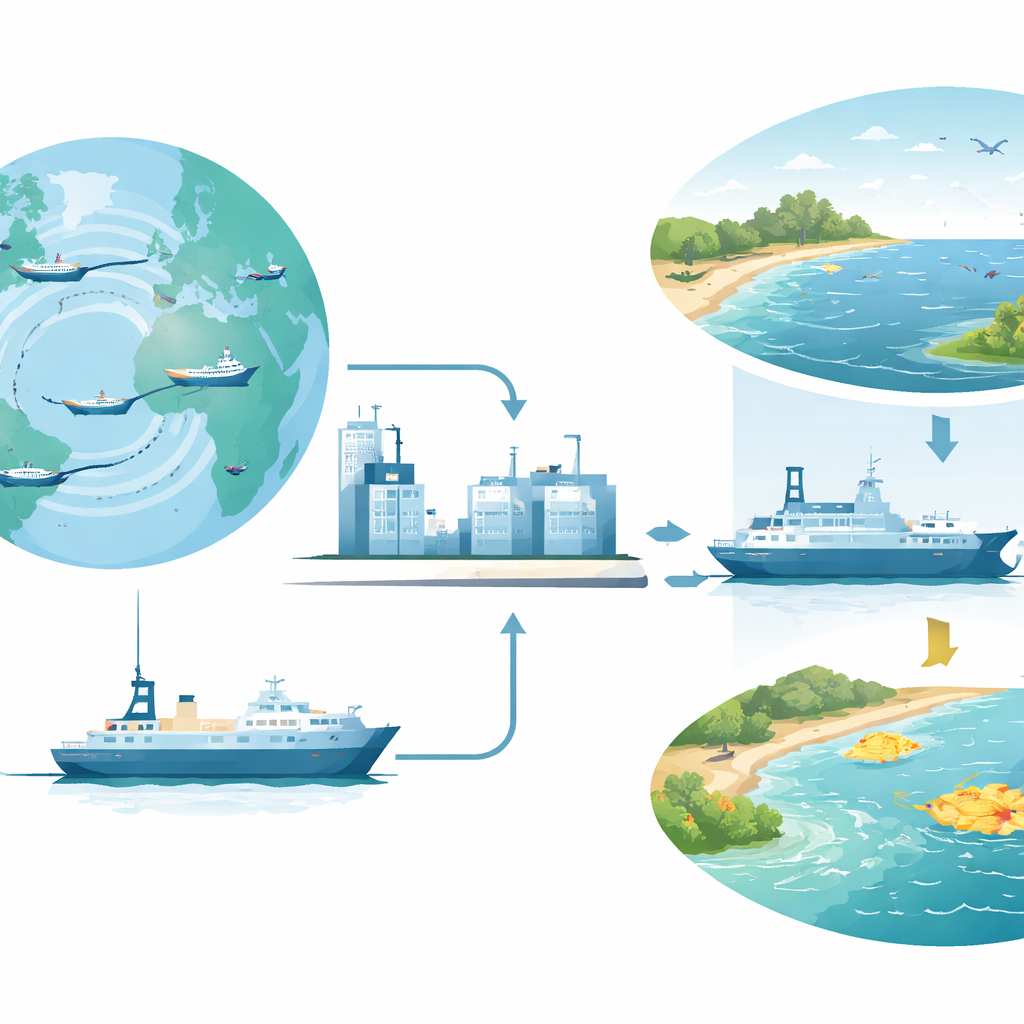
A New Fuel on the Horizon for the World’s Ships
Today most ships burn very-low-sulfur fuel oil, a fossil fuel that releases carbon dioxide and other pollutants. Green “e-ammonia,” produced using renewable electricity and nitrogen from the air, is gaining attention as a replacement because it can work in modified ship engines and fuel cells and is relatively cheap to make at scale. Over its full life, this fuel could emit up to about 80% less greenhouse gas than current marine fuels, helping the shipping sector move toward the International Maritime Organization’s goal of net-zero greenhouse gas emissions by mid-century.
The Hidden Nitrogen Problem
Unlike oil-based fuels, the main environmental risks from ammonia are not carbon but “reactive nitrogen” forms: ammonia gas itself, nitrogen oxides, and nitrous oxide. These compounds do not just vanish after leaving an exhaust pipe. They help form fine particles that harm human lungs, they can lead to low-oxygen “dead zones” in coastal waters by over-fertilizing ecosystems, and nitrous oxide is a powerful greenhouse gas and ozone-depleting substance. Humanity is already adding far more reactive nitrogen to the environment—mainly through fertilizer use and livestock manure—than scientists consider safe, so any large new source could deepen pressure on this overstretched global boundary.
Following the Fuel from Factory to Open Sea
The authors trace nitrogen losses along the entire ammonia marine fuel chain: production at chemical plants, transport and storage in ports, ship refueling (“bunkering”), and final use in engines. For each step they assemble best-available estimates for how much ammonia might leak, boil off as gas, or slip through unburned during combustion, alongside nitrogen oxides and nitrous oxide formed in engines. They then model three futures—low, medium, and high emissions—under industry projections for how much ammonia shipping could use in 2030, 2040, and 2050, and compare the total nitrogen pollution to that from today’s conventional ship fuel.
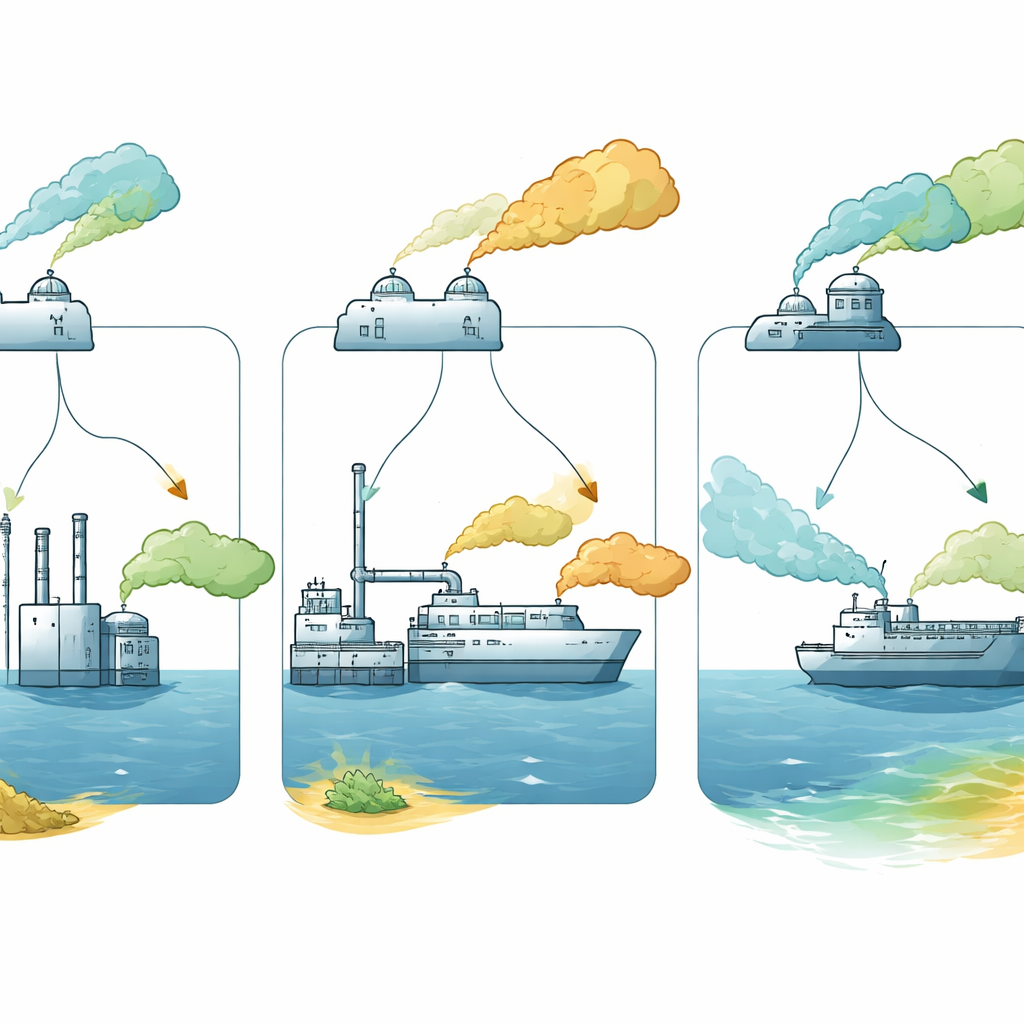
When a Climate Solution Becomes a New Polluter
Under strict controls, the picture is encouraging: by 2050, using ammonia could cut nitrogen emissions per unit of energy by about two-thirds compared with today’s ship fuel, while also lowering climate impacts. But if leaks from production, storage, and bunkering are not well contained, and if engines release more nitrogen compounds than hoped, total nitrogen pollution from ammonia could actually exceed that from current fuels even while delivering less energy. In the higher-emissions cases, the shipping sector’s ammonia use alone could consume up to roughly one-fifth of the world’s “safe” budget for nitrogen losses, with emissions clustering around ports and busy shipping lanes where they would most affect air quality, coastal ecosystems, and nearby communities.
Keeping the Benefits Without the Backfire
The study concludes that ammonia can be part of a cleaner shipping future only if nitrogen emissions are tightly managed at every stage. This means rapid leak detection with sensitive sensors, capturing gas that boils off in storage or transfer, and proving that ship engines operate with very low nitrogen releases. It also calls for updated rules and standards so that climate policies do not simply swap carbon pollution for nitrogen pollution. With strong technical safeguards and coordinated governance, the world can tap the climate advantages of ammonia as a marine fuel while avoiding new damage to the nitrogen cycle, coastal waters, and human health.
Citation: Esquivel-Elizondo, S., Cabbia Hubatova, M., Kershaw, J. et al. Ammonia marine fuel can reduce or increase reactive nitrogen pollution depending on emissions controls. Commun. Sustain. 1, 70 (2026). https://doi.org/10.1038/s44458-026-00076-0
Keywords: ammonia marine fuel, shipping emissions, nitrogen pollution, clean energy transition, air and water quality