Clear Sky Science · en
Majority of methane emissions from European biogas plant supply chains could be eliminated at no net cost
Why leaking gas from green energy matters
Turning food scraps, farm waste and manure into biogas is often promoted as a win win: it provides renewable energy while cutting climate pollution from rotting waste. But this promise only holds if very little of the biogas, which is rich in methane, escapes into the air. This study looks closely at real biogas plants in Europe to see how much methane they actually leak, what that means for the climate, and how much of this pollution could be stopped without costing operators extra money. 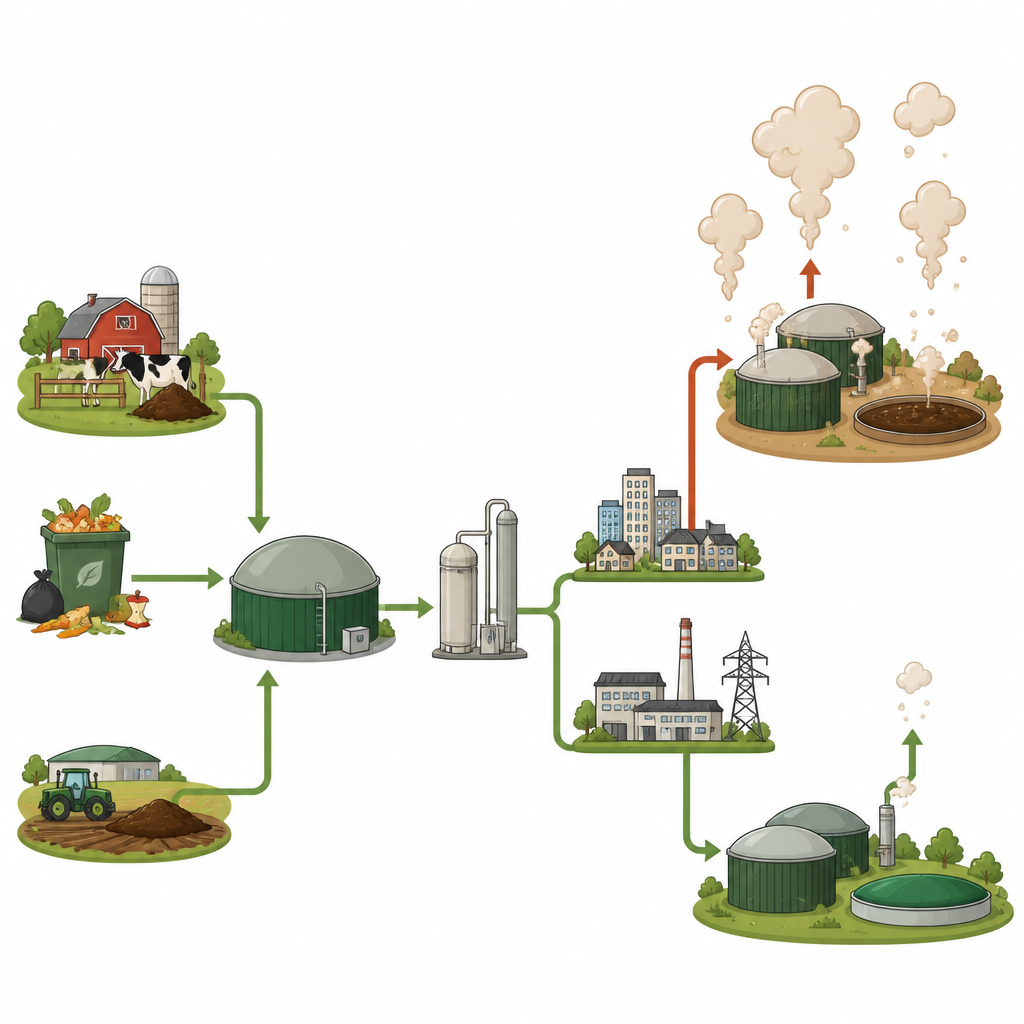
How biogas plants were put to the test
The researchers surveyed 31 biogas plants in Germany, Poland and the United Kingdom, covering a mix of farm based and waste based facilities. They used two kinds of measurements. One set of instruments hunted for leaks at individual pieces of equipment, such as storage tanks, pipes, engines and lagoons. Another set measured methane plumes downwind of whole sites and used atmospheric models to estimate total emissions. By combining these approaches and comparing their results, the team built a detailed picture of how much methane each plant released and where it came from.
What they found at European biogas sites
On average, a plant in the study emitted 14.4 kilograms of methane every hour, equal to about 5.4 percent of the methane it produced. Individual sites varied widely, from about 2 percent to almost 22 percent methane loss. Plants in Germany tended to leak less than those in Poland and the UK, in part because they more often used gas tight storage for the leftover digestate. A small number of sources did most of the damage: just 2 percent of all identified sources were responsible for 20 percent of emissions. Major culprits included open lagoons of digestate, engine exhaust from combined heat and power units, roof leaks on tanks, mixing tanks and safety vents. Short term breakdowns and abnormal operating conditions, such as equipment failures or rejected gas deliveries, also caused sharp temporary spikes in emissions that would be easy to miss with infrequent checks.
Climate impact of supposedly green gas
Using their measurements, the authors calculated the total climate footprint of the biogas supply chains, from feedstocks to energy use. They found that methane dominated the greenhouse gas impact of these systems. When biogas was burned on site to generate electricity, methane made up nearly half of total warming over a 100 year period, and about three fifths over a 20 year period, when methane’s stronger near term effect is considered. If the gas was upgraded to biomethane and injected into the grid instead, methane still accounted for a large share of total emissions, though somewhat less because engine exhaust was avoided. The study also showed that plants using waste as a feedstock had much lower overall climate impacts than those using crops grown specifically for energy, because using waste avoids emissions that would have happened elsewhere. 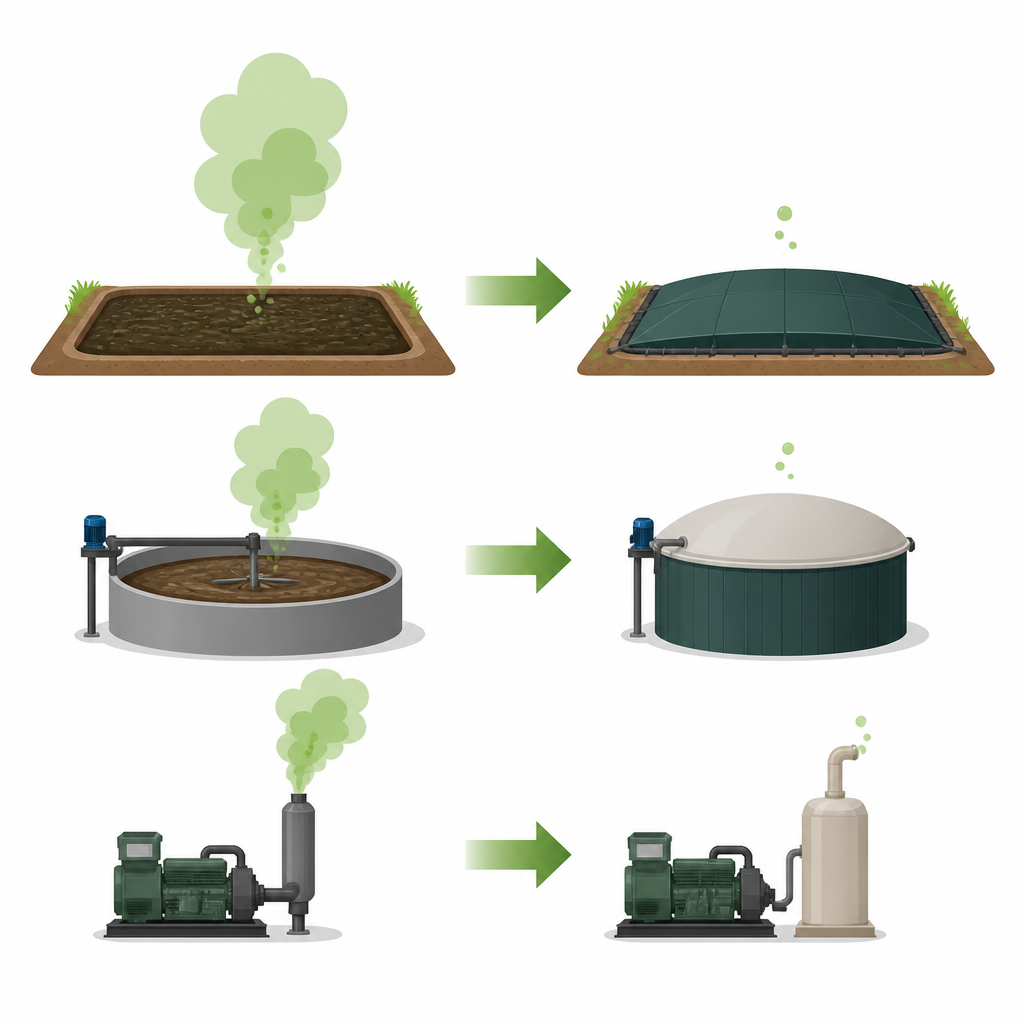
Fixing leaks without breaking the bank
The team then examined how much of this methane could be cut using existing technology and what it would cost. They concluded that around 83 percent of emissions could in principle be reduced, and that 59 percent could be eliminated at no net cost to operators once the value of the saved gas was counted. Simple steps such as sealing open mixing tanks, covering digestate storage, improving gas storage management to limit safety venting, and carrying out regular leak detection and repair were identified as cost effective in most cases. However, reducing methane that slips through engine and upgrader exhausts is harder and more expensive, especially when plants are run flexibly to follow electricity prices. These findings suggest that better plant design from the start is often cheaper than retrofitting fixes later.
Why smarter rules and monitoring are needed
Despite methane’s importance, most of the plants studied were not required to monitor or report their methane emissions in detail. Existing European rules for renewable gas focus on a limited set of sources and often rely on generic emission factors instead of measurements. The authors argue that national and European policies should be updated to reflect the real role of methane in biogas climate performance. They recommend standard rules for leak detection surveys, requirements to track flaring and venting with gas flow meters, and broader greenhouse gas accounting that includes more types of plants and emission sources. This, they say, would steer investment toward designs and practices that truly deliver low carbon energy.
What this means for the promise of biogas
For a non specialist reader, the key message is that biogas and biomethane can still play a helpful role in cutting climate pollution, especially when they turn unavoidable waste into useful energy. However, the study shows that if methane leaks are not tightly controlled, these energy sources can lose much of their climate benefit. The authors conclude that most of the harmful emissions from European biogas supply chains could be removed at little or no extra cost, but only if plant operators, technology suppliers and policymakers act together to tighten monitoring, fix major leak points and design future plants with low emissions in mind.
Citation: Olczak, M., Dubey, L., Lowry, D. et al. Majority of methane emissions from European biogas plant supply chains could be eliminated at no net cost. Commun. Sustain. 1, 88 (2026). https://doi.org/10.1038/s44458-026-00065-3
Keywords: biogas, methane emissions, biomethane, renewable energy, climate policy