Clear Sky Science · en
Global patterns of student mobility align with national climate adaptation
Why climate and study abroad now go hand in hand
For many young people, studying abroad is a life-changing adventure. But as heatwaves, floods, and storms grow more severe, students are also asking a new question: how safe and prepared is my host country for climate change? This paper shows that the global map of where students choose to study is quietly shifting in step with how well countries are getting ready for a warming world. 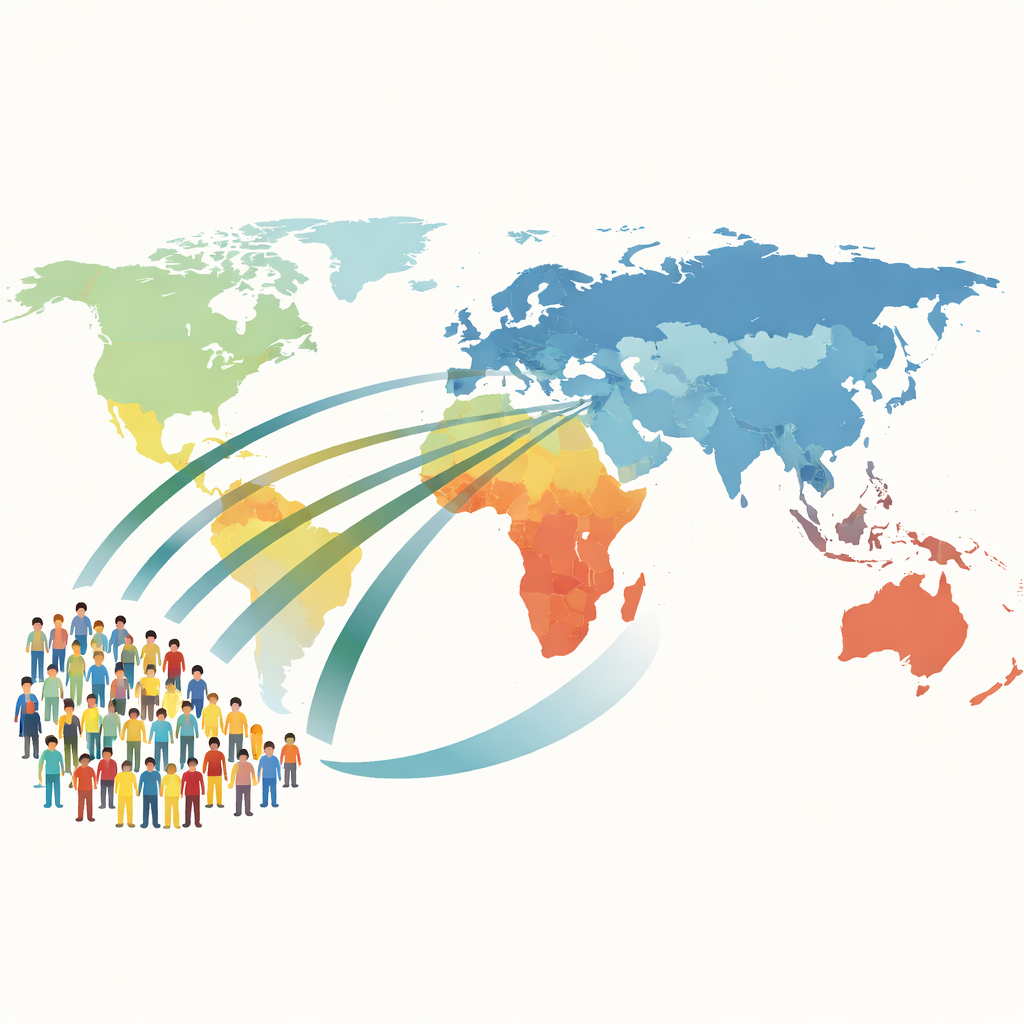
Changing paths of students around the world
Over the past two decades, the number of students crossing borders for higher education has more than tripled. Traditional powerhouses such as the United States, the United Kingdom, France, and Japan have lost market share, while countries including China, Korea, Turkey, Australia, and some in the Middle East and Southeast Asia have gained ground. Earlier research explained these changes mostly by money, distance, language, and university prestige. This study adds another missing piece: climate risk and how well countries are preparing to handle it.
How the researchers traced climate’s hidden role
The authors assembled a vast dataset of 1.15 million student flows between pairs of countries from 1999 to 2018. They linked these flows to a global index that scores each country’s vulnerability to climate hazards and its readiness to adapt, along with information on distance, economic strength, and university rankings. Using a statistical approach designed for flow data, they isolated how much climate conditions in both the sending and receiving countries matter, above and beyond the usual factors. They also examined whether two landmark climate meetings—the Copenhagen summit in 2009 and the Paris Agreement in 2015—changed these relationships by drawing more public attention to climate policy.
What climate readiness means for students’ choices
The results reveal a clear pattern. Countries that are more exposed and less prepared for climate impacts attract fewer international students, even after accounting for income and academic quality. In contrast, countries that score higher on climate readiness draw more students, and this pull has grown stronger over time. In the early 2000s, being well prepared for climate impacts helped, but modestly. By the mid-2010s, readiness had become a powerful magnet. Students from less prepared countries, especially in the developing world, increasingly sought out destinations that offered not only good universities but also safer, more resilient environments. 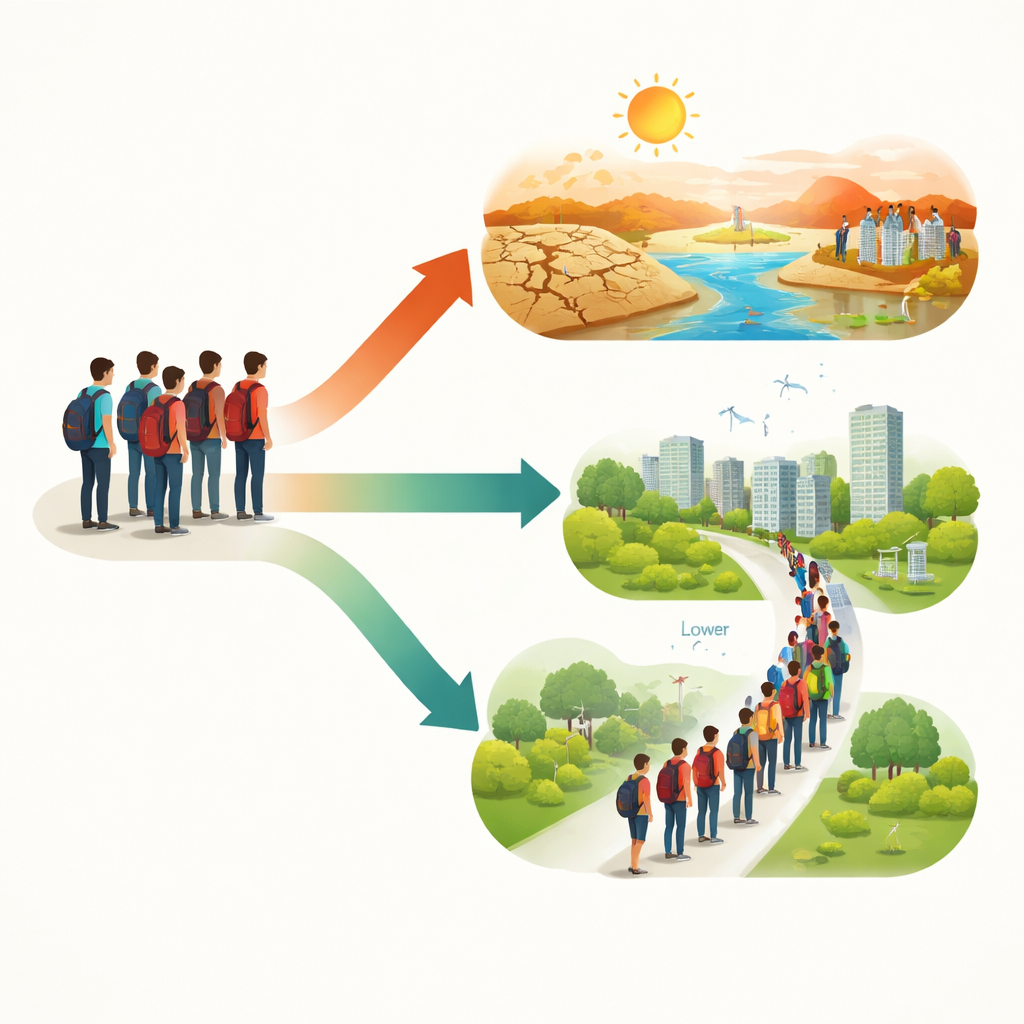
Shifts after global climate agreements
The study also finds that major climate agreements appear to have nudged these patterns. After the Copenhagen and Paris conferences, countries whose climate vulnerability worsened lost ground in attracting students, and similar, if smaller, effects showed up even in countries that signed the agreements but did not improve their own climate standing. This suggests that global climate talks act as megaphones, making students more aware of which countries are taking climate risks seriously and which are not. Scenario projections for 2019–2028 show that if climate vulnerability continues to worsen, traditional wealthy destinations may lose some of their edge, while countries that rapidly improve their readiness could gain new prominence in the student marketplace.
Why this matters for talent and fairness
The authors argue that climate adaptation is becoming a quiet but powerful force in the global competition for talent. Investments in clean air, green spaces, flood protection, and heat preparedness do double duty: they protect residents and make cities more attractive to international students. At the same time, there is a risk of deepening inequality if students from highly vulnerable countries are steadily drawn to a small set of safer, better-prepared destinations, taking their skills with them. The study suggests that to keep global education both vibrant and fair, countries will need to connect scholarship programs, campus planning, and climate finance, so that climate resilience is strengthened not only in popular host countries but also in the vulnerable regions that most need their graduates.
Citation: Gu, H., Hu, H., Shen, J. et al. Global patterns of student mobility align with national climate adaptation. Commun. Sustain. 1, 75 (2026). https://doi.org/10.1038/s44458-026-00061-7
Keywords: international student mobility, climate adaptation, global talent flows, climate vulnerability, higher education