Clear Sky Science · en
The burden of malaria-attributable maternal anaemia and the impact of preventive treatment across sub-Saharan Africa
Why This Matters for Mothers and Babies
Across much of sub-Saharan Africa, many women still face pregnancy with a hidden threat: malaria quietly draining their blood and strength. This study asks a simple but vital question—how much of the anaemia that puts pregnant women and their babies at risk is really due to malaria, and how much protection do current treatments provide? By combining clinical data from thousands of women with detailed maps of malaria and fertility, the authors show that malaria remains a major, and sometimes underestimated, driver of dangerous blood loss in pregnancy—and that stopping preventive treatment could quickly reverse hard-won gains.
How Malaria Steals Blood During Pregnancy
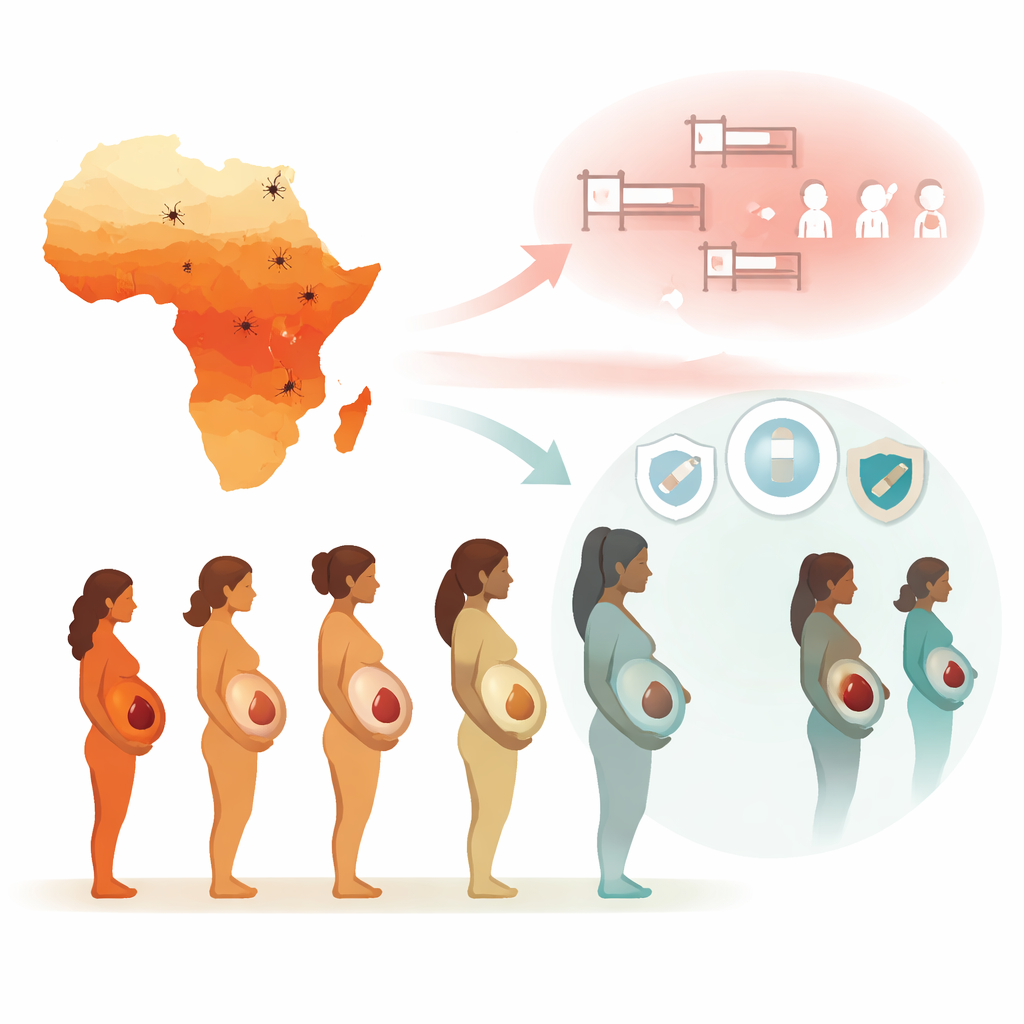
Malaria parasites do something unusual during pregnancy: they latch onto the placenta, the organ that feeds the developing baby. This trapping of infected blood cells leads to the destruction of red blood cells and slows the body’s ability to make new ones. The result is anaemia, a shortage of healthy red blood cells that can leave women weak, more likely to bleed heavily during childbirth, and at higher risk of death. Anaemia also harms babies, increasing the chances of low birthweight, preterm birth, and early death. Even before any preventive medicines are started in the second trimester, the authors estimate that malaria exposure in 2023 had already caused hundreds of thousands of cases of moderate or severe anaemia among pregnant women in malaria-endemic parts of Africa.
First Pregnancies Face the Hardest Hit
Using data from more than 12,000 pregnancies in seven African countries, the researchers tracked how women’s blood levels changed with and without malaria infection over the course of pregnancy. They found that first-time mothers are hit hardest: when infected, their haemoglobin levels fall steadily as pregnancy progresses, with the risk of moderate or severe anaemia rising sharply from early in the second trimester to the third. Women in later pregnancies fare better because repeated exposure to malaria gradually builds a form of pregnancy-specific protection that limits how strongly parasites can cling to the placenta. By the third malaria-exposed pregnancy, the extra drop in blood levels caused by infection is almost completely blunted in many settings.
A Changing Landscape of Risk Across Africa
The team then linked their blood-loss model to continent-wide maps of malaria transmission, population density, and fertility. They estimated that in 2023 about 13.1 million pregnancies in malaria-endemic African regions were exposed to malaria, out of roughly 41.8 million pregnancies overall. Without any pregnancy-specific prevention, this exposure would have led to about 2.41 million cases of moderate or severe anaemia, including around 600,000 severe cases. Past investments in mosquito control and treatment have lowered malaria transmission since 2000, which in turn reduced exposure in pregnancy by about one-third. Yet the reduction in anaemia burden has been smaller—only about a one-fifth drop—because fewer infections in early pregnancies also mean less immunity later on. As a result, anaemia risk is now spread more evenly across first and later pregnancies, instead of being concentrated mainly in first-time mothers.
The Lifesaving Role of Preventive Treatment
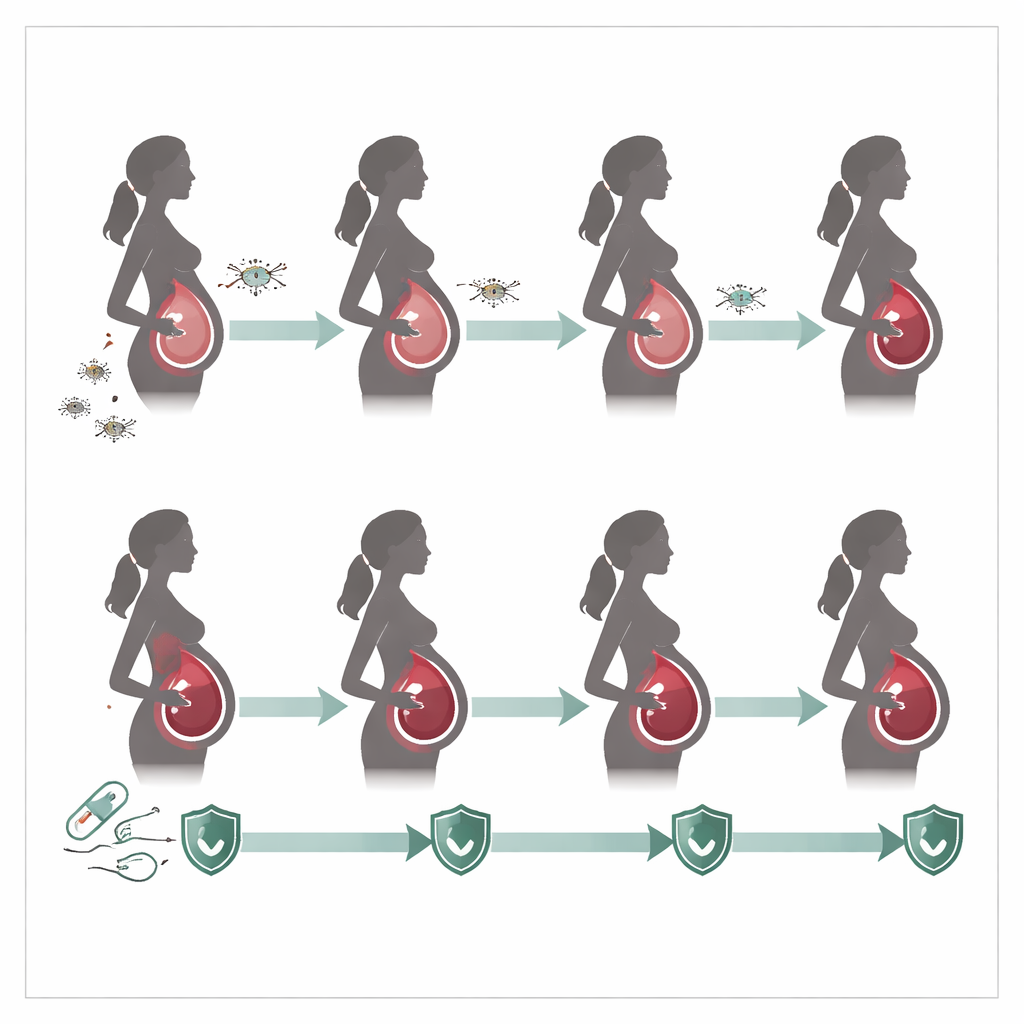
A key focus of the study is intermittent preventive treatment in pregnancy, a strategy in which pregnant women receive doses of the long-acting drug sulfadoxine–pyrimethamine during routine antenatal visits. By calibrating their model to results from randomized trials, the authors estimate that this treatment cuts malaria-related blood loss by about half. In 2023, with current imperfect coverage, they calculate that preventive treatment averted roughly 1.10 million cases of moderate or severe anaemia and about 330,000 severe cases. If every eligible pregnant woman received it, the number of prevented cases would be even higher. When combined with the impact of reduced community-wide transmission since 2000, these measures together prevented an estimated 1.73 million cases of moderate or severe maternal anaemia in 2023 alone.
What This Means for the Future
For a lay reader, the core message is straightforward: malaria remains a major cause of dangerous anaemia in pregnant women across sub-Saharan Africa, even after years of progress. Preventive treatment during pregnancy and broader malaria control have already saved many mothers and babies by keeping blood levels safer. But these very successes have made the situation more fragile, because fewer infections in early pregnancies mean less natural protection later on. Any interruption in preventive treatment or a resurgence of malaria transmission could quickly trigger a sharp rise in severe maternal anaemia. The study argues that protecting and expanding access to preventive malaria treatment in pregnancy is not just a malaria strategy—it is a cornerstone of safe motherhood and newborn health.
Citation: Leuba, S.I., Verity, R., Gutman, J.R. et al. The burden of malaria-attributable maternal anaemia and the impact of preventive treatment across sub-Saharan Africa. Nat. Health 1, 497–510 (2026). https://doi.org/10.1038/s44360-026-00068-3
Keywords: malaria in pregnancy, maternal anaemia, sub-Saharan Africa, preventive treatment, intermittent preventive therapy