Clear Sky Science · en
[64Cu]Cu-DOTA-TYPE7: a targeted PET radiotracer for imaging EphA2+ tumors
Seeing Hidden Tumors
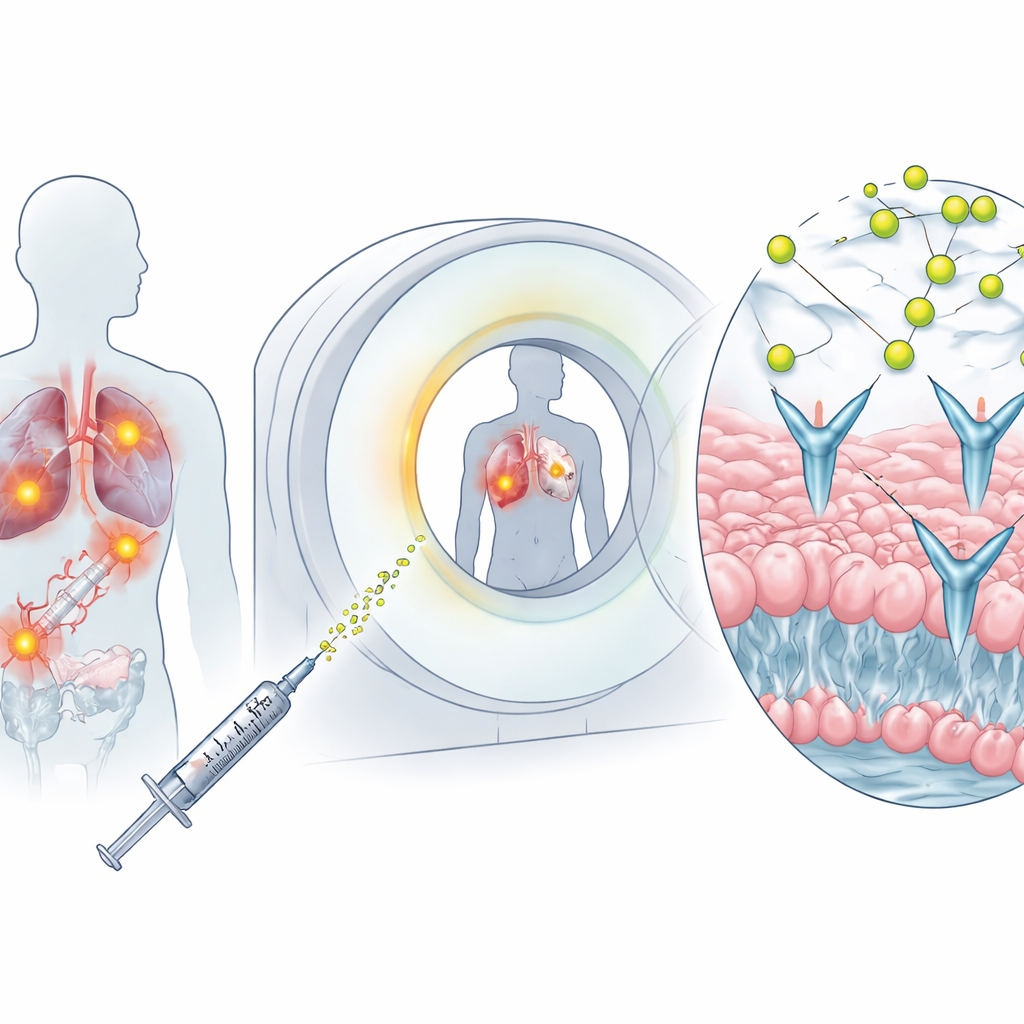
Cancers often hide in plain sight, growing inside the body long before they cause clear symptoms. Doctors rely on advanced scans to find these tumors early and guide treatment, but many imaging tools cannot distinguish aggressive cancers from harmless tissue. This study introduces a new type of radioactive tracer designed to light up tumors that carry a specific cancer-linked receptor, potentially allowing doctors to see dangerous growths more clearly and tailor therapy to each patient.
Targeting a Cancer Flag on Cells
Many tumors display an unusually high amount of a protein called EphA2 on their surface, a kind of molecular flag linked to more invasive and treatment‑resistant disease. Healthy adult tissues usually show this flag only at low levels, but cancers in the breast, lung, pancreas, colon, and several other organs often carry it in abundance. Because of this, EphA2 has become an attractive marker for both imaging and therapy, offering a way to distinguish cancer cells from normal ones and to focus radiation precisely where it is needed.
A Custom-Built Tracer for PET Scans
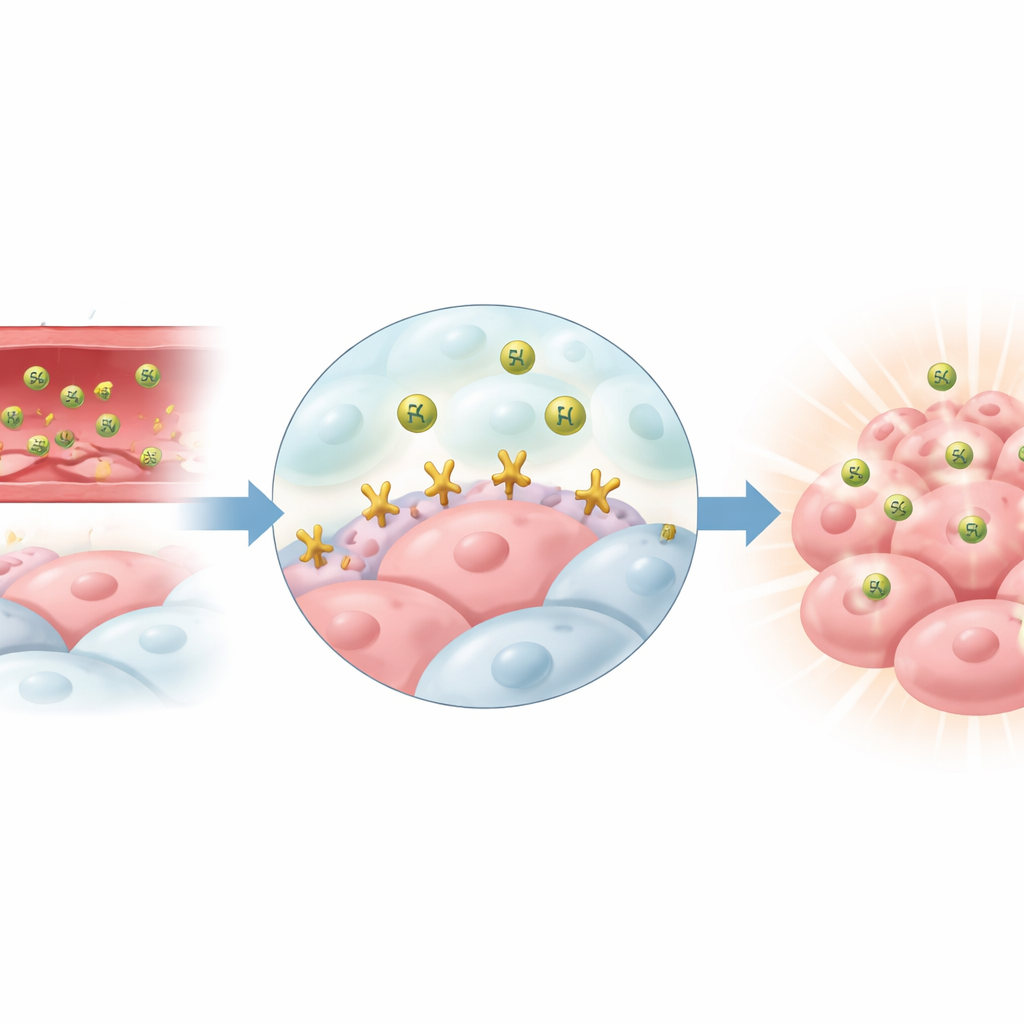
The researchers developed a small, soluble peptide called TYPE7 that can slip into the outer layer of the cell and latch onto EphA2. They attached TYPE7 to a chemical “holder” named DOTA, which firmly grips the radioactive metal copper‑64. When injected into the bloodstream, this new tracer, [64Cu]Cu‑DOTA‑TYPE7, circulates through the body and seeks out EphA2‑rich cells. Laboratory tests showed that the tracer could be labeled efficiently with copper‑64 under gentle conditions and remained mostly intact in blood‑like fluids and in the presence of liver enzymes for several hours, long enough to perform imaging.
Proving It Binds the Right Cells
To confirm that the tracer truly prefers EphA2‑positive cells, the team compared two types of cultured cells: one that produces a lot of EphA2 and one that produces very little. The EphA2‑rich cells took up far more tracer at every time point tested, while the low‑EphA2 cells showed only weak uptake. When the researchers flooded the system with non‑radioactive TYPE7, it blocked the radioactive tracer from binding, further demonstrating that attachment was specific rather than random sticking. Importantly, the tracer mostly stayed on the cell surface instead of being swallowed into the cell, matching the location of the EphA2 receptor in the membrane.
Lighting Up Tumors in Living Mice
The next step was to see whether the tracer could find tumors inside a living body. Mice were implanted with human cancer cells that either did or did not express EphA2, then scanned at several times after injection using PET/CT. In mice bearing EphA2‑positive tumors, the tracer built up strongly in the cancer tissue, peaking around four hours after injection and producing clear, high‑contrast images. When the same tracer was given together with a large dose of non‑radioactive TYPE7, tumor signals dropped sharply, showing that binding in the body was still EphA2‑driven. Tumors lacking EphA2 showed only low tracer uptake. As expected for a small peptide, much of the remaining radioactivity was cleared through the liver and kidneys.
What This Could Mean for Patients
Overall, the study shows that [64Cu]Cu‑DOTA‑TYPE7 can home in on EphA2‑rich tumors and make them visible on PET scans with good timing and contrast. Because copper‑64 has a therapeutic partner, copper‑67, a closely related version of this tracer could one day both show where the cancer is and deliver cell‑killing radiation to the same sites. While more work is needed to improve stability, refine the peptide, and test it in additional tumor models, this approach moves the field closer to pan‑tumor tools that let doctors see and treat aggressive cancers based on their molecular fingerprints rather than just their size or location.
Citation: Sanwick, A.M., Alves, D.S., Haugh, K.N. et al. [64Cu]Cu-DOTA-TYPE7: a targeted PET radiotracer for imaging EphA2+ tumors. npj Imaging 4, 33 (2026). https://doi.org/10.1038/s44303-026-00168-5
Keywords: EphA2, PET imaging, copper-64 tracer, cancer biomarker, theranostics