Clear Sky Science · en
Microplastics as both a driver of genitourinary cancers and a deliverer of treatments
Plastic dust in our bodies
Plastic is everywhere in modern life, from food wrapping to clothing fibers. Tiny fragments called microplastics and nanoplastics are now turning up inside human organs. This article looks at what that might mean for cancers of the urinary system, such as prostate, bladder, and kidney cancers, and how similar plastic particles might one day help deliver cancer treatments more precisely.
Where these tiny plastics come from
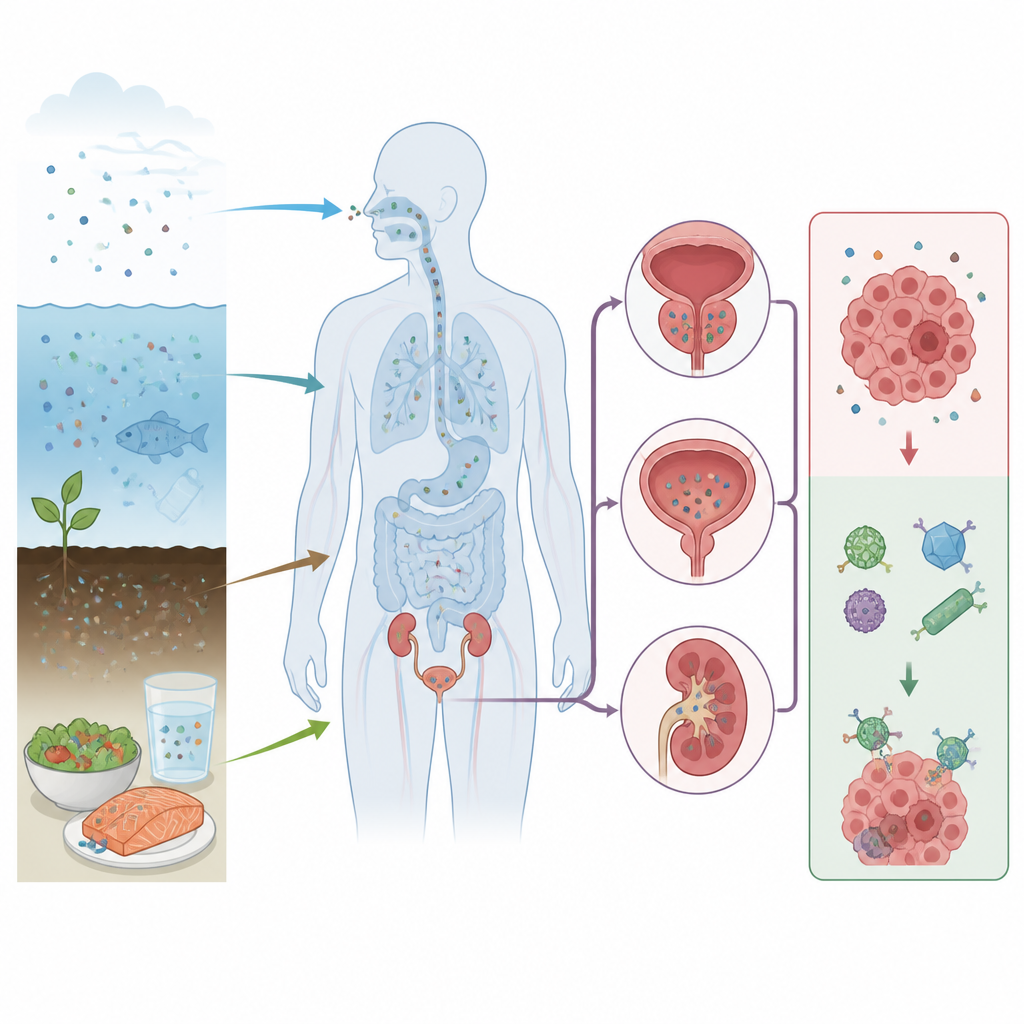
Microplastics and nanoplastics are small pieces of manmade plastic that form when larger items break down or are manufactured at microscopic size. They resist decay and build up in the environment, polluting air, water, soil, and food. People take them in mainly by eating and drinking, but also by breathing indoor dust and, to a lesser degree, through the skin. Studies estimate that the average person may swallow the equivalent of a credit card of plastic each year. Once inside the body, these particles can travel through the bloodstream and have been detected in blood, urine, and even the placenta.
What happens inside the body
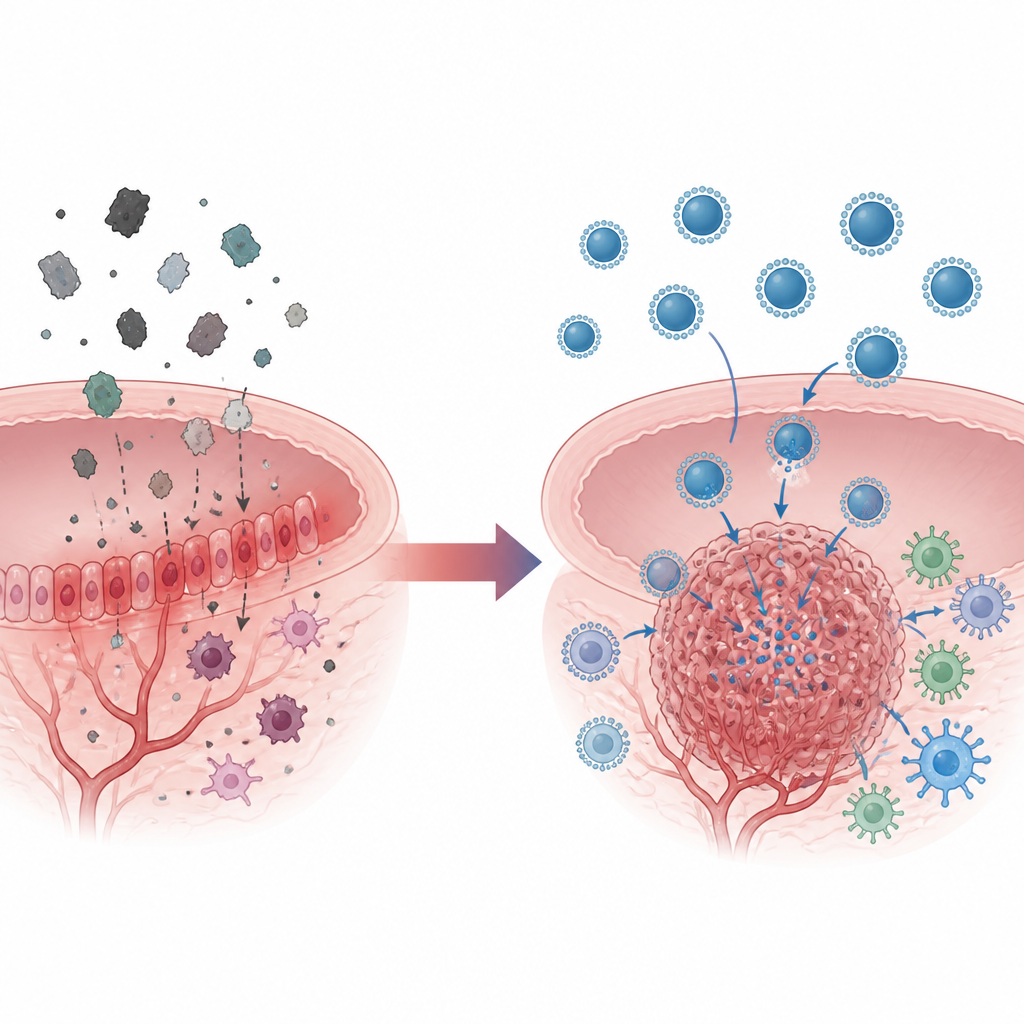
Laboratory and animal studies show that these tiny plastics can disturb the body in several ways. Their size and surface chemistry allow them to slip into cells, where they are often trapped in small internal sacs. There they can spark long lasting inflammation and raise levels of unstable oxygen molecules that damage DNA and cell structures. Some plastics also carry chemical additives or pollutants that interfere with hormones. Together, these effects may encourage cell growth, weaken built in repair systems, and create a tissue environment that favors cancer over time, although this has not yet been proven in people.
Clues from prostate, bladder, and kidney cancers
Researchers have begun to look directly for plastic particles in genitourinary tumors. Early work has found microplastics in human prostate and bladder cancer samples, often in higher amounts than in nearby non cancerous tissue. In one study, men with more plastic particles in prostate tumors also reported more frequent take out food consumption, hinting at a possible dietary source. Other research links plastic related chemicals in urine with prostate cancer. Experiments in kidney and bladder models suggest that microplastics can trigger scarring, oxidative stress, and immune changes in the urinary tract, and may interact with other pollutants and high fat diets. Still, these findings only show association and biological plausibility, not a firm cause and effect.
Using plastics to fight cancer
Not all tiny plastics are accidental pollutants. Scientists can design polymer based nanoparticles with precise sizes, shapes, and surfaces to carry medicines. In cancer care, these engineered particles can help drugs stay in the bloodstream longer, slip more easily into tumors, or remain in the bladder for extended local treatment. They can also be tailored to deliver immune boosting agents or imaging compounds to specific tissues. However, environmental microplastics may also influence how drugs move through the body, potentially changing where medicines go or how long they last, so understanding both sides of this double role is important.
What this research means for patients
The authors conclude that microplastics and nanoplastics are a likely concern for cancers of the urinary system, but current evidence is not strong enough to claim they cause these diseases. Better methods are needed to measure how much plastic actually builds up in human organs and to follow large groups of people over time. At the same time, carefully engineered plastic nanoparticles are emerging as useful tools to improve cancer treatment and diagnosis. In short, microscopic plastics may be both a potential hazard we must measure more clearly and a technology that, when tightly controlled, could help doctors treat prostate, bladder, and kidney cancers more effectively.
Citation: Sridharan, K., Maiorano, B.A., Rehan, F. et al. Microplastics as both a driver of genitourinary cancers and a deliverer of treatments. Commun Med 6, 311 (2026). https://doi.org/10.1038/s43856-026-01675-7
Keywords: microplastics, genitourinary cancers, prostate cancer, nanoparticle drug delivery, bladder and kidney cancer