Clear Sky Science · en
Emergence of Plasmodium falciparum pfdhps A581G mutation in Southern Senegal under Seasonal Malaria Chemoprevention pressure, 2020-2023
Why this matters for children in West Africa
Each rainy season in parts of West Africa, millions of children receive monthly medicines to prevent malaria. These drugs have saved countless lives, but like any treatment used year after year, they can push malaria parasites to adapt. This study looks at how parasites in southern Senegal are changing under the pressure of seasonal malaria chemoprevention and what that might mean for keeping children protected in the future.
How seasonal protection works
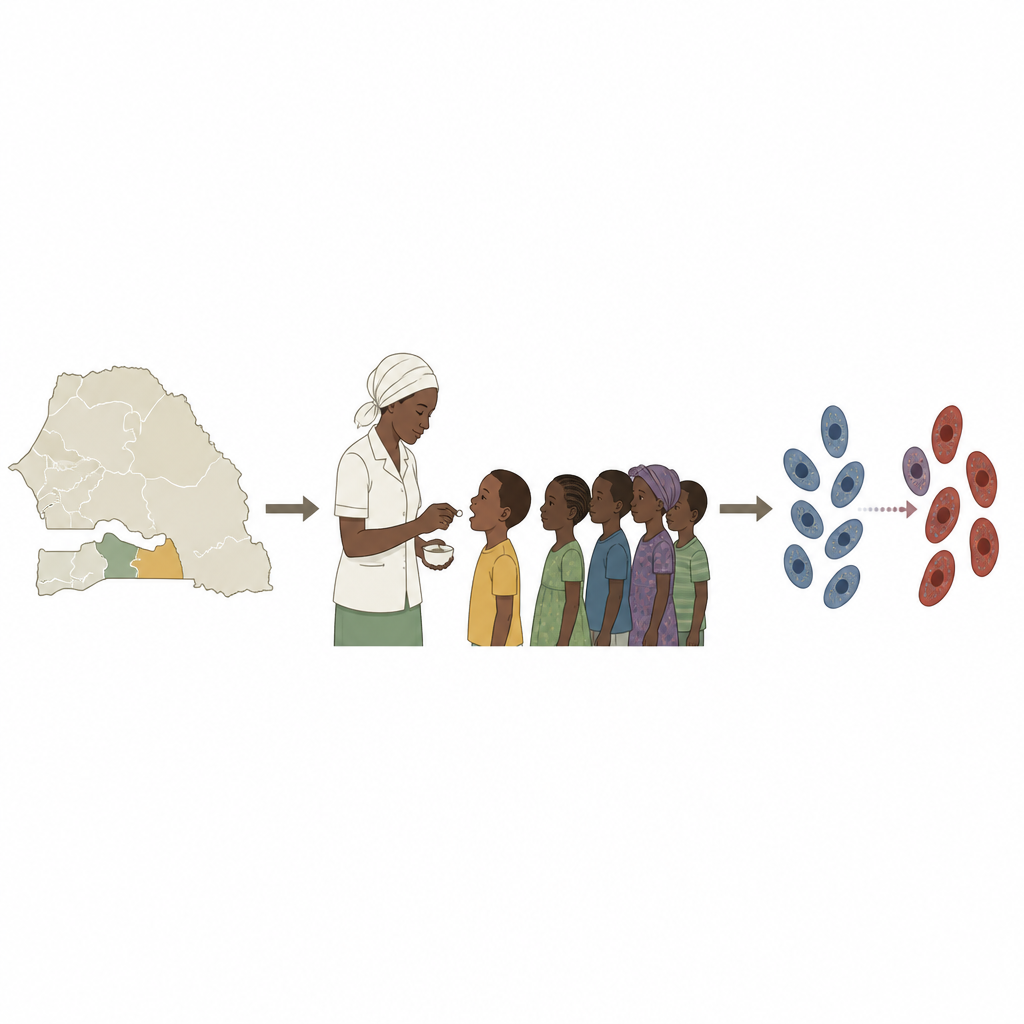
In southern Senegal, malaria transmission surges during the rainy months. To shield young children, health workers give a monthly course of two drugs, sulfadoxine–pyrimethamine and amodiaquine, during this high-risk period. This strategy, called seasonal malaria chemoprevention, has been highly successful at cutting cases. The sulfadoxine–pyrimethamine part works by blocking the parasite’s ability to make folate, a building block it needs to grow. Small DNA changes in the parasite, however, can make these medicines less effective, so tracking those changes over time is crucial.
What the researchers measured
Scientists analyzed dried blood samples from people with uncomplicated malaria treated in two high-burden regions, Kolda and Kédougou, between 2020 and 2023. Using deep sequencing, they focused on two parasite genes that are known to influence how well sulfadoxine–pyrimethamine works. Specific positions in these genes act like signposts for reduced drug sensitivity. By counting how often those altered positions appeared each year in each region, the team could see whether resistant parasite strains were becoming more common under years of preventive drug use.
Signs of long-term drug pressure
The study found that one cluster of changes tied to pyrimethamine resistance was already almost universal in the parasite population, confirming that this part of the drug combination has been under heavy pressure for a long time. Another key change linked to sulfadoxine resistance, called A437G, was also very common and stayed high throughout the study. A different change, K540E, which is part of a classic high-resistance pattern seen in other regions of Africa, appeared only rarely and did not increase over time. Taken together, these results suggest that parasites in southern Senegal carry several warning markers of reduced sulfadoxine–pyrimethamine sensitivity, but have not yet fully shifted to the most extreme resistance profile known from East and Southern Africa.
The new mutation on the rise
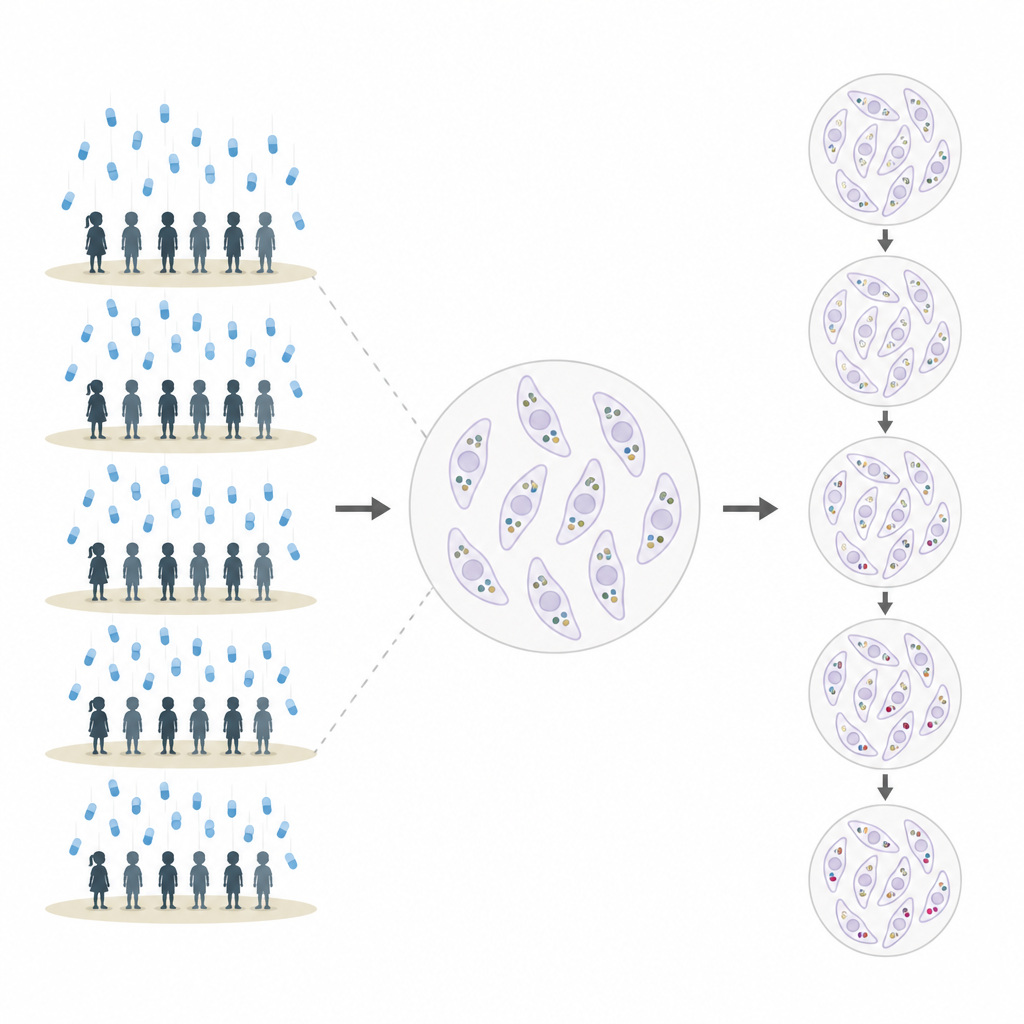
The most important finding was the emergence of another change, A581G, which had previously been rare or absent in West Africa. This mutation was not detected in 2020 or 2021. It first appeared in 2022 in Kolda and, by 2023, reached about 15 percent of infections there and around 7 percent in Kédougou. Every parasite carrying A581G also carried the older resistance markers, suggesting they form a more hardened strain. However, no parasites carried both K540E and A581G together, meaning the most concerning “super resistant” combination still has not taken hold in these regions. The rise in A581G was similar in younger and older children, indicating that age and cumulative preventive doses did not strongly shape who carried these strains.
What this means for malaria prevention
For now, the drug combination used for seasonal malaria chemoprevention in Senegal still works well in practice, and treated children remain strongly protected. Yet the steady appearance and growth of the A581G mutation above 10 percent in one region is a clear early warning sign. It suggests that, if current drug pressure continues, parasites could keep evolving toward higher resistance. The authors recommend continued genetic monitoring, exploration of alternative preventive drug combinations, and flexible policies so that health programs can adapt before resistance seriously erodes protection for children.
Citation: Diallo, M.A., Tine, A., Sow, D. et al. Emergence of Plasmodium falciparum pfdhps A581G mutation in Southern Senegal under Seasonal Malaria Chemoprevention pressure, 2020-2023. Commun Med 6, 295 (2026). https://doi.org/10.1038/s43856-026-01553-2
Keywords: malaria, drug resistance, Senegal, seasonal chemoprevention, Plasmodium falciparum