Clear Sky Science · en
The 5-HT1A receptor antagonist WAY-100635 maleate promotes retinal ganglion cell differentiation and protects the retino-visual circuits
Why Protecting Eye Nerves Matters
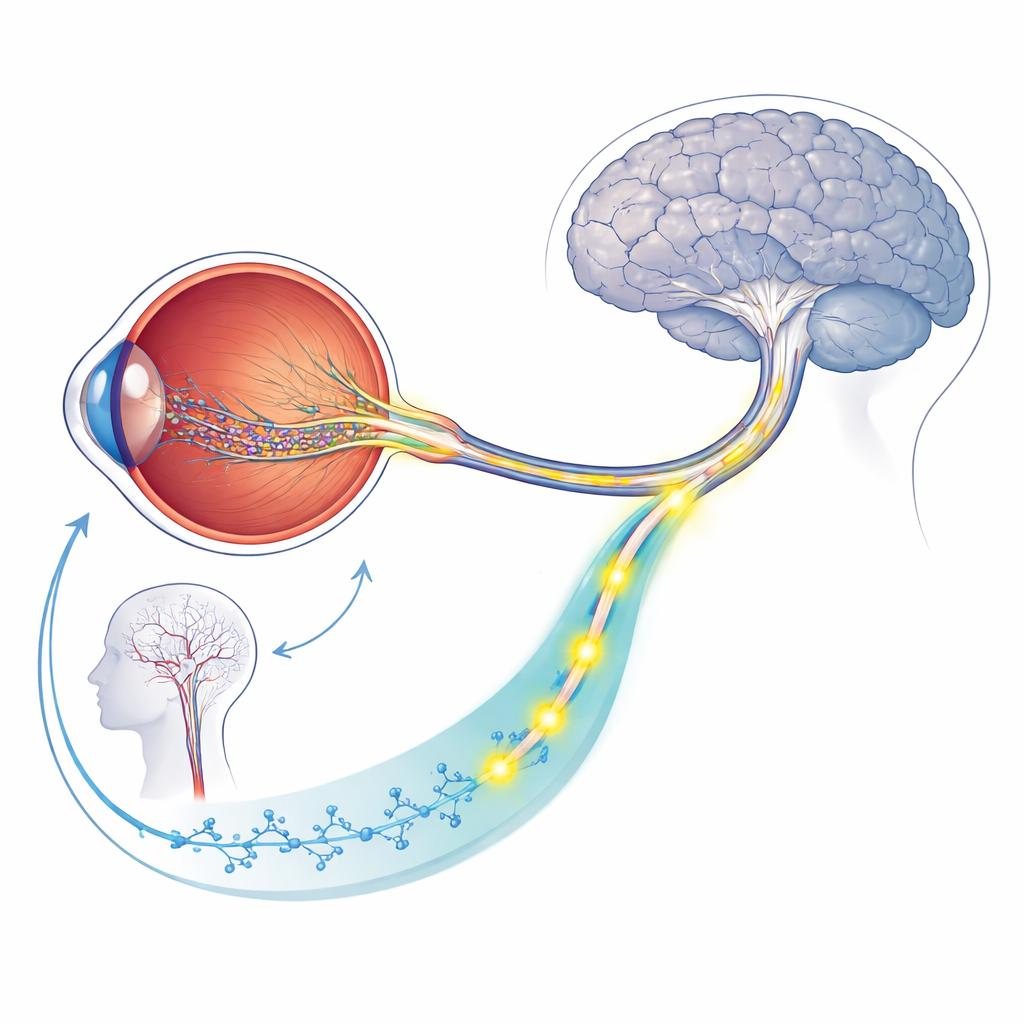
Glaucoma is a leading cause of irreversible blindness because it slowly kills the nerve cells that carry visual information from the eye to the brain. Current treatments mainly focus on lowering eye pressure, yet many people still lose vision even when that pressure is well controlled. This study explores a different strategy: directly protecting and strengthening those fragile nerve cells, called retinal ganglion cells, using a drug that has already been tested in people for other purposes.
A New Way to Shield Vision
The researchers focused on retinal ganglion cells because these neurons have long, partially uninsulated fibers that demand a lot of energy and are highly vulnerable to damage, especially when their tiny power plants, the mitochondria, falter. Using human stem cells, they grew large numbers of retinal ganglion cells in the lab and screened a library of known drugs to see which ones could boost mitochondrial health and keep cells alive under stress. One compound clearly stood out: WAY-100635, a blocker of a serotonin receptor called 5-HT1A that had previously been used in brain imaging studies and passed basic safety evaluations in humans.
Recharging the Cell’s Power System
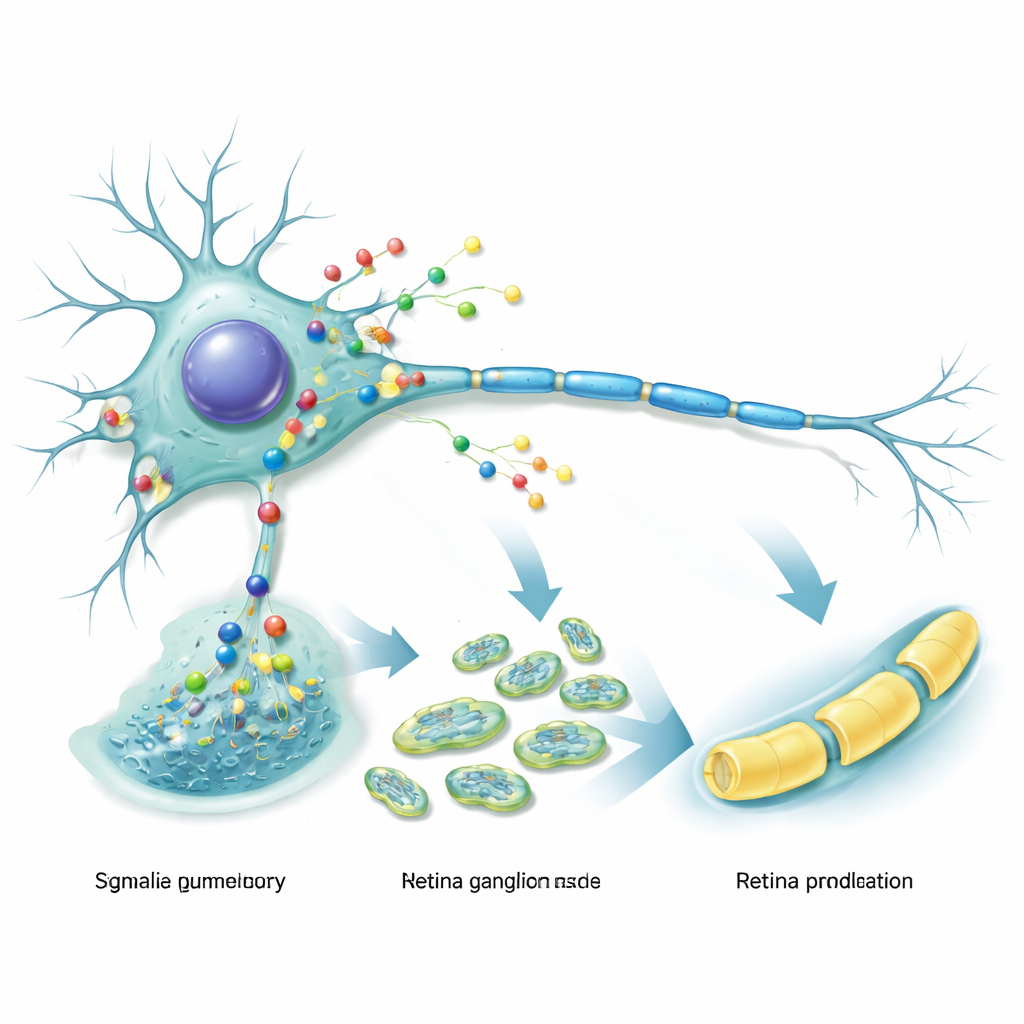
When human retinal ganglion cells were exposed to WAY-100635, their internal chemistry briefly shifted. Levels of a messenger molecule called cAMP rose near the cell’s nucleus, which in turn activated a protein that drives the creation of new mitochondria. This burst of fresh, healthy mitochondria increased the cells’ ability to maintain energy balance and reduced their tendency to undergo programmed cell death. In cells carrying a glaucoma-related mutation (OPTN E50K), the drug not only restored mitochondrial health but also calmed excessive electrical firing, a harmful overactivity linked to energy failure and toxicity.
Smart Metabolism for Different Life Stages
Intriguingly, the same drug nudged cell metabolism in different directions depending on developmental stage. In fully formed retinal ganglion cells, WAY-100635 shifted energy production toward a safer, more flexible form of sugar burning known as aerobic glycolysis, which can support function without generating as many damaging by-products as constant high-level mitochondrial activity. In contrast, when applied early to immature stem cells that were just beginning to turn into retinal ganglion cells, the drug pushed them to build more mature mitochondria and rely more on highly efficient oxidative metabolism. This early metabolic upgrade helped cells exit the cell cycle, commit to the retinal ganglion cell fate, and increased the overall yield of these neurons, a potential boost for future cell replacement therapies.
Protecting Eye-Brain Connections in Living Animals
To test whether these benefits extend beyond the dish, the team studied mice in two models of optic nerve damage: an acute injury caused by crushing the optic nerve, and a chronic form created by raising eye pressure with tiny beads. In both situations, mice that received daily injections of WAY-100635 retained significantly more retinal ganglion cells and their axons than untreated animals. Detailed imaging of the optic nerve and brain pathways showed that treated mice preserved more intact nerve fibers running from the eye through the optic nerve to visual centers deep in the brain. Electrical tests confirmed that treated animals maintained stronger retinal responses and better transmission of visual signals to the cortex. Behaviorally, mice given the drug performed better on tests of visual sharpness and contrast detection, even though the drug did not lower eye pressure itself.
Safety and Future Promise
Because glaucoma is a chronic disease, any new therapy must be safe over long periods. The researchers found that a month of daily treatment with WAY-100635 did not cause detectable harm to major organs such as liver and kidney in mice, and the drug reached the retina at levels consistent with its protective effects. Taken together, the results suggest that blocking the 5-HT1A receptor with WAY-100635 can restore energy balance in retinal ganglion cells, promote their maturation, and preserve the full eye-to-brain visual circuit in both sudden and slowly developing injury models. While further testing in humans is required, this work points to a realistic path for a neuroprotective glaucoma treatment that could complement pressure-lowering therapies and potentially help in other optic nerve diseases driven by mitochondrial failure.
Citation: Dutta, S., Surma, M.L., Chen, J. et al. The 5-HT1A receptor antagonist WAY-100635 maleate promotes retinal ganglion cell differentiation and protects the retino-visual circuits. Commun Med 6, 254 (2026). https://doi.org/10.1038/s43856-026-01528-3
Keywords: glaucoma, retinal ganglion cells, mitochondria, neuroprotection, optic nerve