Clear Sky Science · en
Sleep and temperature data from wearable devices support noninvasive detection of diabetes mellitus in a large-scale, retrospective analysis
Why Your Sleep and Body Heat Might Reveal Hidden Diabetes
Millions of people live with diabetes without knowing it, in part because standard tests usually happen only after symptoms raise concern. This study asks a simple but powerful question: could the smart rings and watches many people already wear quietly flag early signs of diabetes, long before a clinic visit? By analyzing months of sleep, heart, and body-temperature data from thousands of volunteers, the researchers show that common wearables can pick up subtle, lasting changes in the body that are strongly linked to diabetes.
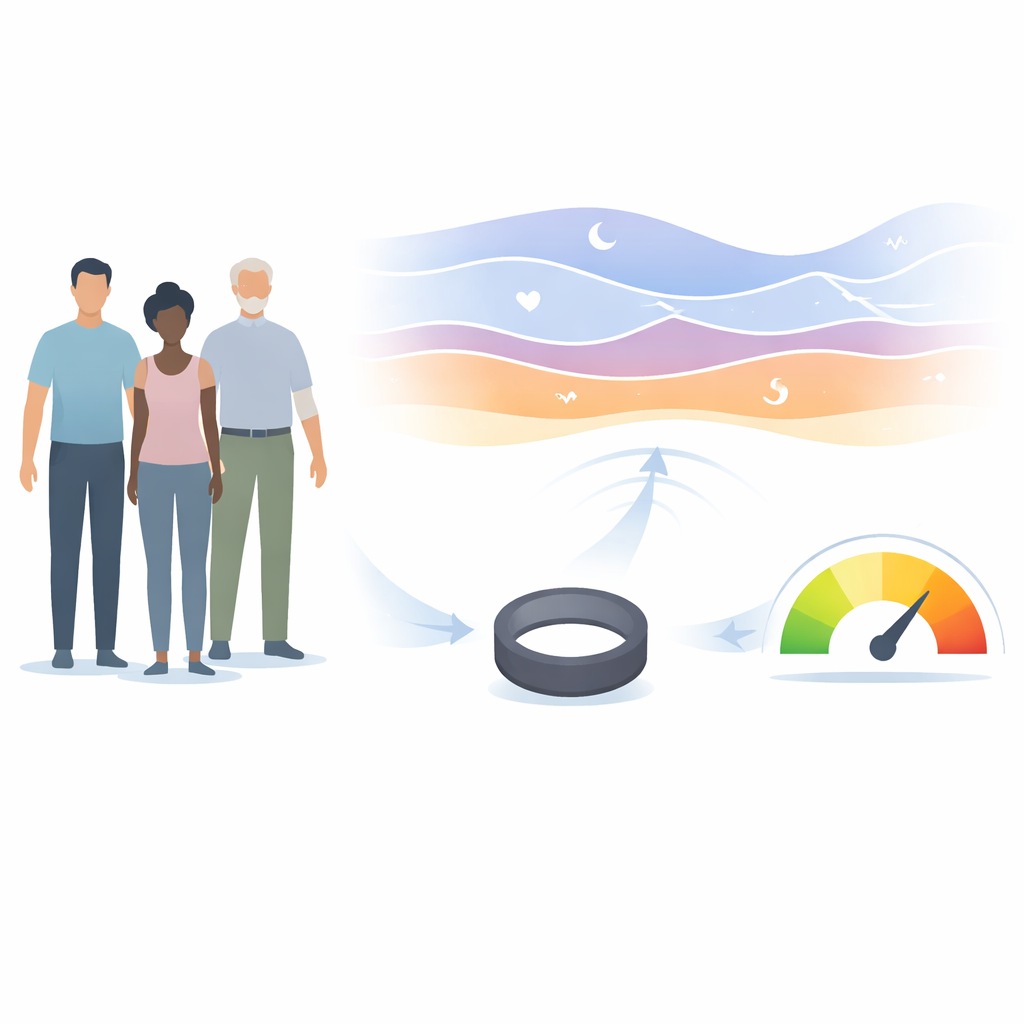
Smart Rings as Health Windows
The team drew on data from more than 33,000 people using a popular smart ring that tracks heart rate, heart rate variability, sleep stages, and temperature at the surface of the finger. Among these users, nearly 11,000 reported that they had never been diagnosed with diabetes, while 389 reported a diabetes diagnosis. For over four months in 2020, the ring recorded how quickly their hearts beat at night, how variable those beats were, how long and how efficiently they slept, and how their finger temperature rose and fell across day and night. From these continuous streams, the scientists built 36 nightly measures designed to capture not just simple averages, but also daily rhythms and the complexity of body-temperature changes during sleep.
Hidden Patterns in Sleep and Body Temperature
When the researchers compared groups, people reporting diabetes consistently looked different from those without a diagnosis. On average, they had higher night-time heart rates, lower heart rate variability (a sign of a less flexible nervous system), slightly shorter sleep, and a smaller day–night swing in finger temperature. The team also created more advanced temperature features that describe how stable someone’s temperature rhythm is over 24 hours and how intricate the minute-to-minute temperature pattern is during the middle of the night. These richer measures turned out to be especially informative, suggesting that diabetes quietly reshapes how the body regulates heat and sleep over many nights, not just in single snapshots.
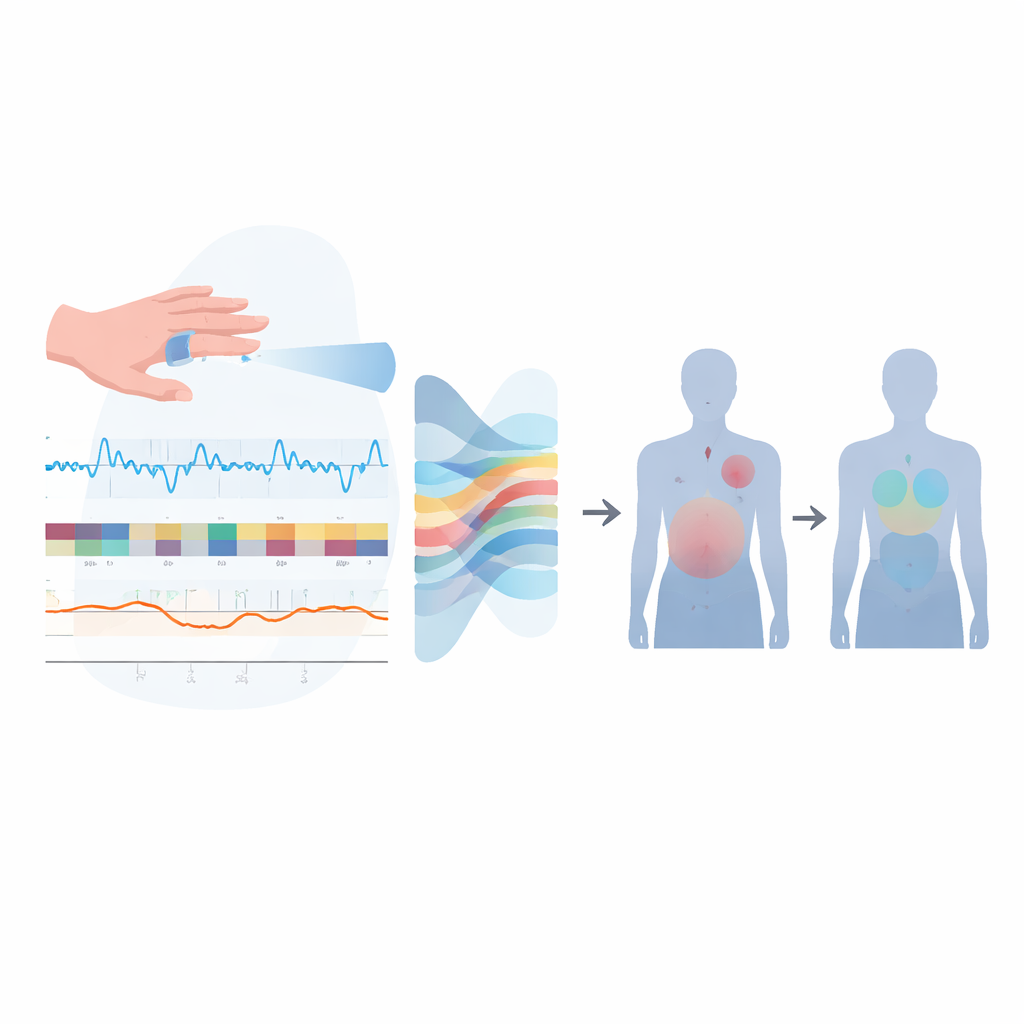
Teaching Algorithms to Spot Risk
To see whether these wearable signals could actually distinguish individuals with diabetes, the team trained machine-learning models on rolling windows of 1 to 21 nights of data. The idea was that if diabetes produces small but persistent shifts in physiology, several weeks of measurements should make those shifts stand out. This is exactly what they found: using just one night of data yielded modest performance, but feeding in 14 or 21 nights allowed the best model to reach a high accuracy score (an AUROC of about 0.88) and strong precision. In other words, over three weeks of typical at-home wear was enough for the algorithm to separate people with diabetes from those without, far better than chance.
Separating Diabetes from Other Long-Term Illnesses
Many chronic conditions, like high blood pressure or sleep apnea, can also disturb sleep and heart patterns. The researchers worried that their model might simply be detecting “being sick” rather than diabetes in particular. To test this, they looked at people who said they did not have diabetes but did report another chronic illness. Those individuals did not receive significantly higher diabetes-like scores than people reporting no chronic conditions at all. Crucially, when the team removed the more advanced temperature features from the model, people with other chronic illnesses started to be mistaken for having diabetes more often. This shows that detailed body-temperature patterns help the system be more specific to diabetes, instead of flagging every kind of health problem.
What This Could Mean for Everyday Health
Finally, the authors checked how well their best model would work in a more realistic population, where only a minority of people have diabetes. Even in this tougher test, using thousands more users and preserving a typical diabetes rate, the system still picked up far more signal than random guessing. To a layperson, the message is straightforward: weeks of simple, passive data from a ring or watch—how you sleep, how your heart behaves at night, and how your skin temperature rises and falls—contain enough information to flag physiology consistent with diabetes. While this is not a replacement for blood tests, it points toward a future where everyday wearables quietly suggest who should seek testing earlier, and perhaps help monitor chronic conditions in the background of daily life.
Citation: Viswanath, V.K., Navaneethan, S., Burks, J.H. et al. Sleep and temperature data from wearable devices support noninvasive detection of diabetes mellitus in a large-scale, retrospective analysis. Commun Med 6, 223 (2026). https://doi.org/10.1038/s43856-026-01501-0
Keywords: wearable devices, sleep patterns, body temperature, diabetes detection, digital health