Clear Sky Science · en
Analysis of a PCORnet® database identifies multi-level predictors of delta hepatitis in a U.S. hotspot
Why this hidden liver infection matters
Most people have heard of hepatitis B, a viral infection that can damage the liver. Far fewer know about hepatitis delta, a lesser-known virus that can only infect people who already have hepatitis B but makes their disease much more dangerous. This study looks at how often people in New York City—a national hotspot for hepatitis delta—are actually tested for it, who is most affected, and how it shapes their risk of serious liver problems.
A closer look at a high‑risk city
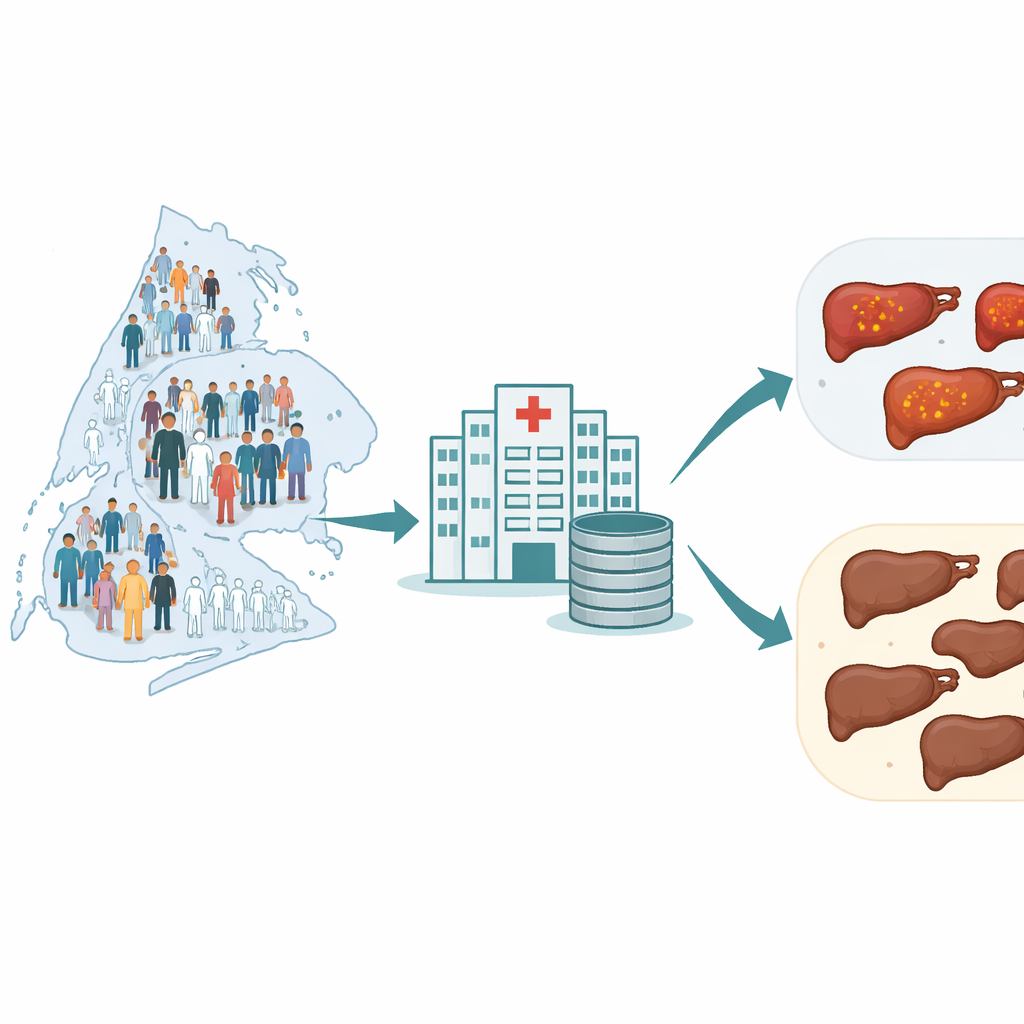
New York City has a large immigrant population from parts of the world where hepatitis B and delta are more common. The researchers used INSIGHT, a huge electronic health record system that links five major hospital networks across the city and includes data on more than 13 million patients. From this resource, they identified over 106,000 adults who had signs of hepatitis B between 2010 and 2023, based on blood tests and diagnosis codes. They then examined who was tested for hepatitis delta, who tested positive, and how their liver health and neighborhoods differed from those who were never tested.
Too few tests, even where risk is high
Despite New York City being a known hotspot, only about one in twenty people with hepatitis B in this study had ever been tested for hepatitis delta. Among those who were tested, about 1 in 18 turned out to be positive. Testing increased sharply after 2019, likely following updated medical guidelines, but even by 2023 only about half of patients with hepatitis B were being checked for delta. The team also found mismatches between medical record codes and actual lab results—some people had a delta diagnosis code but negative blood tests, while others had positive tests but no diagnosis code—showing that relying only on billing codes can give a distorted picture of how common the infection really is.
Who gets tested and who is missed
The people who were tested for hepatitis delta did not look the same as those who ultimately tested positive. Doctors were more likely to order delta tests for older patients, those identified as Asian, and those already receiving detailed hepatitis B care, such as advanced blood work and liver scans. These patients tended to live in neighborhoods with more resources and near large hospitals. In contrast, people who actually had delta were more often women and white, and were less likely to be Asian, Black, or Hispanic. Neighborhood data showed that both testing and positivity were more common in areas with relatively lower social deprivation, suggesting that people living in poorer or more marginalized areas were less likely to be tested and diagnosed, even though they may also be at risk.
Delta infection and fast‑moving liver disease
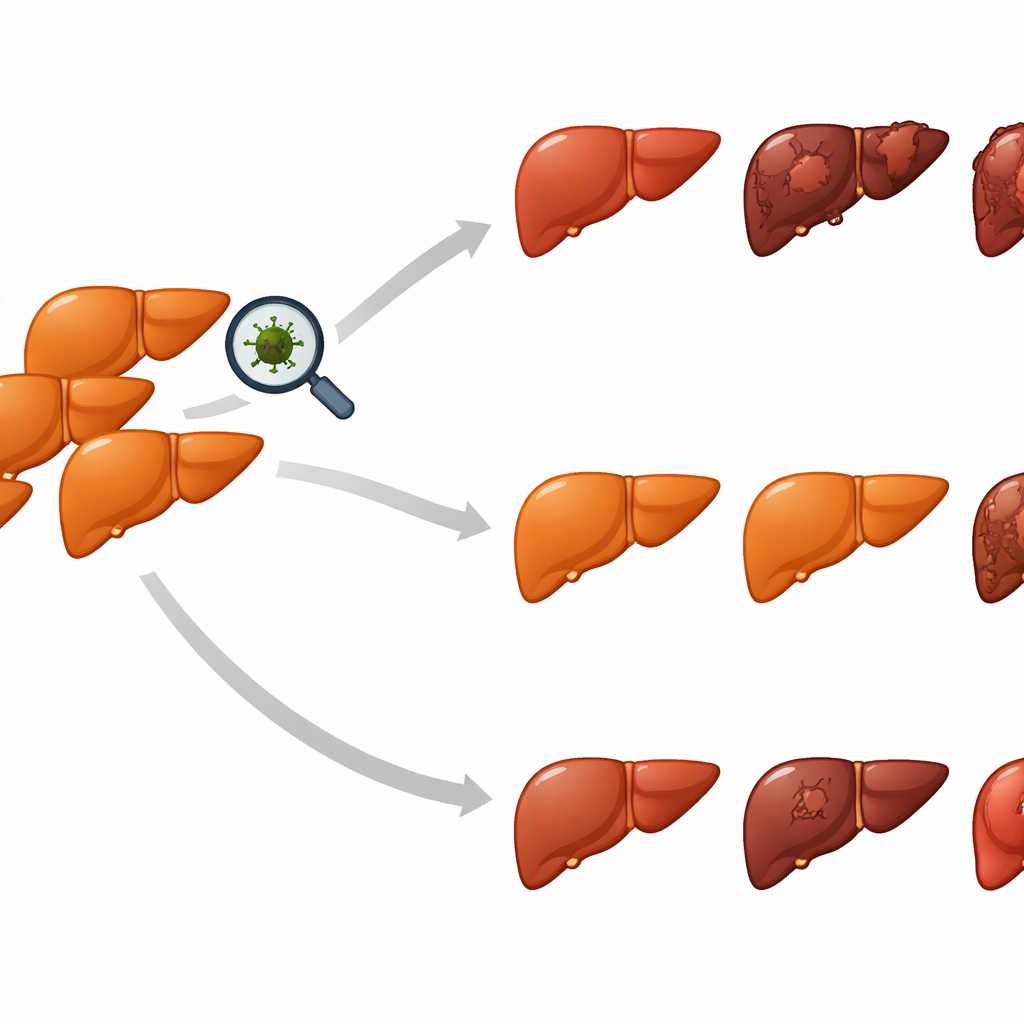
The study confirmed that hepatitis delta is not just another lab result—it is tied to much worse liver outcomes. Compared with people who had hepatitis B alone, those with delta were more likely to develop severe scarring of the liver (cirrhosis), liver failure, liver cancer, and to need a transplant. They also had more transplant complications, such as rejection or infection. When the researchers followed patients over time, those with delta reached these serious milestones faster. A smaller group with active delta virus detected in the blood faced especially high risks of liver failure and liver cancer, underscoring the danger of missing the diagnosis until the disease is advanced.
What this means for patients and doctors
To a layperson, the message of this study is clear: a particularly harmful liver infection is flying under the radar, even in places where it is known to be common. Testing for hepatitis delta is still rare, shaped by where people live, which hospitals they can reach, and how familiar their doctors are with the virus. Because delta so strongly accelerates liver damage, the authors argue that catching it early is crucial. They recommend automatic "reflex" testing for hepatitis delta whenever someone is found to have hepatitis B, especially in communities with fewer resources. As new treatments for delta become available, making testing routine could help prevent many cases of liver failure, cancer, and transplant, and ensure that people at highest risk are not left behind.
Citation: Alpert, L., Zhang, X., Smith, R. et al. Analysis of a PCORnet® database identifies multi-level predictors of delta hepatitis in a U.S. hotspot. Commun Med 6, 239 (2026). https://doi.org/10.1038/s43856-026-01462-4
Keywords: hepatitis delta virus, hepatitis B, liver disease, New York City, health disparities