Clear Sky Science · en
Host response biomarkers of tuberculosis recurrence and treatment failure
Why watching the body’s response to TB matters
Tuberculosis (TB) remains one of the world’s deadliest infectious diseases, and even when treatment seems successful, some people fall ill again or never fully clear the infection. Today, doctors mostly rely on sputum—mucus coughed up from the lungs—to track whether therapy is working. But sputum tests can be slow, hard to obtain, and sometimes misleading. This study explores a different idea: can simple blood tests that read the body’s immune and genetic responses reveal, earlier and more reliably, who is truly cured and who is at risk of treatment failure or a return of TB?
Following patients beyond the end of treatment
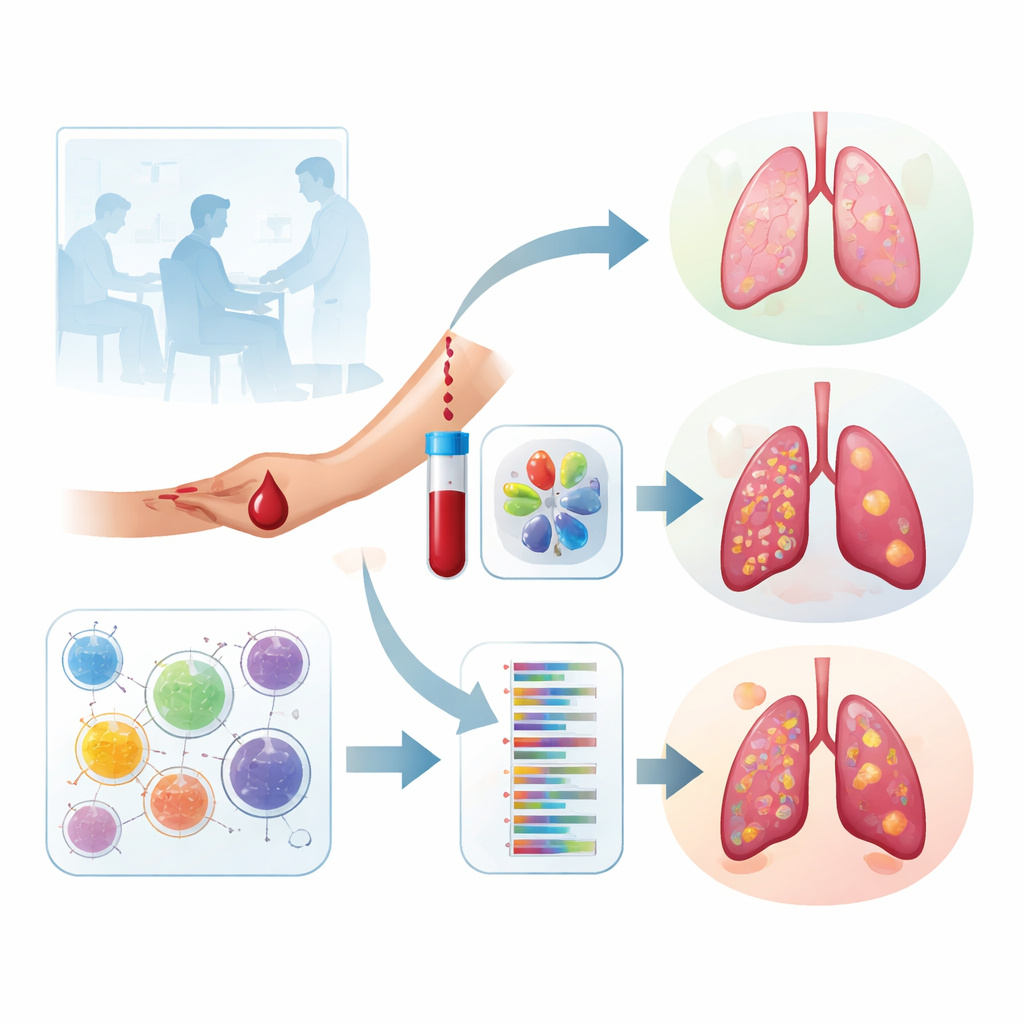
The researchers drew on a large African cohort called TB Sequel, which followed more than a thousand adults treated for lung TB in Tanzania, Mozambique, The Gambia, and South Africa for up to five years. From this cohort they selected 40 people who either failed treatment or later developed TB again, and 37 similar patients who were cured and stayed healthy. All had drug-susceptible TB and received standard therapy. The team regularly collected blood samples—from the start of treatment up to a year later and beyond—and compared these to standard sputum culture and smear results to see how well blood-based signals tracked the course of disease.
Reading warning signs on immune cells
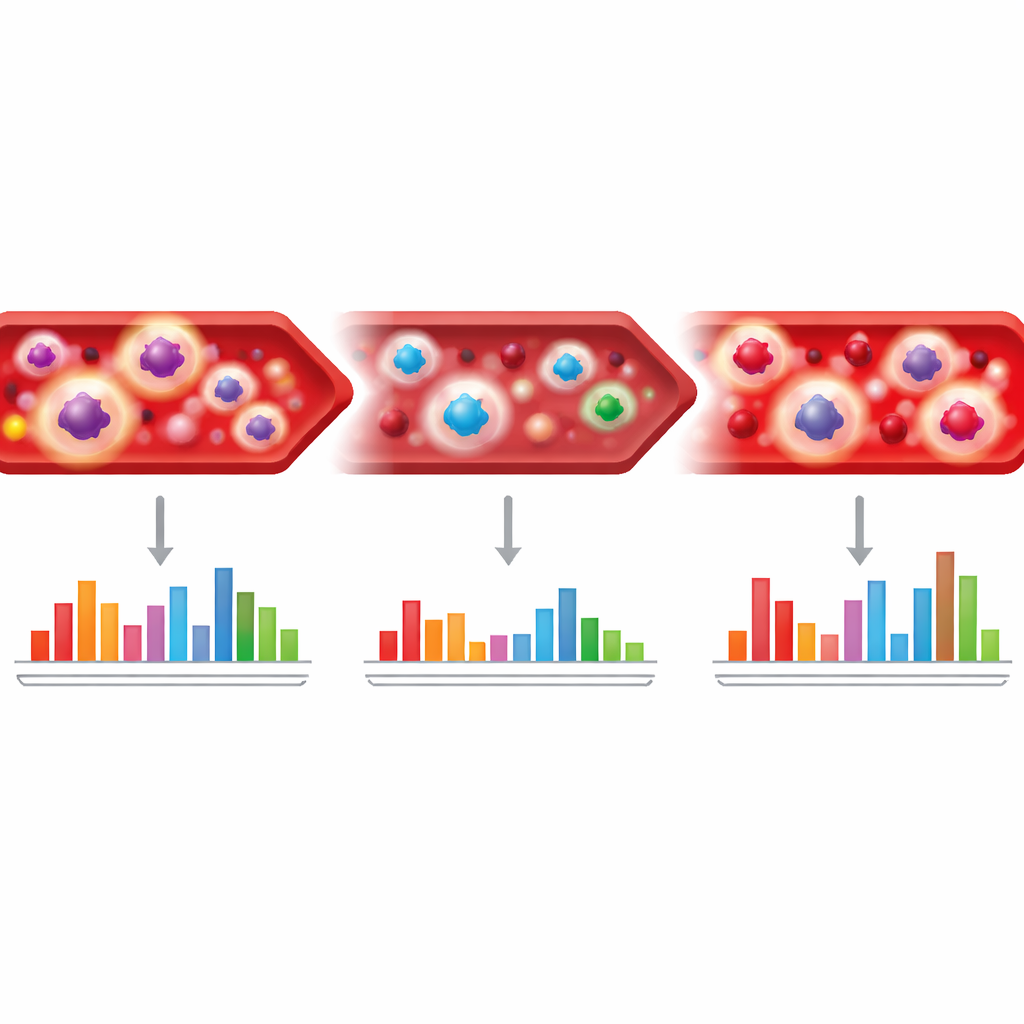
One set of blood tests focused on TB-specific CD4 T cells, a type of white blood cell that coordinates the immune attack on germs. When these cells are highly “switched on,” they display certain surface and internal features, including markers called CD38, HLA-DR, Ki67, and CD27. Using a lab technique that profiles these markers after exposing blood cells to TB proteins, the scientists could gauge how intensely the immune system was responding to the bacteria. They found that in most patients, the activation markers were very high at diagnosis, dropped sharply after two months of treatment, and continued to fall as the infection came under control. In people whose sputum never turned negative—a group called non-converters—these activation levels stayed unusually high, hinting that live bacteria were still present despite ongoing therapy.
Blood signals that mirror TB’s return
The team then asked whether a resurgence in these immune signals could uncover TB coming back after treatment had ended. Indeed, among patients whose disease recurred nine to twelve months after starting therapy, levels of the CD38 marker on TB-specific T cells rose again and clearly separated them from cured controls. Using a pre-set threshold, CD38 correctly identified all recurrence cases in this time window and rarely flagged healthy controls. In some individuals, elevated activation appeared months before TB was officially diagnosed by sputum, suggesting that the immune system sensed the returning bacteria early. In contrast, people who had a one-off positive sputum test right at the end of treatment—a group the authors call reverters—did not show such a strong immune signal, raising the possibility that some of these late positive results reflected very low-level or even false-positive findings rather than meaningful disease.
Gene activity patterns as a second window
The second approach looked at patterns of gene activity in whole blood. Rather than measuring thousands of genes, the researchers focused on three small “signatures,” each built from just a few genes whose combined behavior has previously been linked to TB risk and treatment response. These scores were high (or low, depending on the signature’s design) at diagnosis and generally moved toward normal as treatment progressed. In patients whose TB never fully cleared, the scores stayed abnormal. At nine to twelve months, these gene-based scores were again able to distinguish people with returning TB from those who remained healthy, with reasonably high sensitivity and specificity. However, like the T-cell markers, they did not reliably single out future failures or recurrences at the very start of treatment, and they could not clearly detect the reverters at the end of therapy.
What this means for future TB care
Taken together, the findings show that simple blood-based readouts of the body’s response to TB—either by tracking activated immune cells or by measuring small gene expression signatures—can detect ongoing disease, lack of sputum conversion, and clinically important recurrences after treatment has supposedly ended. These tests do not yet replace sputum for every situation, and they struggle to interpret borderline cases at the exact end of therapy. But they point toward a future in which a quick blood draw could help doctors identify patients who need closer follow-up or adjusted treatment, even when their sputum tests are negative or unavailable. Such sputum-independent tools could be especially valuable for children, people with disease outside the lungs, and clinics with limited laboratory capacity, ultimately helping to prevent relapse, reduce transmission, and improve long-term outcomes for people with TB.
Citation: Bauer, B., Ahmed, M.I.M., Baranov, O. et al. Host response biomarkers of tuberculosis recurrence and treatment failure. Commun Med 6, 184 (2026). https://doi.org/10.1038/s43856-026-01424-w
Keywords: tuberculosis biomarkers, treatment failure, disease recurrence, blood-based diagnostics, host immune response