Clear Sky Science · en
A simple preference aggregation rule explains how multidimensional identities shape social networks
Why Our Social Circles Look the Way They Do
Why do school friendships, romantic partnerships, and everyday social circles so often fall along lines of ethnicity, age, or social class—and why is it so hard to cut across those divides? This article introduces a simple rule that helps explain how our many overlapping identities, such as gender, grade level, ethnicity, and income, combine to shape who connects with whom. Understanding that rule sheds light on why segregation persists, where bridges between groups appear, and how policies might better foster social cohesion.
Many Sides of Who We Are
Each of us belongs to multiple groups at once: we are not just a gender or an ethnicity or an income bracket, but a combination of all of these. Most research on social networks has treated such traits one by one—studying, for example, how race alone or age alone shapes our friendships. That approach leaves a central puzzle unsolved: when we meet someone new, how do we mentally combine all these bits of information about them to decide whether a tie is worth forming? Do we focus on a single standout trait, average everything together, or apply some other blend of preferences?
A Simple Rule Called MAPS
To tackle this question, the authors build a modeling framework they call MAPS (Multidimensional Aggregation of Preferences in Social Ties). In MAPS, people are represented as belonging to groups along several identity dimensions—such as grade, ethnicity, and gender in schools, or gender, age, ethnicity, and economic level in marriages. For each dimension, a group (say, 9th graders or middle-income adults) has a certain tendency to connect to every other group on that same dimension. The key step is an “aggregation rule” that combines these separate tendencies into a single overall likelihood that a tie will form between two people who differ on several traits at once. 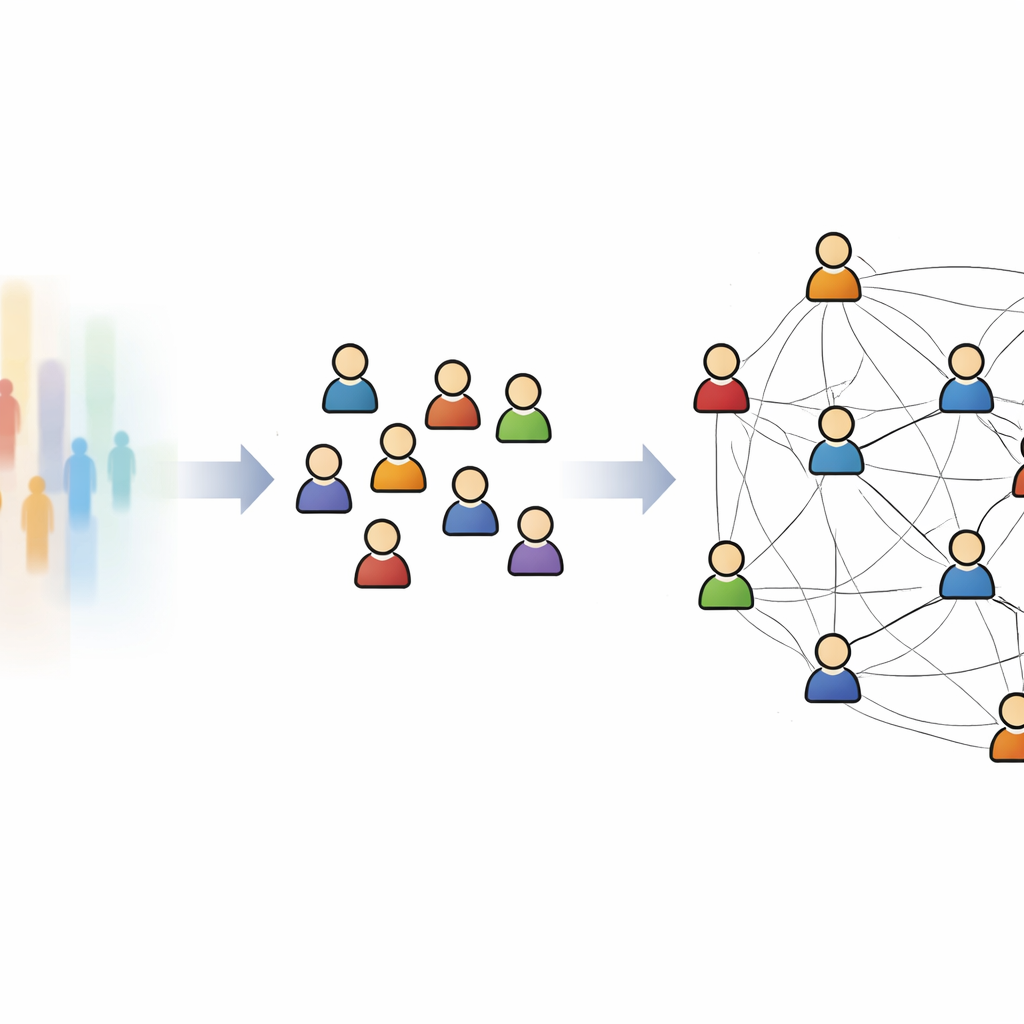
Testing How People Really Combine Traits
The researchers compare three intuitive rules. Under an “OR” rule, people are easygoing: a strong match on any one dimension (same grade or same ethnicity, for example) is enough to make a connection likely. Under a “MEAN” rule, people act as if they average their feelings across dimensions, ending up with moderate preferences for many cross-group ties. Under an “AND” rule, people are picky: they evaluate each dimension separately and only form a tie if all of those evaluations are favorable. Using detailed data from 70 U.S. high schools and marriage records from the 50 largest U.S. cities, the authors use statistical tools to see which rule best reproduces the observed patterns of who connects to whom.
The Picky-Chooser Pattern
The clear winner is the picky “AND” rule. In both friendships and marriages, people behave as if they check each identity dimension one by one—grade, ethnicity, gender, age, income level—and only move forward when none of those checks raises a red flag. This simple rule not only fits the data at least as well as more complicated models, it often does better once model complexity is penalized. With this rule in hand, the authors are able to uncover interpretable patterns: in schools, students strongly prefer friends from their own grade and often their own ethnicity, with younger students tending to “look up” to higher grades. Some ethnic groups show especially strong within-group preferences, while others act as bridges between communities. In marriages, strong age and ethnic similarity, along with heterosexual pairings, dominate, and economic status reveals an aspirational tilt—people in lower or middle tiers show a quiet pull toward partners in higher tiers. 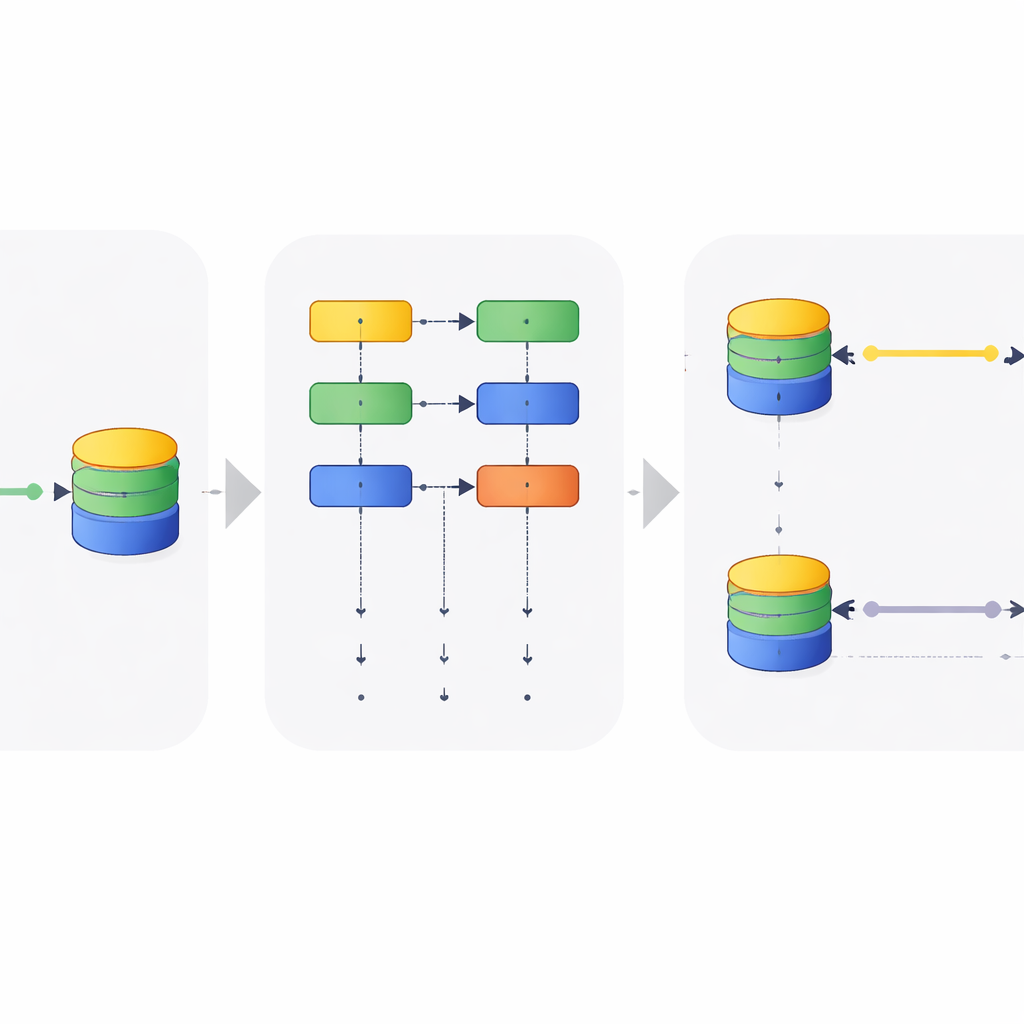
Which Traits Matter Most
MAPS also offers a way to measure which identity dimensions are most important for forming ties—a concept known as salience. One measure looks at how far preferences deviate from neutral; another asks how much adding a dimension improves the model’s ability to explain the data. In high schools, grade is by far the most influential trait, followed by ethnicity, with gender mattering least. In marriages, age comes first, then gender and ethnicity, with economic level adding nuance but less overall weight. This approach helps resolve long-standing debates about whether multiple identities can be important at once and how to rank their influence without relying only on intuition.
What This Means for Everyday Life
Put in plain terms, the article concludes that people tend to form social ties only when someone feels “right” along all the identity dimensions that matter to them—a selective, dimension-by-dimension evaluation rather than a rough average. This simple picky-chooser rule can generate sharply segregated networks even when many potential cross-group ties exist, helping explain persistent divides by ethnicity, age, or class. At the same time, the framework pinpoints where bridges are most likely to appear and which traits policymakers or educators might target if they aim to reduce segregation and foster more inclusive, cohesive social networks.
Citation: Martin-Gutierrez, S., Cartier van Dissel, M.N. & Karimi, F. A simple preference aggregation rule explains how multidimensional identities shape social networks. Commun Phys 9, 142 (2026). https://doi.org/10.1038/s42005-026-02537-3
Keywords: social networks, multidimensional identity, homophily, friendship and marriage patterns, social segregation