Clear Sky Science · en
Psilocybin ameliorates neuropathic pain-like behaviour in mice and facilitates gabapentin-mediated analgesia
Why this study matters for people in pain
Chronic nerve pain can linger for months or years, often resisting standard medications and draining quality of life. This study explores whether psilocybin, the active ingredient in certain “magic” mushrooms, can ease nerve pain in mice and, importantly, make an existing pain drug, gabapentin, work better and longer. The findings hint at a future where a single psychedelic-assisted treatment could help unlock more benefit from familiar medicines for people living with stubborn pain.
A new look at an old problem
Chronic neuropathic pain arises when nerves are damaged, for example after surgery, trauma, or diabetes. Many people given current drugs, including gabapentin, get only partial relief or none at all, and side effects or tolerance often limit long-term use. At the same time, psilocybin has attracted attention for its lasting benefits in depression and anxiety after only one or two guided sessions. Because mood disorders often accompany chronic pain, and because psilocybin can reshape brain networks, the researchers asked whether it might also reset brain circuits that keep pain signals “stuck” in a high-gain state.
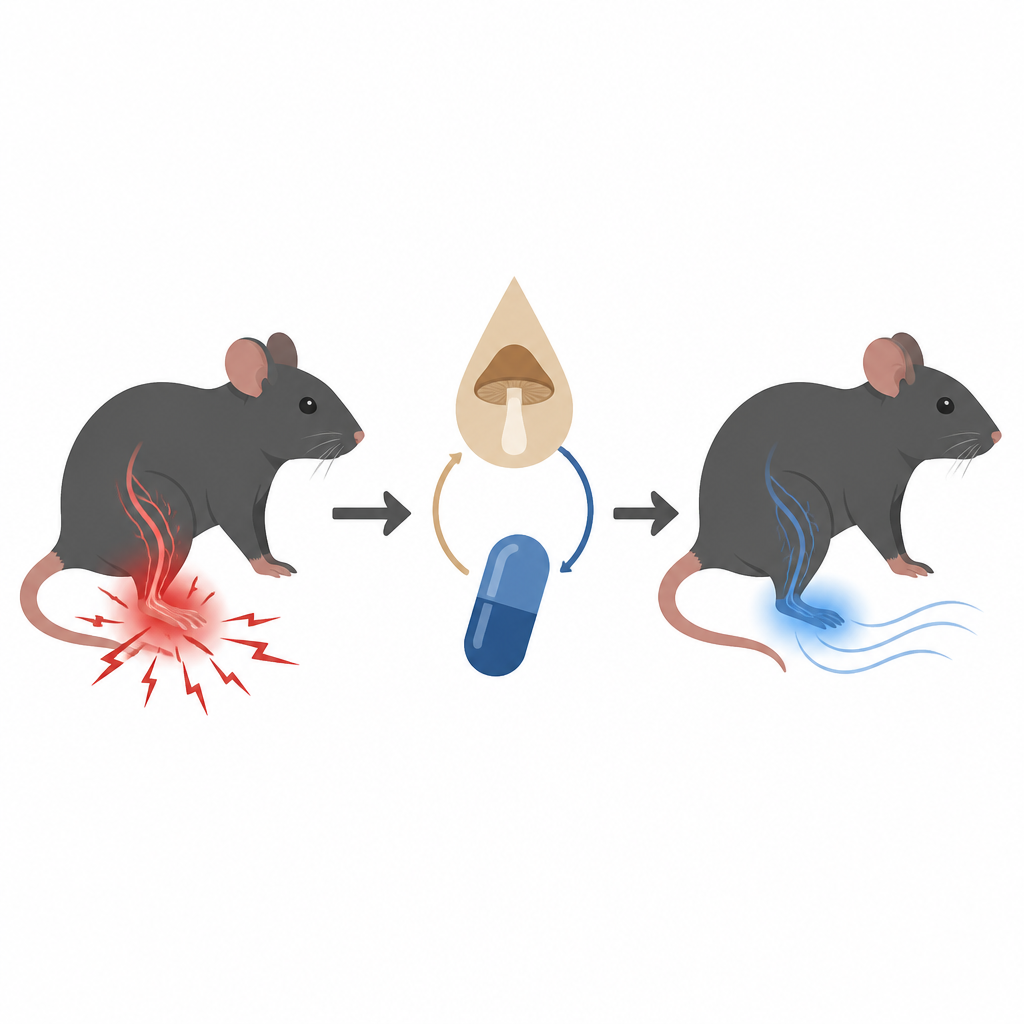
Testing psilocybin in a mouse model of nerve pain
The team used a well-established mouse model that mimics human nerve injury in a hind paw, producing long-lasting hypersensitivity to touch and temperature. After this pain-like state had fully developed, mice received a single injection of psilocybin at different doses or a saltwater control. The scientists then measured how strongly the animals reacted when the injured paw was gently pressed, brushed, or cooled, along with general movement and stress-related signs. A higher tolerance to these tests indicated less pain-like behaviour.
Lasting pain relief and the role of key receptors
A single moderate dose of psilocybin reduced mechanical hypersensitivity in both male and female mice, with effects lasting around a week in females and up to a month in males. Lower, repeated doses extended and strengthened this benefit without impairing movement. Psilocybin also reduced certain stress-related measures after injury. To probe how this works, the researchers blocked a specific serotonin receptor, called 5-HT2A, before giving psilocybin. This pretreatment prevented the typical head-twitch behaviour linked to psychedelic action and largely blunted psilocybin’s pain-relieving effect, suggesting that activation of this receptor is a key part of the mechanism, though other pathways may contribute.
Psilocybin as a “primer” for gabapentin
The most striking results came when the team combined psilocybin with gabapentin. When gabapentin was given during the period when psilocybin was already easing pain, the two together produced stronger and longer-lasting relief than gabapentin alone. Even more surprising, when gabapentin was given many weeks after a single psilocybin dose, long after psilocybin’s direct effect on behaviour had faded, gabapentin suddenly became far more effective and its benefits lasted for days. This suggests that psilocybin left behind durable changes in pain-processing networks that made the nervous system more responsive to later treatment.
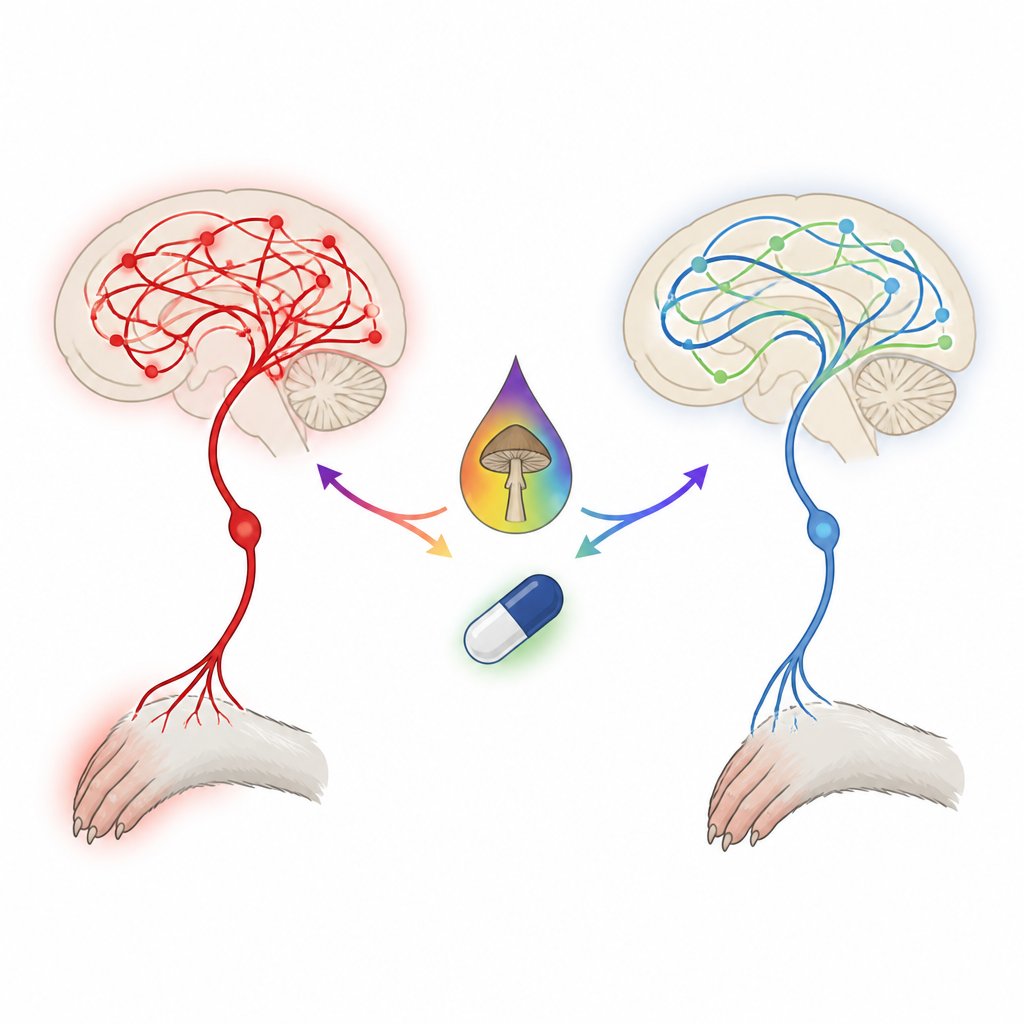
What this could mean for future pain care
These experiments, carried out under controlled conditions in mice, do not yet show that psilocybin will help people with chronic pain. However, they provide the first preclinical evidence that a psychedelic can both directly reduce nerve pain-like behaviour and act as a long-term “network primer” that amplifies the effect of an existing pain medication. Instead of relying solely on daily pills that can lose power over time, a future approach might use carefully supervised psilocybin sessions to reshape brain and spinal circuits so that standard drugs, such as gabapentin, work better at lower or less frequent doses. For the many patients whose pain does not respond well to current options, this strategy offers a promising new direction for research rather than an immediate cure.
Citation: Askey, T., Allen-Ross, D., Luzyanin, D. et al. Psilocybin ameliorates neuropathic pain-like behaviour in mice and facilitates gabapentin-mediated analgesia. Commun Biol 9, 707 (2026). https://doi.org/10.1038/s42003-026-10065-7
Keywords: psilocybin, neuropathic pain, gabapentin, chronic pain, mouse study