Clear Sky Science · en
OncoRisk: a state-of-the-art web server for bridging the oncogenic databases and pan-cancer cohorts to the translational oncology
Turning DNA Data into Clear Cancer Answers
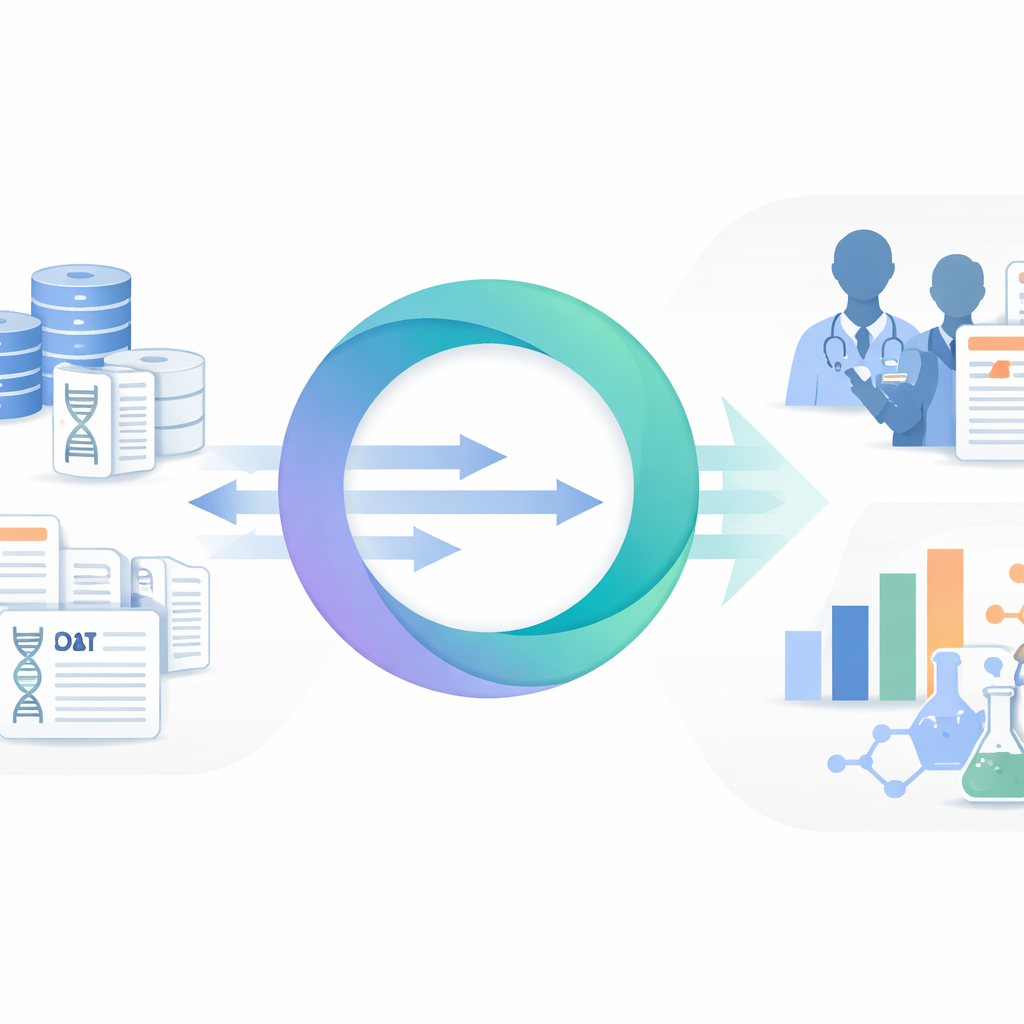
Cancer treatment increasingly depends on reading the DNA of a patient’s tumor, but the flood of genetic data can overwhelm even experts. Different databases store pieces of the puzzle, large patient cohorts hold real-world patterns, and clinics must turn all of this into decisions about drugs and prognosis. This paper introduces OncoRisk, a free web platform designed to pull these scattered resources together so that doctors and researchers can move more quickly from raw DNA data to practical insights for people with cancer.
Why Cancer DNA Is So Hard to Interpret
Every tumor carries a unique mix of DNA changes. Some alterations actively drive cancer growth, others influence how well a drug will work, and many are simply harmless background noise. Existing expert databases such as ClinVar, CIViC, and OncoKB each capture part of this knowledge, while massive projects like The Cancer Genome Atlas and AACR Project GENIE have profiled hundreds of thousands of patients. Yet these resources are scattered, use different formats, and often require coding skills or manual cross-checking across many websites. This fragmentation slows down both research and clinical decision-making, especially when a single patient’s tumor may contain thousands of DNA changes that need to be reviewed.
One Web Hub for Cancer Variant Knowledge
OncoRisk was built to act as a unified hub for this complex landscape. The platform integrates more than ten oncology knowledge bases and seven large pan-cancer cohorts within a single web interface. Users can search for a gene, a specific mutation, a cancer type, or a therapy and immediately see how they connect to one another. A "quick search" function supports flexible queries using common gene names, technical mutation codes, or even broad disease terms. For deeper exploration, an interactive network view shows how a drug, mutation, and cancer type are linked through shared evidence, while a “family tree” of cancers situates each disease within broader tissue and subtype relationships.
From a Single Mutation to 3D Structures and Real Patients
For any DNA change, OncoRisk can assemble an in-depth, variant-centered page. Behind the scenes it runs established annotation tools, then pulls in classifications of how harmful a mutation is, what drugs it may affect, and whether relevant clinical trials exist. The system maps the mutation onto cancer family trees and can display 3D protein structures showing where a drug and a mutated protein physically meet—or fail to meet—inside the cell. At the same time, OncoRisk checks large patient cohorts to report how common the mutation is across cancer types and how strongly it appears in a given tumor sample. This combination of structural views, clinical evidence, and real-world frequency data helps users judge which mutations are likely to matter most.
Automated Reports for Individual Patients and Whole Cohorts
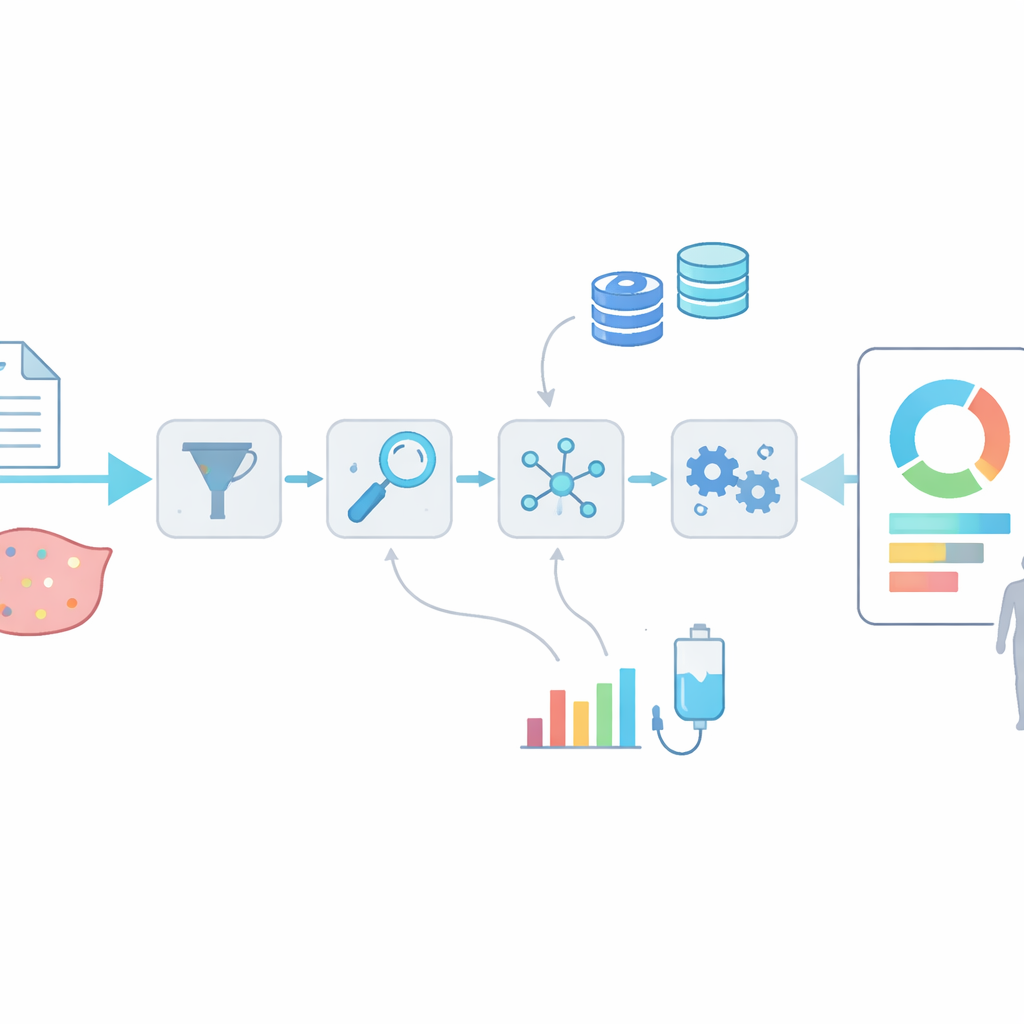
Beyond single variants, OncoRisk offers a semi-automated pipeline that turns an entire tumor DNA file into a human-readable report. Users upload a standard variant file, after which the system filters for high-quality changes, annotates them, and pulls in supporting evidence from multiple databases. It then groups mutations into tiers based on how strong and actionable the evidence is, producing a structured PDF and exportable data file that highlight potential drug targets and clinical trial options. In tests on six real tumor samples, the system quickly surfaced known cancer-driving mutations and therapies, even when these were originally described in other cancer types. A companion module, called server-maftools, lets researchers load hundreds or thousands of samples at once to visualize mutation patterns, compare cancer subtypes, and link particular DNA changes to patient survival or tumor stage.
What This Means for Cancer Care and Research
OncoRisk is not a stand-alone diagnostic device, and it does not replace expert guidelines or medical judgment. Instead, it acts as a powerful assistant that gathers scattered evidence, organizes it consistently, and makes the links between DNA changes, cancer types, drugs, and outcomes much easier to see. By uniting curated expert knowledge with real-world patient data, the platform aims to shorten the path from sequencing a tumor to suggesting the most relevant questions, trials, and treatment options. For patients, this could translate into faster, clearer explanations of what their tumor DNA means; for researchers, it offers a single, flexible environment to explore mutational landscapes and test new ideas across many cohorts.
Citation: Song, X., Green, E., Liao, X. et al. OncoRisk: a state-of-the-art web server for bridging the oncogenic databases and pan-cancer cohorts to the translational oncology. Commun Biol 9, 519 (2026). https://doi.org/10.1038/s42003-026-10005-5
Keywords: precision oncology, cancer genomics, variant interpretation, bioinformatics platform, pan-cancer cohorts