Clear Sky Science · en
Spatial profiling uncovers multicellular dynamics in early relapse of hepatitis B virus-associated follicular lymphoma
Why this matters for patients and families
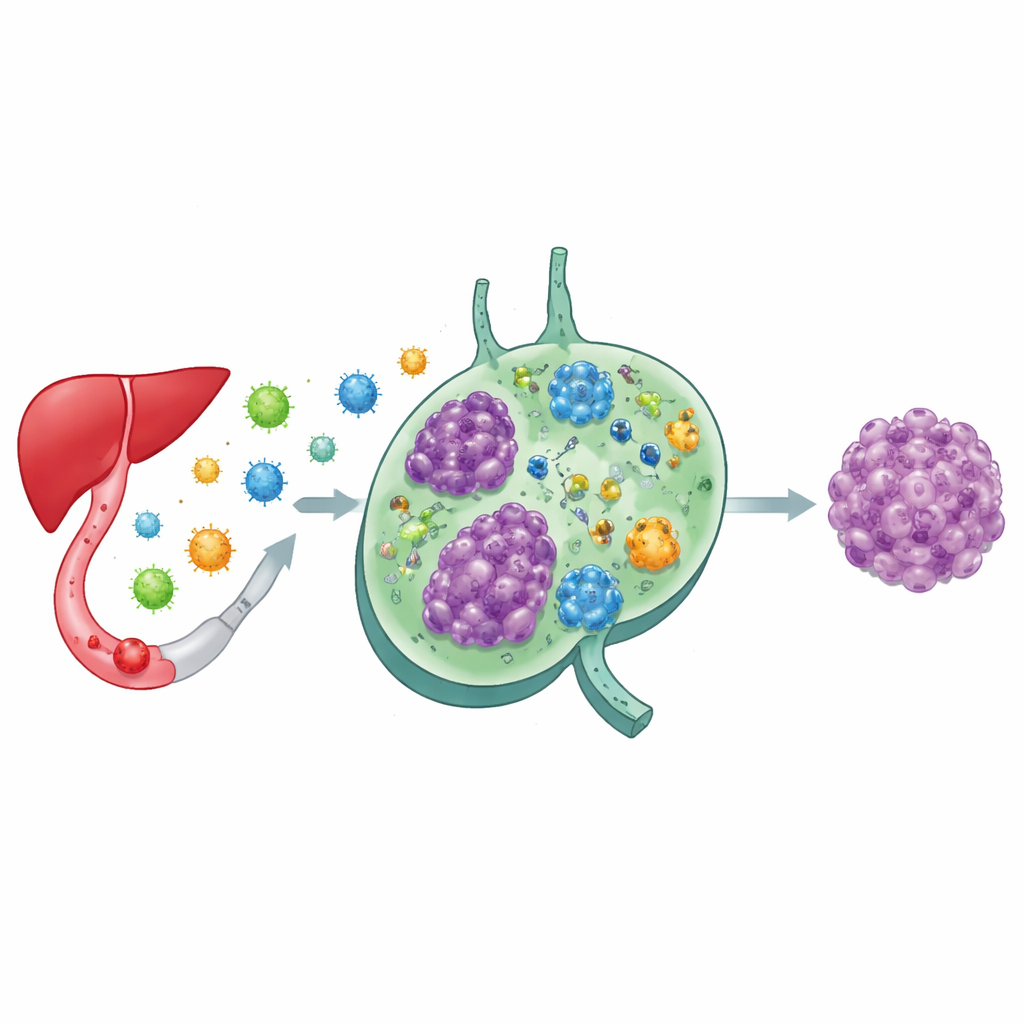
Some people living with or recovering from hepatitis B virus (HBV) infection go on to develop a common type of blood cancer called follicular lymphoma. Even after modern chemo‑immunotherapy, many of these patients see their disease come back quickly within two years, a red‑flag event doctors call POD24. This study uses advanced “spatial” gene‑mapping tools to watch, in place, how tumor cells and immune cells interact inside lymph nodes, revealing why HBV‑linked follicular lymphoma may relapse early and where new treatments could intervene.
Looking inside tumors in three dimensions
The researchers studied lymph node samples from 17 people with relapsed follicular lymphoma whose HBV infection histories and viral DNA levels were carefully tracked. Using a technology called CosMx Spatial Molecular Imaging, they measured the activity of about 1,000 genes in tens of thousands of individual cells while keeping each cell’s exact position in the tissue. They combined this with single‑cell RNA sequencing data to label major cell groups: cancerous B cells, healthy B cells, several T‑cell types, macrophages and follicular dendritic cells (FDCs), and fibroblasts. This approach produced detailed “maps” that show not just which cells are present, but who sits next to whom and which genes they are turning on.
How chronic hepatitis B reshapes the tumor neighborhood
Comparing samples taken before and after treatment, and across different HBV DNA levels, the team saw that chronic or long‑lasting HBV infection goes hand‑in‑hand with a distinctive immune landscape. Tumors from patients with high viral loads were rich in memory B cells (the long‑lived cells that remember past infections), exhausted T cells that had lost much of their fighting power, and dense networks of FDCs. As antiviral therapy lowered or cleared HBV DNA, these exhausted T cells, regulatory T cells, and FDCs shrank in number, and the balance between malignant and healthy cells shifted. This pattern supports the idea that a constant stream of viral antigens pushes the immune system toward burnout and may help shelter cancer cells.
A hidden pool of memory‑like cancer cells
Digging deeper into the cancerous B cells, the scientists found four main malignant programs. Two resembled classic follicular lymphoma cells, one looked more like plasma cells, and one, called the memory B cell‑like malignant (MBLM) subtype, carried features of both normal memory B cells and tumor cells. Genetic “trajectory” analyses suggested a path from ordinary memory B cells, through an atypical intermediate, into these memory‑like malignant cells. MBLM cells were especially common in tumors with high HBV loads and long‑term infection and tended to cluster spatially close to memory B cells and certain FDC subsets. This points to memory B cells, repeatedly stimulated by HBV and tumor antigens, as a key seedbed for malignant evolution.
Support cells that feed the problem
The study also split follicular dendritic cells into four functional flavors: cells that activate T cells, cells that handle antigen transport and presentation, adhesion‑focused cells, and a “virus‑protein transport” group enriched for genes tied to hepatitis B pathways. In HBV‑high and long‑term carriers, the virus‑linked and antigen‑transport FDC types dominated, forming an inflamed but immunosuppressed network around tumor areas. Spatial analyses showed that MBLM cells and these FDCs formed tight communities connected by a key chemical signal, the CCL21–CCR7 axis, which is known to guide cell migration into lymph nodes and activate growth‑promoting pathways like NF‑κB. Different chemotherapy regimens shifted these malignant and FDC subsets in distinct ways, helping explain why some treatments leave behind hard‑to‑eradicate cell populations and set the stage for POD24.
What this means for future care
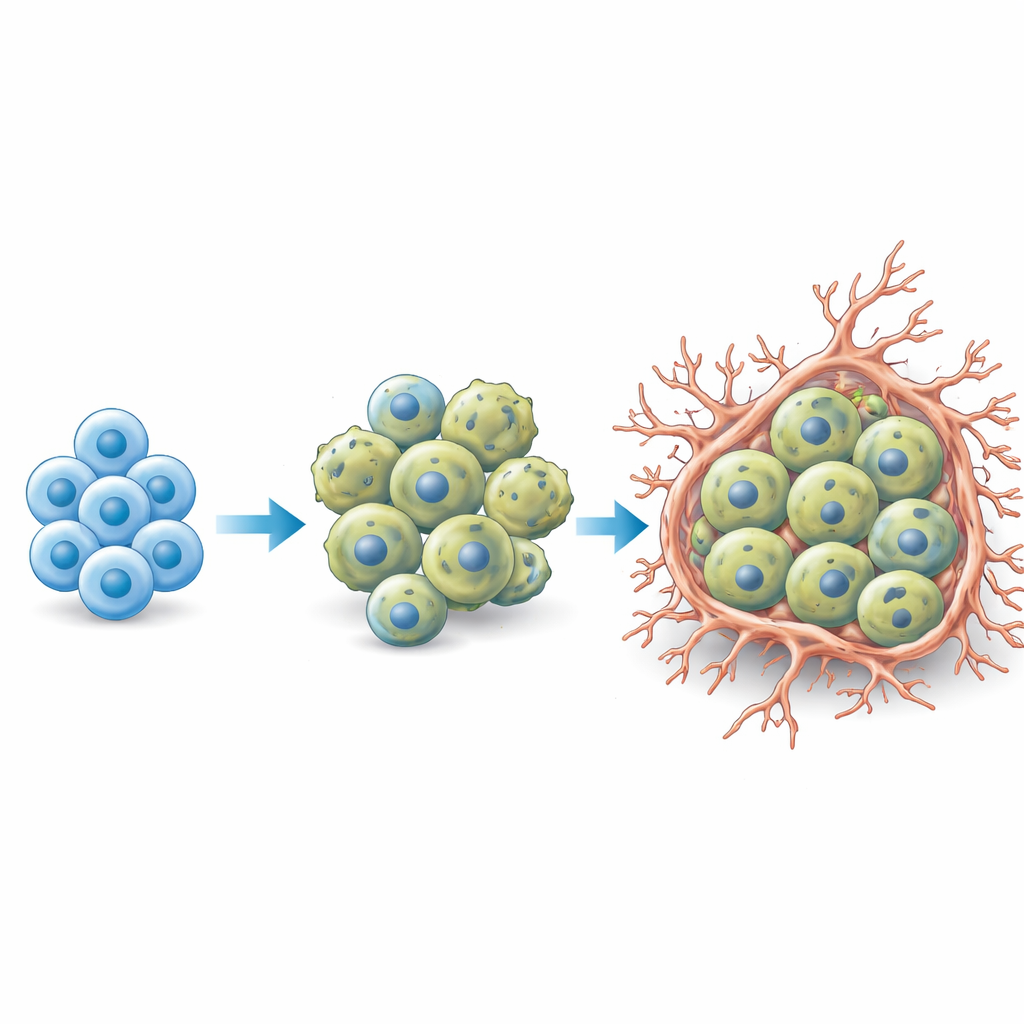
To a non‑specialist, the central message is that HBV‑associated follicular lymphoma is not just “the same cancer plus a virus.” Chronic hepatitis B sculpts a unique tumor ecosystem that nurtures a memory‑like pool of cancer cells and rewires local support cells, together driving early relapse after standard therapy. By pinpointing these memory‑like malignant cells, their HBV‑shaped FDC partners, and the signaling routes that connect them, this work highlights new biomarkers that might flag high‑risk patients at diagnosis and suggests fresh drug targets—such as pathways controlling memory B‑cell fate, CCL21–CCR7 signaling, and specific surface proteins like PTPRCAP and CD37—that could be combined with antiviral therapy to delay or prevent early return of the disease.
Citation: Deng, Y., Zhang, Q., Jia, Z. et al. Spatial profiling uncovers multicellular dynamics in early relapse of hepatitis B virus-associated follicular lymphoma. Commun Biol 9, 551 (2026). https://doi.org/10.1038/s42003-026-09837-y
Keywords: hepatitis B, follicular lymphoma, tumor microenvironment, spatial transcriptomics, early relapse