Clear Sky Science · en
NAD+ controls circadian rhythmicity during cardiac aging
Keeping the Heart’s Internal Clock on Time
As we grow older, our hearts do more than just beat a little slower or stiffer—they also lose some of their daily rhythm. This study explores how a small molecule found in every cell, called NAD+, helps keep the heart’s built‑in clock running smoothly with age. By understanding and gently nudging this system, scientists hope to find new ways to prevent age‑related heart enlargement and failure, without resorting to drastic interventions.
Why Daily Rhythms Matter to the Heart
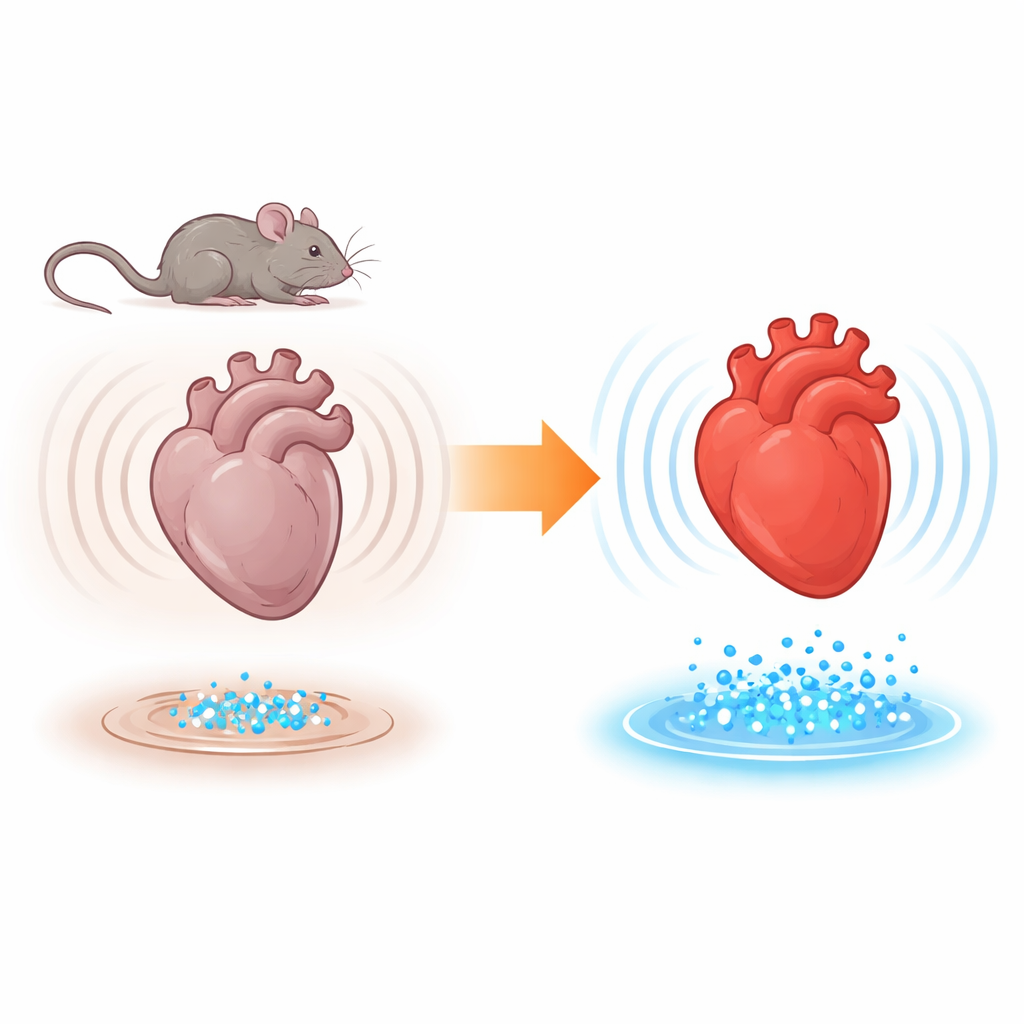
Every cell in the body, including those in the heart, follows a roughly 24‑hour rhythm. This internal timing system tells the heart when to prepare for rest, when to handle higher workloads, and how to manage fuel use across the day and night. In young mice, hundreds of heart genes rise and fall between day and night in a predictable pattern. The authors show that in older mice, many of these genes no longer follow clear cycles. Interestingly, the core clock machinery itself still ticks, but the genes it controls become quieter or shifted, suggesting that aging scrambles the heart’s daily program rather than turning the clock off entirely.
Aging Hearts, Lower NAD+, and Bigger Cells
The team next looked at NAD+, a central molecule that helps enzymes sense energy status and has been tied to both aging and biological clocks. They found that older mouse hearts had noticeably lower NAD+ levels than young hearts. At the same time, individual heart muscle cells from older animals were larger, a hallmark of age‑related heart enlargement. Even though the genes that make and use NAD+ were mostly unchanged, the actual pool of NAD+ in the heart dropped with age. This pointed to NAD+ decline as a candidate link between getting older, disrupted daily rhythms, and structural changes in the heart.
Boosting NAD+ to Re‑shape the Heart’s Daily Program
To test whether more NAD+ could help, the researchers added the vitamin‑like compound nicotinamide riboside (NR), a precursor that cells can convert into NAD+, to the drinking water of female mice for ten months. These mice aged naturally, but those receiving NR did not develop the usual age‑related heart enlargement, even though their body weight stayed the same. Markers of cardiac stress in heart tissue also went down. When the scientists examined day‑night patterns of gene activity, they found that NR partially restored rhythmic behavior in many genes that had lost it with age and prevented some problematic, age‑specific rhythms from emerging. In other words, NR nudged the older heart’s daily genetic program back toward a more youthful pattern, without dramatically changing the basic clock genes themselves.
How NAD+ Tunes the Heart’s Clockwork
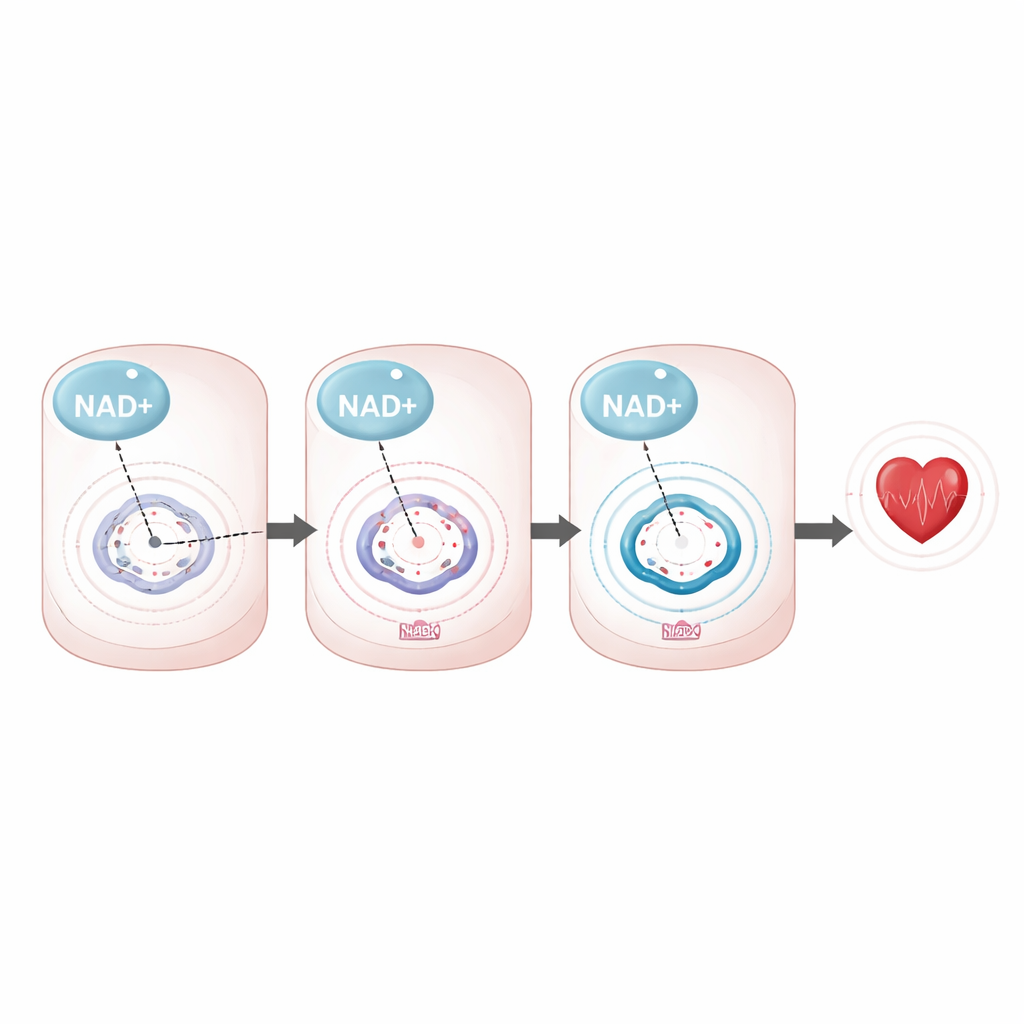
To probe the mechanism, the team moved to heart cells in a dish that carried a glowing reporter for a key clock protein. When they chemically lowered NAD+ using a drug that blocks its main recycling pathway, the regular waves of clock activity quickly weakened. Adding NR restored NAD+ and brought the rhythms back, even if treatment started after the decline. Further experiments in a heart‑like cell line showed that most of the gene changes triggered by NR depended on an enzyme called SIRT1, which uses NAD+ to modify proteins involved in the clock and in stress‑response pathways. When SIRT1 was blocked, the majority of NR‑driven gene shifts disappeared, indicating that NAD+ shapes the heart’s daily outputs largely through this NAD‑hungry regulator.
What This Could Mean for Healthy Aging
Put simply, the study suggests that keeping NAD+ levels up helps an aging heart maintain a strong, well‑timed daily rhythm and avoid harmful enlargement. Rather than resetting the clock from scratch, boosting NAD+ seems to fine‑tune how the clock’s signals are translated into gene activity and cell behavior, partly through SIRT1. While more work is needed in male animals, in humans, and over longer times, these findings support the idea that gentle, long‑term support of the cell’s NAD+ supply could become a strategy to delay or soften age‑related heart problems by keeping the heart’s internal clock in better shape.
Citation: Carpenter, B.J., Lecacheur, M., Mangold, Y.N. et al. NAD+ controls circadian rhythmicity during cardiac aging. Commun Biol 9, 476 (2026). https://doi.org/10.1038/s42003-026-09818-1
Keywords: cardiac aging, circadian rhythm, NAD+ metabolism, nicotinamide riboside, SIRT1