Clear Sky Science · en
Identifying what works in mental health apps through meta-regression analyses of 169 trials
Why Your Phone Might Help Your Mood
Many of us turn to smartphone apps when we feel low, stressed, or overwhelmed—but with thousands of mental health apps on the market, it is hard to know which ones truly help. This study combed through a large body of clinical trials to uncover which specific in‑app tools and exercises are actually linked to easing depression and anxiety. Instead of asking whether “apps work” in general, the researchers zoomed in on the concrete features inside these apps that seem to drive real emotional change.

Looking Inside Hundreds of App Trials
The researchers systematically searched the scientific literature and identified 169 randomized controlled trials of smartphone mental health apps, including more than 41,000 participants worldwide. Most people in these studies were young to middle‑aged adults, many with mild to moderate symptoms of depression or anxiety. For each trial, the team cataloged whether the app included any of 34 predefined therapeutic building blocks drawn mainly from cognitive behavioral therapy and newer approaches like mindfulness and acceptance‑based treatments. Importantly, they also coded what was offered to comparison groups, such as simple information or relaxation tools, to get a clearer picture of what each element contributed.
What App Features Are Used Most Often
Across all of the trials, apps rarely relied on a single technique. Experimental apps used on average about seven active elements, while control apps typically used fewer than one. The most common ingredients were plain‑language information about mental health, relaxation exercises, mindfulness practices, and tools that let users track their thoughts, moods, or behavior over time. Features inspired by acceptance‑based and positive psychology approaches—such as focusing on personal values, practicing gratitude, or savoring positive experiences—appeared less often, even though they were present in a noticeable minority of apps. The authors also observed that published papers often described these ingredients only briefly, suggesting that many apps may contain more therapeutic content than is clearly reported.
Which Ingredients Seem to Help Depression
To link app features with changes in symptoms, the team used a statistical approach that looked at how scores for depression shifted over time within each group, and how those shifts related to the presence or absence of each element. Many ingredients were tied to meaningful improvements in low mood. Common staples such as problem‑solving, changing unhelpful thoughts, scheduling pleasant or important activities, and relaxation were all associated with better outcomes. So were mindfulness and acceptance‑based practices, as well as positive psychology tools like gratitude and savoring. A few less common techniques—such as certain forms of exposure to feared sensations or images, and strategies called desensitization and stimulus control—showed particularly strong links to reduced depression in some analyses, although they were tested in relatively few studies and should be interpreted cautiously.
What Works Best for Anxiety
The pattern looked somewhat different for anxiety. Here, exercises that helped people gradually face the situations, sensations, or worries they feared—collectively known as exposure‑based elements—stood out. When delivered via an app, these exposure tools were consistently associated with reductions in anxiety symptoms. Many of the same building blocks that helped depression, such as cognitive restructuring, problem‑solving, self‑monitoring, and mindfulness, were also beneficial for anxiety, though the strength of their links varied. The results hint that certain elements may be especially important when the main problem is anxiety, while others have broader effects across both depression and anxiety.
How Many Tools Are Too Many?
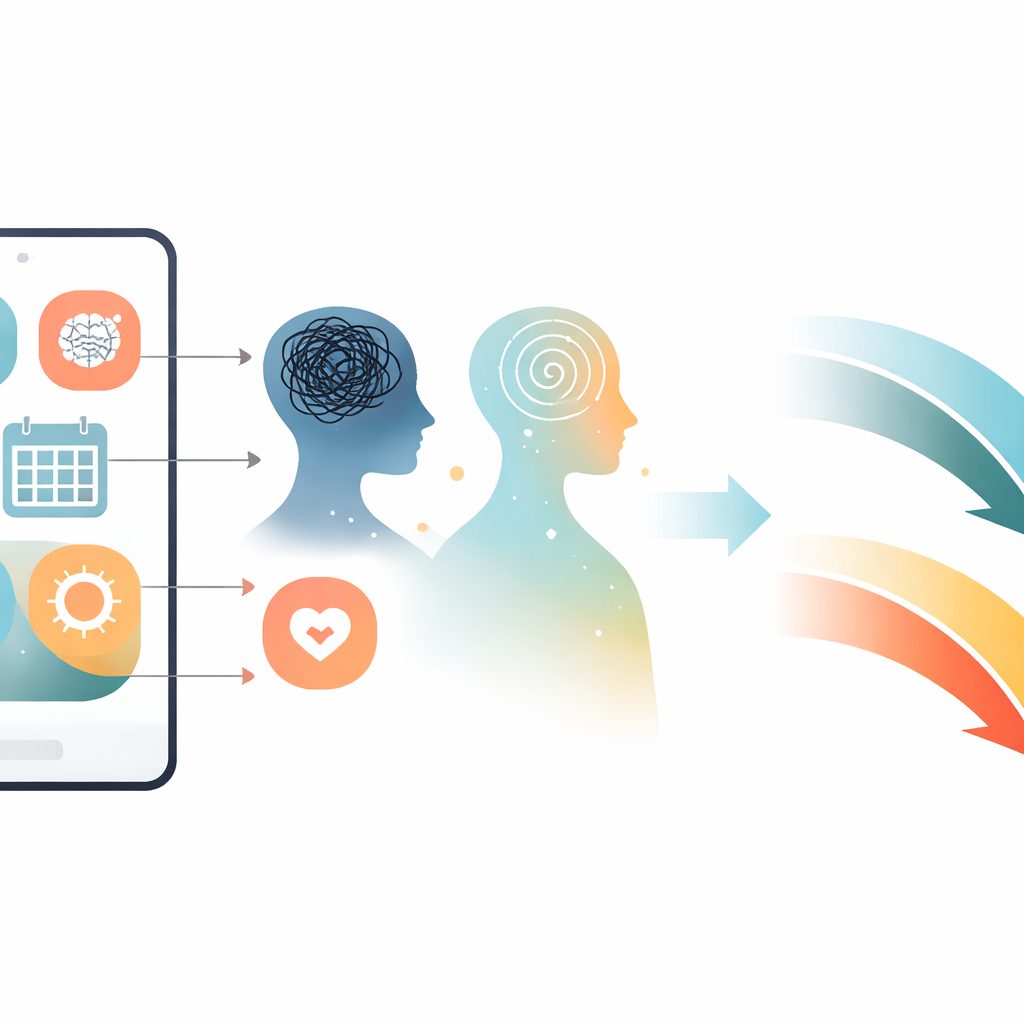
Beyond single ingredients, the researchers asked whether “more is better.” Overall, apps that packed in a larger number of active elements tended to produce greater improvements in both depression and anxiety. For depression, the relationship looked roughly linear: each additional ingredient provided a small added benefit. For anxiety, however, there were hints of a “sweet spot.” Apps that became extremely complex—using around fifteen or more different elements—seemed less effective, though very few trials tested such feature‑rich designs, so this pattern needs confirmation. The findings suggest that combining several well‑chosen tools may be more helpful than relying on a single technique, but that overwhelming users with too many different exercises might backfire.
What This Means for Everyday App Users
In simple terms, this work shows that mental health apps are not magic black boxes—what matters are the specific tools they contain and how those tools are combined. Apps that offer relaxation, structured problem‑solving, help with changing negative thinking, mindfulness exercises, and opportunities to track moods and activities are, on average, linked to modest but real improvements in depression and anxiety. For anxiety in particular, features that gently guide users to face their fears step by step appear especially valuable. While no app can fully replace professional care for serious conditions, this study provides a roadmap for both developers and consumers: look for apps that bundle several proven elements without becoming needlessly complicated, and be cautious about offerings that rely on vague claims without clear, actionable exercises.
Citation: Kraiss, J., Fiß, F., Chakhssi, F. et al. Identifying what works in mental health apps through meta-regression analyses of 169 trials. npj Digit. Med. 9, 336 (2026). https://doi.org/10.1038/s41746-026-02466-z
Keywords: mental health apps, depression, anxiety, cognitive behavioral therapy, digital interventions