Clear Sky Science · en
Autonomous AI-assisted diabetic retinopathy screening at primary care is associated with increased presentation to eye care by at risk patients
Why This Matters for People With Diabetes
Diabetes can quietly damage the back of the eye and lead to blindness, often without early warning signs. Regular eye exams can prevent most of this vision loss, yet many people never make it to an eye specialist, especially those in historically underserved communities. This study explores whether adding an autonomous artificial intelligence (AI) eye check directly into routine primary care visits can help more at‑risk patients, particularly African-American adults with diabetes, actually get in front of an eye doctor.
Eye Disease That Sneaks Up on Vision
Diabetic retinopathy is a complication of diabetes that harms the tiny blood vessels in the retina, the light-sensing tissue at the back of the eye. If caught early, treatment can prevent more than 90% of blindness, but that protection depends on patients getting yearly dilated eye exams. In reality, only a minority of Americans with diabetes receive these regular exams. African-American patients are less likely to be screened and more likely to show up with advanced disease and vision loss, reflecting broader social and economic barriers to care. Closing this gap requires not only better technology but also smarter ways to bring care closer to where people already receive their routine health services.
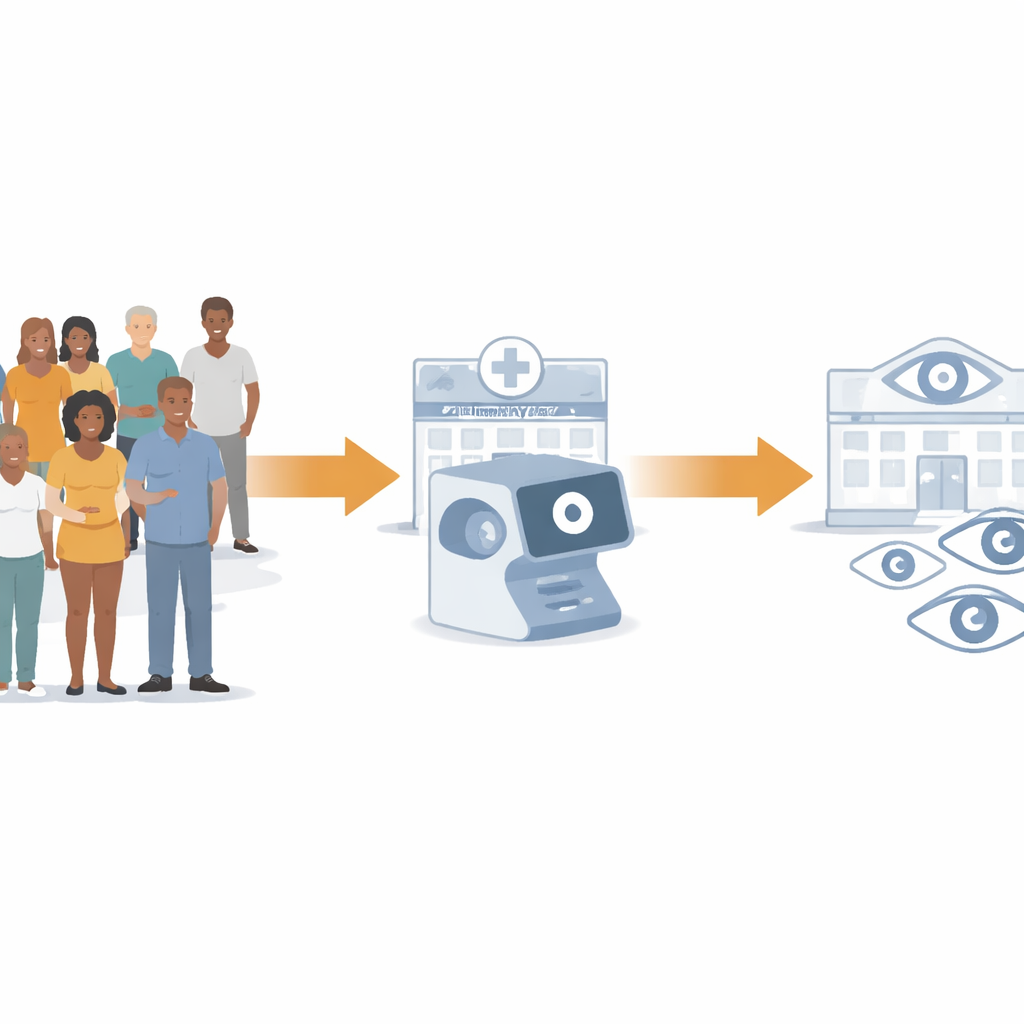
Bringing Smart Eye Checks Into the Regular Doctor Visit
Johns Hopkins Medicine introduced an autonomous AI system called LumineticsCore into several community-based primary care clinics starting in 2020. Adults with diabetes at these clinics could have quick photographs taken of their eyes during a regular visit, with the AI program immediately analyzing the images for signs of diabetic retinopathy. If the result suggested disease or was unclear, the patient was referred to the Wilmer Eye Institute, a major eye center within the same health system. At other clinics without AI, eye specialist visits depended on a primary care provider placing a standard referral. The researchers compared more than 3700 adults with diabetes who ended up at the eye institute through either the traditional referral route or the AI-assisted route.
Who Reached the Eye Specialist
The team examined electronic health records to see how the two pathways differed in the kinds of patients who actually arrived for eye care. They looked at age, sex, race, language, marital status, insurance type, and health conditions such as high blood pressure, kidney disease, and blood sugar control. Because the people served at different clinics could vary in important ways, the researchers used statistical techniques—propensity score matching and weighted regression—to make the AI and non-AI groups as comparable as possible. After carefully balancing these factors, they asked whether patients coming through the AI-assisted route were more likely to be African-American or covered by Medicaid, two groups known to face greater barriers to eye care.
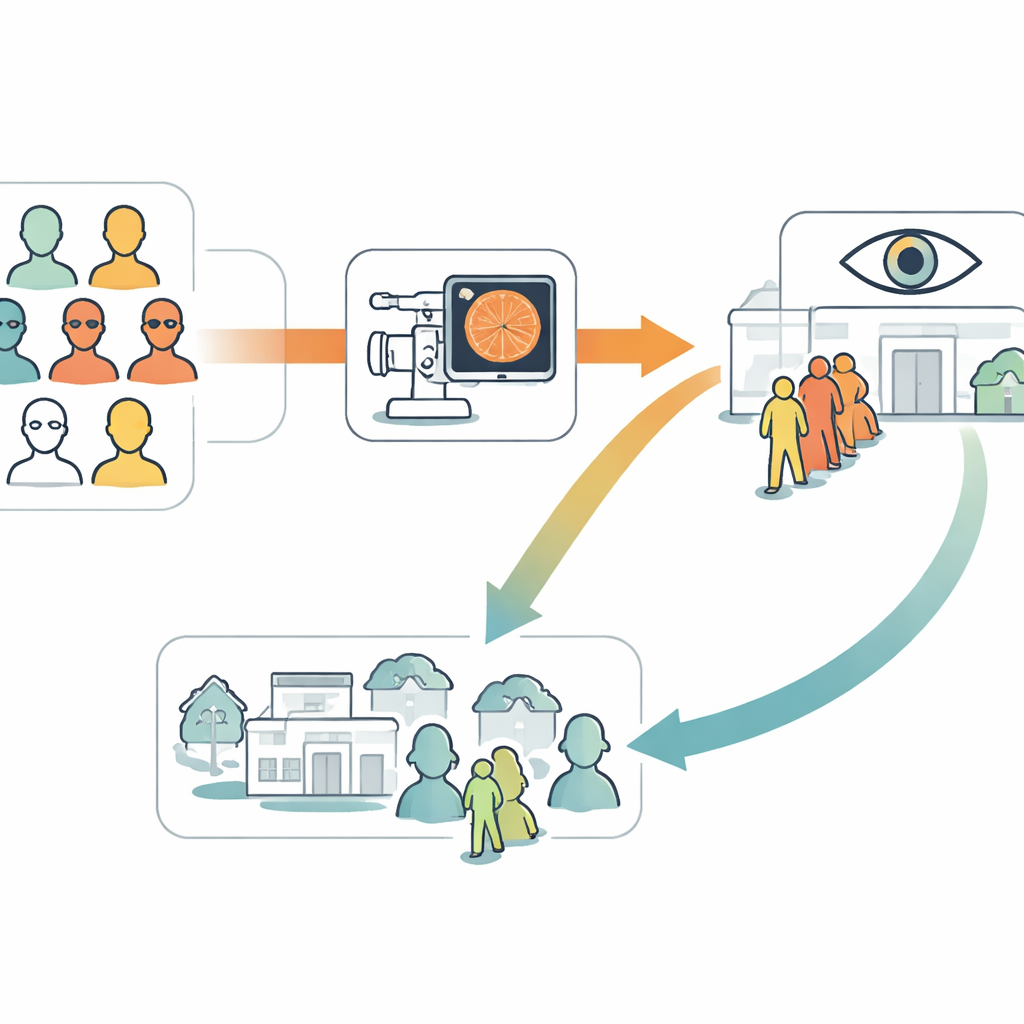
Signs of Better Access for a High-Risk Group
The analysis showed that, among patients who made it to the Wilmer Eye Institute, those coming from clinics using AI screening were more likely to be African-American than those referred through the standard pathway. This pattern held even after adjusting for many health and social differences between groups. In contrast, there was no meaningful difference in how many patients had Medicaid insurance in the two pathways, likely in part because very few patients in the dataset were on Medicaid at all. The results echo earlier work from the same group showing that AI-assisted screening improved overall adherence to yearly eye checks, with particularly strong gains among African-American patients and those with Medicaid coverage.
What This Means for Patients and Communities
For everyday patients, the study suggests that placing autonomous AI screening directly in primary care clinics may help more high-risk individuals actually reach eye specialists, especially African-American adults who have historically experienced worse outcomes from diabetic eye disease. The research does not prove that AI alone causes this improvement, and it has limits: it looks back at records from a single health system, cannot track patients who went elsewhere for eye care, and includes few people on Medicaid. Still, it points toward a promising model in which smart, point-of-care technology can shrink long-standing gaps in access. If confirmed in larger and more diverse settings, this approach could help protect the sight of thousands of people with diabetes by catching eye damage early and connecting them to timely, sight-saving treatment.
Citation: Leong, A., Wolf, R.M., Channa, R. et al. Autonomous AI-assisted diabetic retinopathy screening at primary care is associated with increased presentation to eye care by at risk patients. npj Digit. Med. 9, 310 (2026). https://doi.org/10.1038/s41746-026-02460-5
Keywords: diabetic retinopathy screening, autonomous medical AI, health equity, primary care eye exams, African-American patients