Clear Sky Science · en
An antibody-drug conjugate designed through clone and isotype selection restricts the growth of CSPG4-expressing triple-negative breast cancer
Why this research matters
Triple-negative breast cancer is one of the most aggressive forms of breast cancer and lacks many of the targeted treatments available for other subtypes. This study explores a new way to attack these tumors more precisely, by building a “smart bomb” drug that homes in on a specific marker on cancer cells while sparing most healthy tissue. For patients whose disease comes back or resists chemotherapy, such focused treatments could offer urgently needed options.
A new flag on stubborn tumor cells
The researchers focused on a surface molecule called CSPG4, which sits on the outside of some cancer cells. By analyzing large datasets of breast tumors and examining patient tissue samples, they showed that CSPG4 is found much more often in triple-negative breast cancers than in other breast cancer types. Importantly, CSPG4 levels remained the same or even increased in tumor tissue that persisted after standard chemotherapy, suggesting that cells carrying this marker are especially tough and could be responsible for relapse. Patients whose tumors had high CSPG4 tended to have worse outcomes, making it an appealing flag to target with precision drugs.
Building a guided missile drug
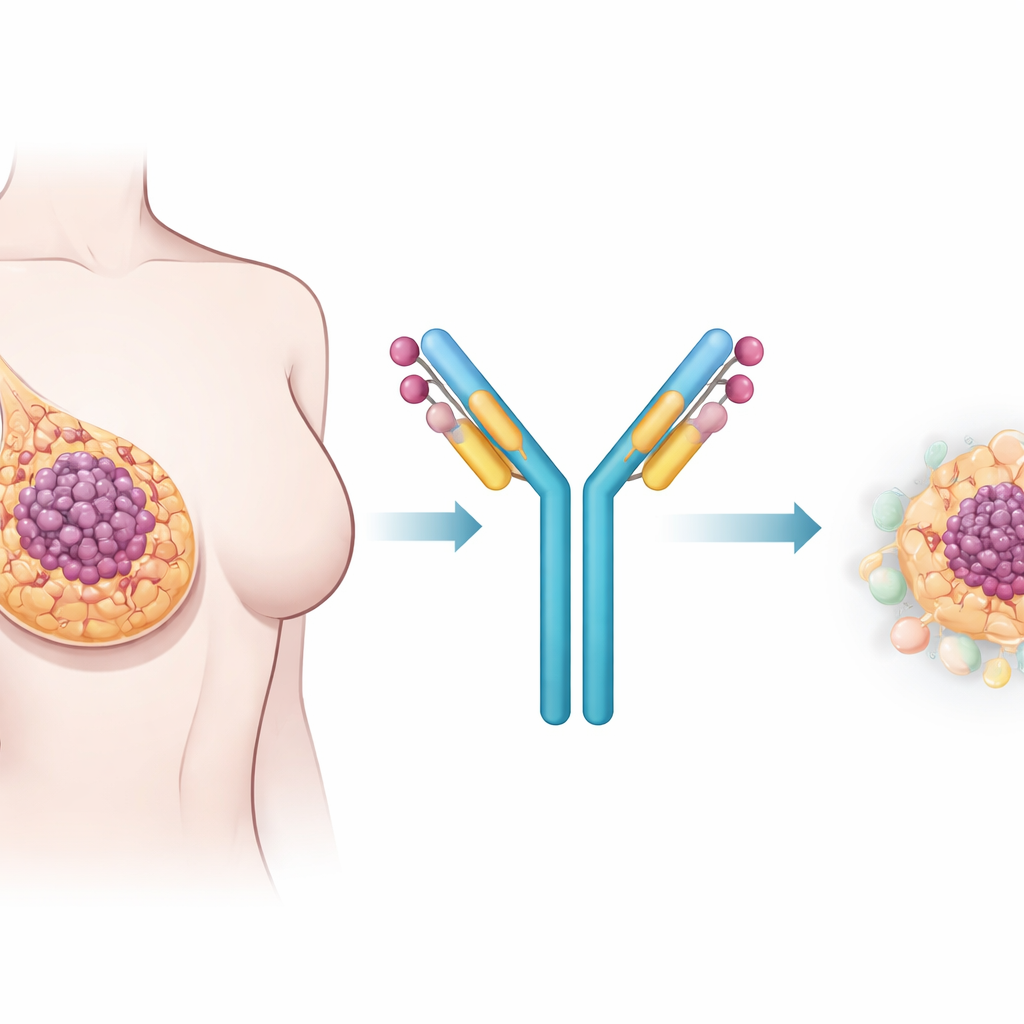
To take advantage of this marker, the team designed antibody–drug conjugates, or ADCs. These are combinations of two parts: an antibody that recognizes a chosen target on cancer cells, and a powerful cell-killing drug tethered to the antibody like a payload. The group compared three different antibodies that all recognize CSPG4 but latch onto slightly different parts of the molecule. They also tested two common antibody “backbones,” called IgG1 and IgG4, which differ in how they behave in the body. In cell culture experiments, one antibody version, called 225.28S in the IgG1 format, stood out. It bound strongly to CSPG4, was taken up efficiently into cancer cells, and, when linked to a standard chemotherapy-like payload, killed CSPG4-positive cells much more effectively than the other candidates.
Upgrading the payload for stronger impact
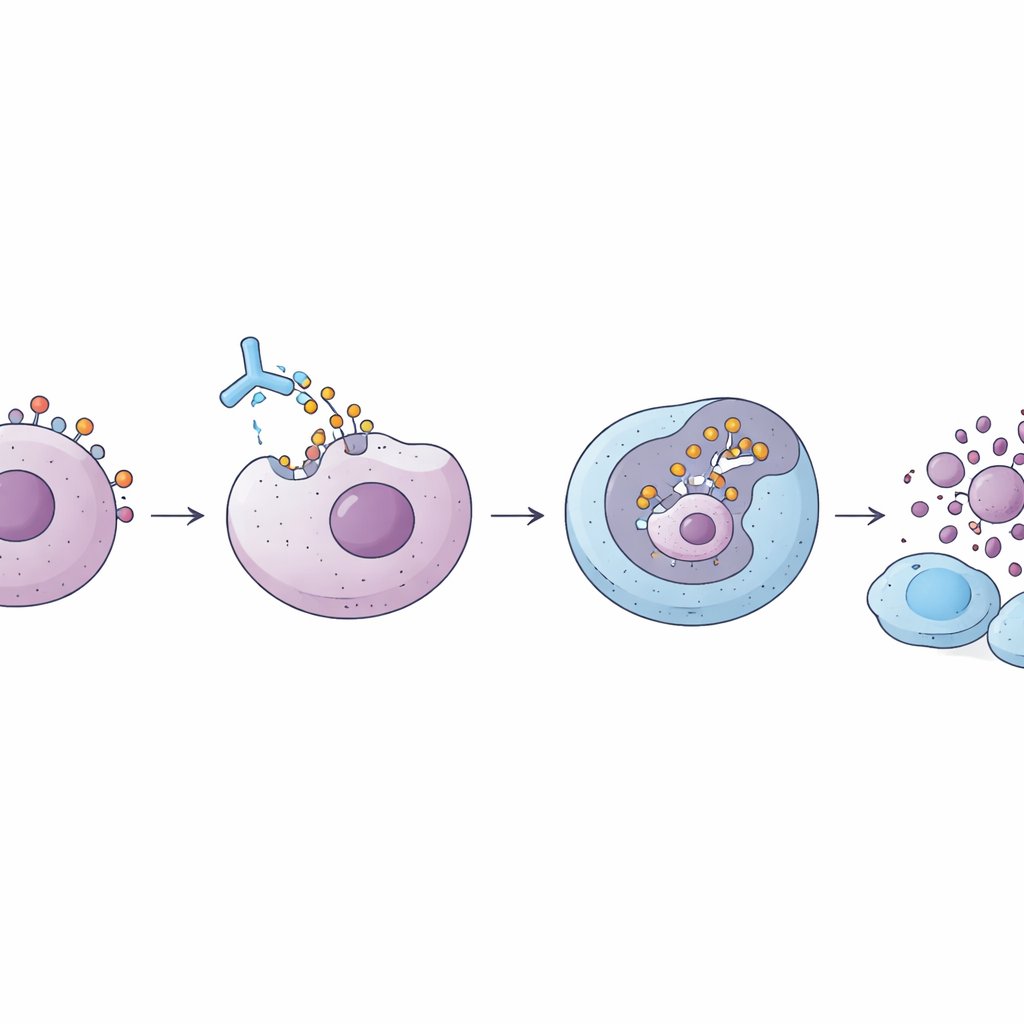
After identifying the best antibody scaffold, the scientists paired 225.28S IgG1 with a next-generation payload known as DXd, a highly potent drug already used in approved therapies for other breast cancer subtypes. They engineered the conjugate so that, on average, eight DXd molecules were attached to each antibody, while maintaining structural integrity and purity. In lab tests, this ADC entered CSPG4-rich triple-negative breast cancer and melanoma cells efficiently and sharply reduced their survival, while having far less effect on cells with little CSPG4. This behavior indicates that the drug’s punch is largely confined to cells carrying the intended target, a key requirement for a successful precision medicine.
Testing in living models of difficult disease
The team then moved to patient-derived xenograft models, in which pieces of human triple-negative breast tumors are grown in the mammary fat pads of immune-deficient mice. In two independent models that expressed CSPG4, treatment with the 225.28S IgG1–DXd ADC substantially slowed or halted tumor growth at doses similar to those used for other ADCs in development, and extended the animals’ survival without obvious weight loss or signs of toxicity. Interestingly, even the antibody alone, without a drug payload, could slow tumor growth when human immune cells were present in the mice. This suggests that the antibody may not only deliver a toxic cargo but can also recruit the immune system to attack CSPG4-positive cells.
What this could mean for future patients
Overall, the study shows that CSPG4 is a promising marker on chemotherapy-resistant triple-negative breast cancers and that carefully choosing both the antibody clone and its structural type can dramatically influence how well an ADC works. The optimized construct, 225.28S IgG1–DXd, shrank CSPG4-positive tumors in realistic preclinical models while appearing safe in animals. Although much work remains before this approach can be tested in people—including safety studies, dose finding, and clinical trials—the results point toward a potential new targeted therapy for a group of patients who currently have very limited options.
Citation: Esapa, B., Liu, Y., Chenoweth, A.M. et al. An antibody-drug conjugate designed through clone and isotype selection restricts the growth of CSPG4-expressing triple-negative breast cancer. npj Precis. Onc. 10, 161 (2026). https://doi.org/10.1038/s41698-026-01341-0
Keywords: triple-negative breast cancer, antibody-drug conjugate, CSPG4, targeted therapy, precision oncology