Clear Sky Science · en
The adrenal stress response involves distinct dynamics of both cortisol and corticosterone in the axolotl salamander
Why a salamander’s stress matters to us
Axolotls, the feathery-gilled salamanders famous for regrowing lost limbs, are helping scientists rethink how bodies respond to stress. This study explores how these animals use two closely related hormones, cortisol and corticosterone, to cope with everything from handling in the lab to full limb amputation. Understanding this split stress system could reveal how injury, healing and even development are linked—and may offer clues for harnessing regeneration while avoiding the harmful side of stress.
Two stress hormones instead of one
Most vertebrates rely on a single main stress hormone: humans on cortisol, many rodents and birds on corticosterone. Axolotls, however, produce both. The researchers first mapped the classic “brain–pituitary–adrenal” route that turns stress into hormone release. When they stimulated this pathway directly, using lab versions of upstream messengers that normally rise during severe stress, both cortisol and corticosterone levels climbed in the blood. But corticosterone surged much more strongly, in the circulation and in adrenal tissue, marking it as the chief output of this traditional stress axis in axolotls. 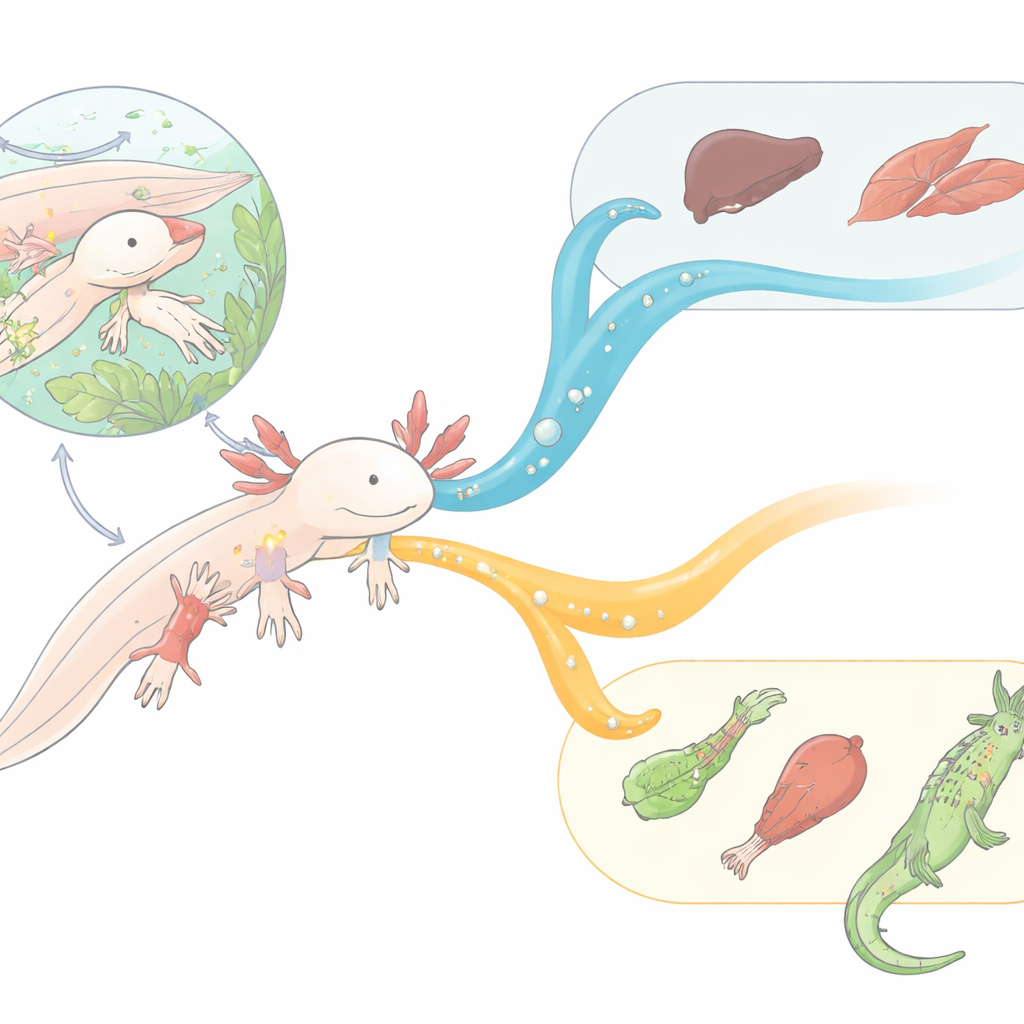
Mild stress taps a shortcut
Real life stress is not always extreme. To mimic what axolotls experience during ordinary handling and transport, the team invented a “manual stress” routine involving lowered water levels, shaking of containers and brief lifting of the animals. Here, the pattern flipped: cortisol became the dominant hormone in the bloodstream, even though both hormones increased inside the adrenal glands. Blocking the usual receptor for the upstream signal ACTH sharply blunted corticosterone release but left cortisol largely untouched. At the same time, measurements of adrenaline and related messenger chemicals showed a rapid, short spike just after stress. Together, these results point to an alternate route in which nerve signals and neurotransmitters, rather than the full hormone cascade from the brain, trigger a fast cortisol response to moderate challenges.
Injury brings a stronger, mixed response
Because regeneration research depends on deliberate injury, the authors next studied how axolotls react hormonally to limb amputation under anesthesia. Both cortisol and corticosterone rose in the hours after surgery, but corticosterone increased earlier and more sharply, outpacing the milder, slower rise in cortisol. Even a sham operation without actual amputation raised both hormones, but again the true injury produced a larger corticosterone spike. Despite these surges, hormone levels had returned to baseline by four days, when the early regenerative “blastema” of cells is forming. This suggests that the most intense hormonal stress response is tied to the immediate aftermath of injury, not to the later stages of regrowth.
Zooming in on the adrenal “control board”
To untangle how different signals pick out different hormones, the team studied isolated adrenal tissue in dishes. When they bathed the tissue in various triggers, the classic stress messengers and adrenaline strongly boosted the synthesis and release of corticosterone. By contrast, the nerve transmitter acetylcholine was the most powerful stimulator of cortisol release and barely affected corticosterone. Microscopy of adrenal sections revealed several distinct types of hormone-producing cells, marked by different combinations of key steroid-making enzymes and receptors, supporting the idea that some cells are wired to respond mainly to ACTH with corticosterone, while others respond more to nerve input with cortisol. 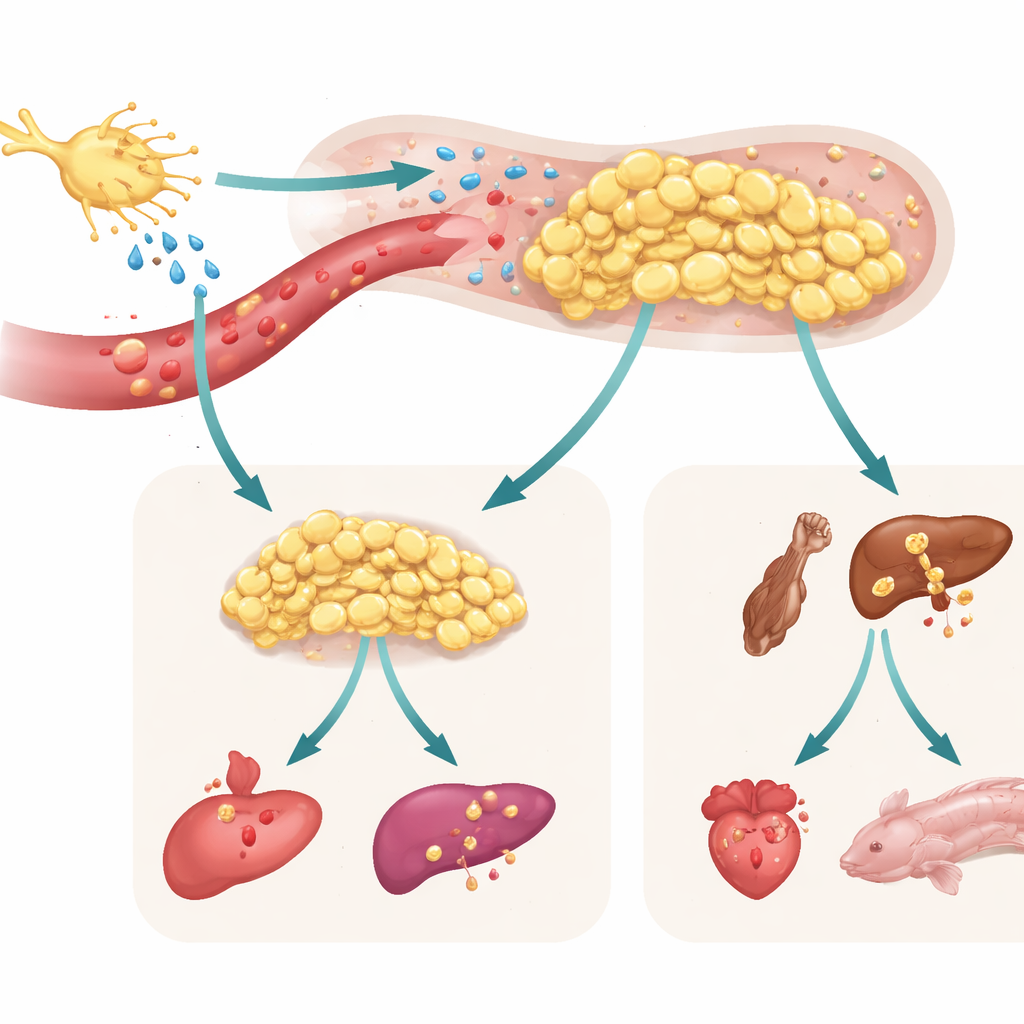
What these hormones actually do in the body
Stress hormones matter because they change how organs behave. Using a radioactive sugar tracer and whole-body imaging, the researchers showed that injected cortisol reduced sugar uptake in skeletal muscle and liver—matching its textbook role in keeping blood sugar available during stress. Corticosterone, on the other hand, had a stronger effect on the heart’s metabolism. Both hormones, as well as ACTH itself, raised blood glucose, but cortisol did so more potently. Yet only ACTH reliably increased heart rate, indicating that some cardiovascular changes may require the full upstream cascade, not just the end hormones.
A split system for staying young and surviving hardship
The authors propose that axolotls use a two-step strategy. For everyday, short-lived stress, they lean on cortisol released through direct nerve signaling, working hand-in-hand with adrenaline to adjust metabolism quickly without strongly engaging hormonal pathways that could disturb their permanently “youthful” state. When stress is severe or prolonged—such as major injury—the brake on the classic axis is lifted, ACTH pours out, and corticosterone dominates, driving a broader whole-body response that may interact with thyroid hormones and, in extreme cases, push the animal toward metamorphosis. This finely tuned division of labor between cortisol and corticosterone may help axolotls balance survival under stress with their remarkable ability to remain larval and regenerate, and it highlights why future studies of stress and healing in this species must track both hormones, not just one.
Citation: Dittrich, A., Andersson, S.A., Winkel, E.A.B. et al. The adrenal stress response involves distinct dynamics of both cortisol and corticosterone in the axolotl salamander. Lab Anim 55, 117–136 (2026). https://doi.org/10.1038/s41684-026-01692-y
Keywords: axolotl, stress hormones, cortisol, corticosterone, regeneration