Clear Sky Science · en
Measuring moral distress in Swedish maternal and neonatal healthcare: validation of an adapted MDS‑R and development of a criterion‑based index
Why this matters for parents and staff
Welcoming a new baby is often seen as a joyful time, but for the staff working in maternity wards and neonatal units it can also be emotionally challenging. This study from Sweden looks at “moral distress,” the uncomfortable feeling that arises when healthcare workers believe they know the right thing to do for mothers and babies but feel blocked from doing it. By finding a clearer way to measure this hidden strain, the researchers hope to help hospitals spot problems earlier and protect both caregivers and the care they provide.
When doing your best does not feel possible
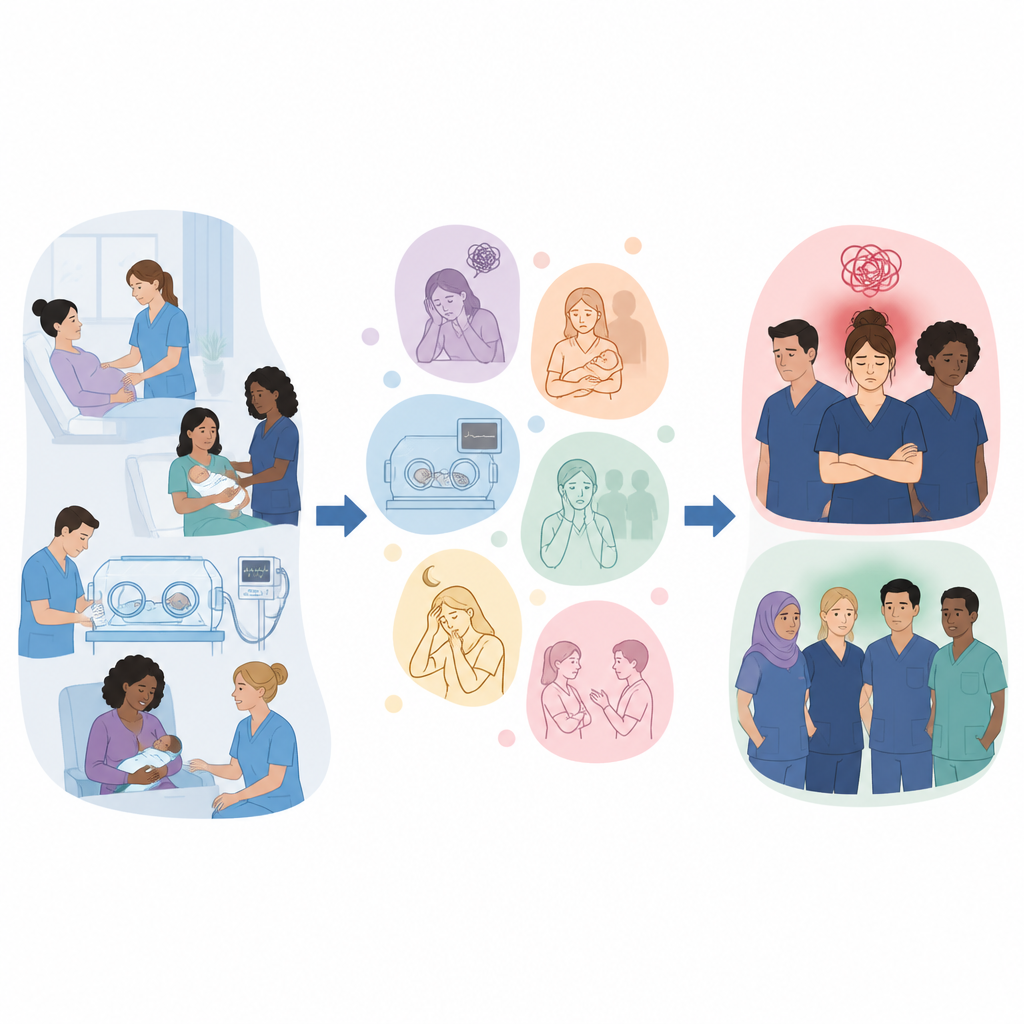
Moral distress occurs when professionals face situations that clash with their values, such as not having enough time, staff, or resources to give the care they believe patients deserve. In Swedish maternal and neonatal care, such situations can include unsafe staffing levels, pressure to cut costs, caring for patients beyond one’s competence, or parents having expectations that staff feel they cannot meet. The authors argue that it is important to distinguish between difficult situations that are simply part of the job and the deeper distress that can arise when these situations are frequent, intense, and unresolved.
Shaping a practical tool for maternity and newborn care
To capture this experience, the team adapted an existing questionnaire called the Moral Distress Scale Revised. A Swedish version for paediatric care already existed, so the researchers selected and reworded ten of its questions to fit maternity wards and neonatal units. These questions ask staff to rate both how upsetting a situation would be and how often it happens, using simple five‑point scales. Midwives, physicians and nurses with long experience in these settings reviewed the questions and took part in detailed interviews, helping the researchers check that the wording was clear, relevant and realistic for everyday practice.
Turning answers into a clear risk signal
Rather than simply adding up scores, the research team created a new way to flag when moral distress is high. They treated each question as one distinct type of difficult situation that can contribute to an overall burden. Experts defined combinations of strong negative feelings and non‑rare occurrence that would count as serious, and then agreed on how many of these serious situations, taken together, should indicate high moral distress. According to their rule, a person is classified as having high moral distress if at least half of the ten situations are both very upsetting and happen more than occasionally.
What the survey revealed about Swedish staff
The adapted questionnaire was then used in a national survey of 951 midwives, physicians, registered nurses and assistant nurses working in Swedish maternal and neonatal healthcare. Applying the new index, 28 percent of respondents were found to have high moral distress. This was especially common among midwives and registered nurses. The situations most often rated as both intense and frequent involved not being able to give the best care because of budget cuts or staff shortages. In contrast, staff were less likely to report high distress from isolated events such as making decisions with very limited knowledge.
Links to stress, burnout and plans to leave
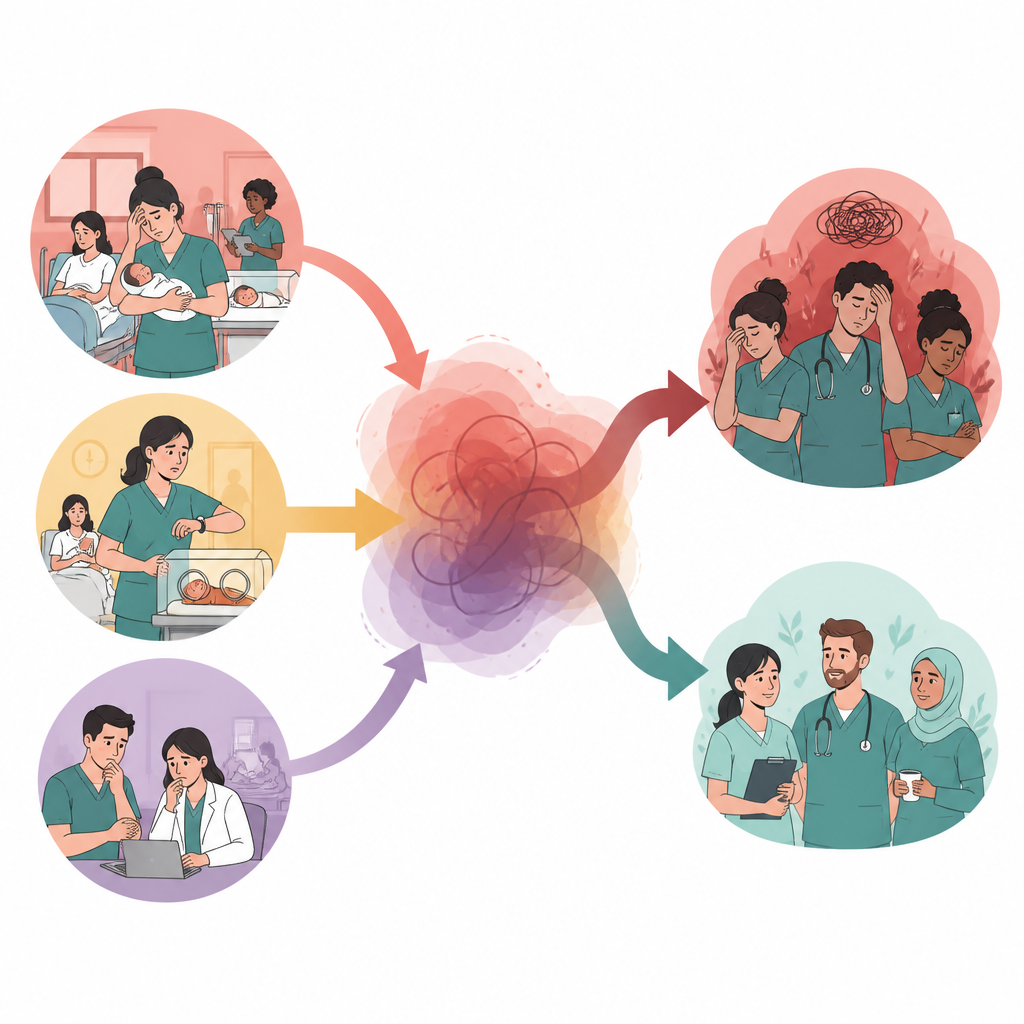
The study also examined how high moral distress related to other signs of strain. Those classified with high moral distress reported lower job satisfaction and higher stress compared to their colleagues. They were more likely to show mild or severe burnout symptoms and to say they often think about leaving their job. About one in five workers with high moral distress had severe burnout complaints, three times the rate seen among those without high moral distress. These patterns fit with previous research suggesting that ongoing moral strain can push people toward exhaustion and out of the workforce.
What this means for mothers, babies and staff
For a general reader, the main message is that the quality and safety of care in maternity and neonatal units depend not only on medical skills but also on whether staff can act in line with their values. This study shows that a sizable share of Swedish workers in these settings feel unable to do so and that this is closely linked to stress, burnout and thoughts of quitting. The new questionnaire and index provide hospitals with a practical way to identify teams and individuals at risk, opening the door for earlier support, better working conditions and more sustainable care for mothers and newborns.
Citation: Akerstrom, M., Linden, K. & Hadžibajramović, E. Measuring moral distress in Swedish maternal and neonatal healthcare: validation of an adapted MDS‑R and development of a criterion‑based index. Sci Rep 16, 14763 (2026). https://doi.org/10.1038/s41598-026-52337-6
Keywords: moral distress, maternal healthcare, neonatal care, burnout, job satisfaction