Clear Sky Science · en
A multi-national observational study on the concordance between the translational triage tool and routine prehospital triage
Why sorting patients in a crisis matters
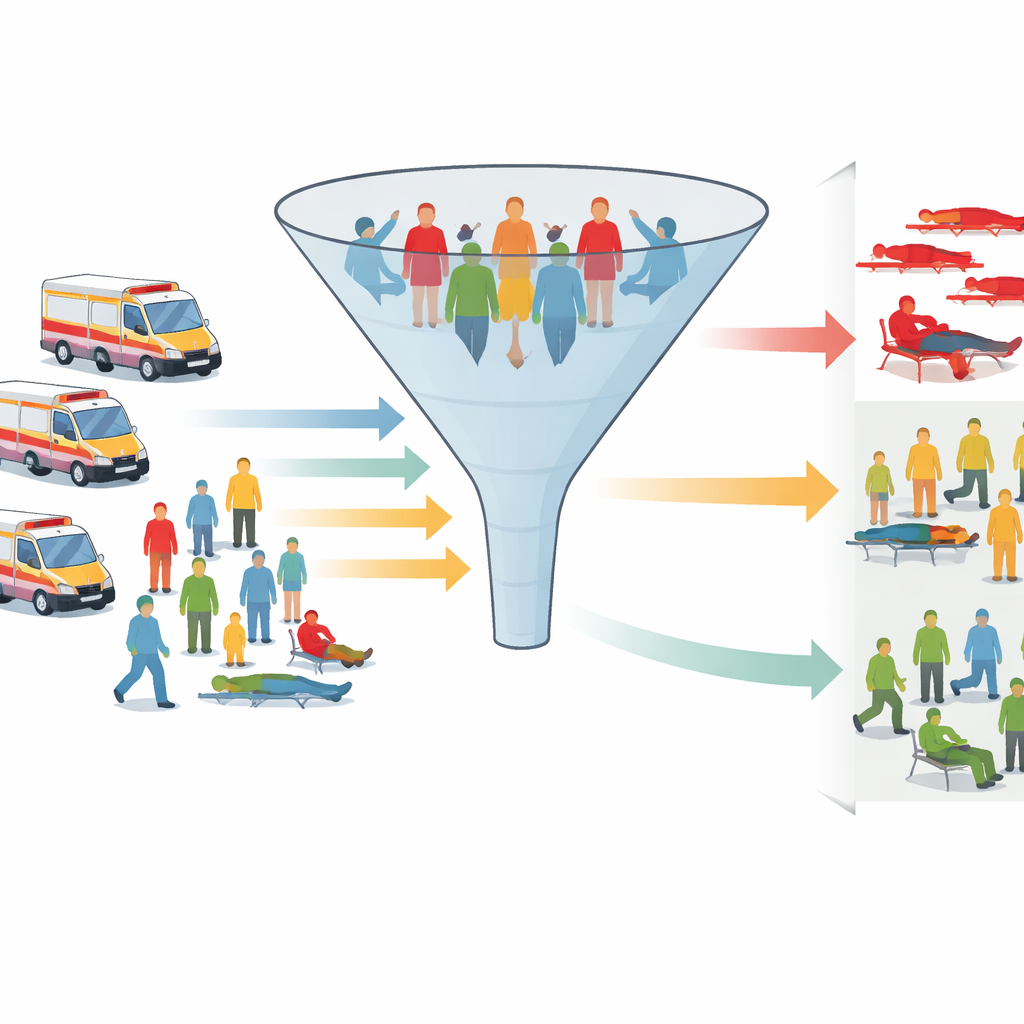
When a disaster strikes or an emergency room overflows, medical teams must decide in minutes who needs help right now and who can safely wait. This fast sorting process, called triage, can mean the difference between life and death for many people at once. The study behind this article asks a simple but high‑stakes question: could one easy-to-use triage tool work both in everyday emergencies and during mass‑casualty events, and even help different countries work together more smoothly?
A simple idea for a very busy day
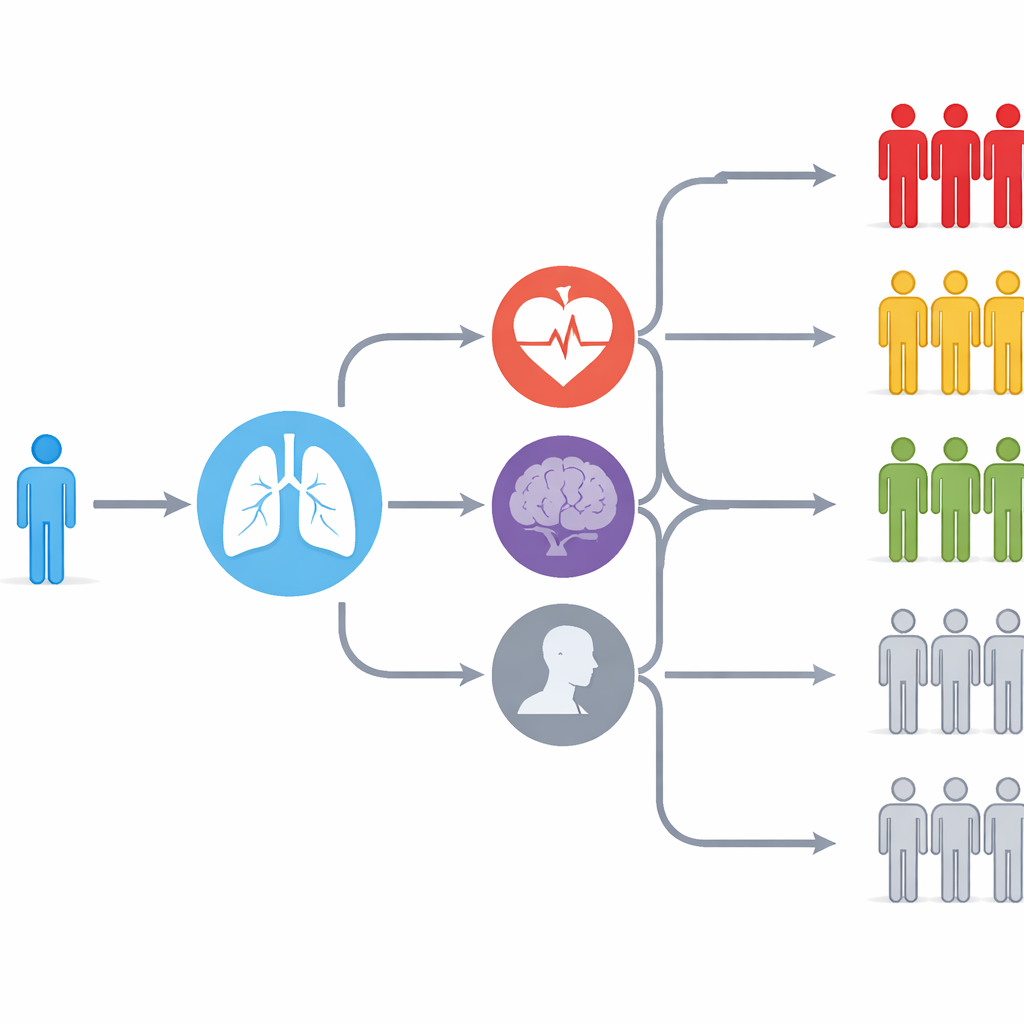
The researchers focused on a proposed "translational" triage tool, or TTT. The basic idea is appealing: instead of teaching emergency workers one system for daily use and a different one for rare disasters, create a single, simple tool they use all the time. In theory, this would build strong habits and reduce confusion when a major incident suddenly floods services with patients. The TTT leans heavily on basic, visible signs such as breathing, pulse, and how awake a person is, mirroring disaster triage methods that aim to be fast, objective, and easy to remember under pressure.
Testing the tool in three very different settings
To see how well this new tool lines up with real-world practice, the team observed 301 patients in Poland, Saudi Arabia, and Thailand. Each country already used its own established triage method: Poland used START, a disaster-style system built around simple checks of breathing, circulation, and responsiveness; Saudi Arabia used CTAS, and Thailand used ESI, both five-level hospital triage scales that also consider the patient’s main complaint and hidden risks. After local emergency staff triaged each patient as usual, a trained observer, who did not influence care, applied the TTT and recorded its category for comparison.
Where the new tool agreed—and where it missed
The TTT agreed perfectly with Poland’s START system for the patients studied, suggesting that both tools share almost the same "physiology-first" logic. In Saudi Arabia and Thailand, agreement with CTAS and ESI was still high overall but clearly less perfect. The mismatches were revealing. The TTT often gave higher urgency to people whose breathing looked abnormal, even if the local system considered them less serious. On the other hand, it sometimes gave lower urgency to patients whose vital signs looked stable but whose condition was known to be high-risk—such as diabetic crises, internal bleeding, strokes, or sudden loss of consciousness—situations that CTAS and ESI treat as emergencies even before vital signs collapse.
What this means for disasters versus daily care
These patterns highlight a clash in priorities. In daily emergency care, detailed systems like CTAS and ESI aim to catch hidden dangers early, based on symptoms, medical history, and the likely need for tests and treatments. In a mass-casualty situation, there may be too many patients and too few staff for that level of detail. Under those conditions, a stripped-down, physiology-based approach like the TTT can be an advantage: it is fast, easy to teach, and focuses attention on those who will die without immediate help. Some of the cases that look like "under-triage" in routine care—such as a patient with a serious but slow-moving illness—might actually be the right choice when the goal is to save the greatest number of lives with scarce resources.
Why this promising tool is not ready for everyday use
The authors emphasize that their study measured agreement between tools, not whether patients lived, died, or suffered harm. Still, the pattern is clear: the TTT behaves like a disaster-specific system and does not reliably flag certain high-risk conditions in normal emergency settings. That makes it unsafe as a one-size-fits-all solution for both daily and crisis care. The study concludes that, in its current form, the TTT might be better viewed as a candidate tool for mass-casualty and resource-poor situations rather than a universal bridge between routine and disaster triage. Future research will need to follow patients through their entire course of care, test how quickly and consistently the tool can be used, and possibly combine its simple checks with smarter aids—such as artificial intelligence—to keep speed while better recognizing hidden danger.
Take‑home message for the public
For non-specialists, the key takeaway is that there is no easy shortcut to safely sorting patients in every situation. A very simple, fast system like the TTT can help in large-scale crises, where every second and every pair of hands counts. But the same simplicity becomes a weakness in day-to-day emergency rooms, where subtle warning signs and complex illnesses demand more detailed judgment. Designing a single triage tool that works equally well in quiet times and catastrophes remains a difficult—and still unsolved—challenge.
Citation: Phattharapornjaroen, P., Khorram-Manesh, A., Mani, Z. et al. A multi-national observational study on the concordance between the translational triage tool and routine prehospital triage. Sci Rep 16, 14645 (2026). https://doi.org/10.1038/s41598-026-52015-7
Keywords: emergency triage, mass casualty incidents, disaster medicine, prehospital care, patient prioritization