Clear Sky Science · en
Longitudinal evaluation of the psychometric stability of the somatic symptom scale-8 (SSS-8) in a large German general population sample
Why everyday aches can tell a bigger story
Most people have days when their back hurts, they feel dizzy, or they cannot sleep well. These scattered aches and pains may seem minor, but together they can reveal how stressed a society is and who might be most vulnerable. This study looks at a very short questionnaire, the Somatic Symptom Scale-8 (SSS-8), to see whether it can reliably track such bodily complaints in the German population over several years marked by the COVID-19 pandemic and a major political crisis.
Taking the pulse of a population
The researchers drew on the Gutenberg COVID-19 Study, a large ongoing health project in the Mainz region of Germany. More than 5,300 adults, ranging from young workers to retirees, filled out the SSS-8 at three different times between late 2020 and late 2022. The survey asks how much people were bothered in the past two weeks by eight common complaints such as stomach problems, back or joint pain, dizziness, fatigue, and trouble sleeping. People also answered questions about mood, anxiety, fatigue, quality of life, income, and education, and reported whether they went to necessary medical appointments during the pandemic. Those who had been infected with SARS-CoV-2 were excluded so that the focus stayed on general somatic symptoms rather than direct effects of the virus.
How symptoms rose and fell with crisis events
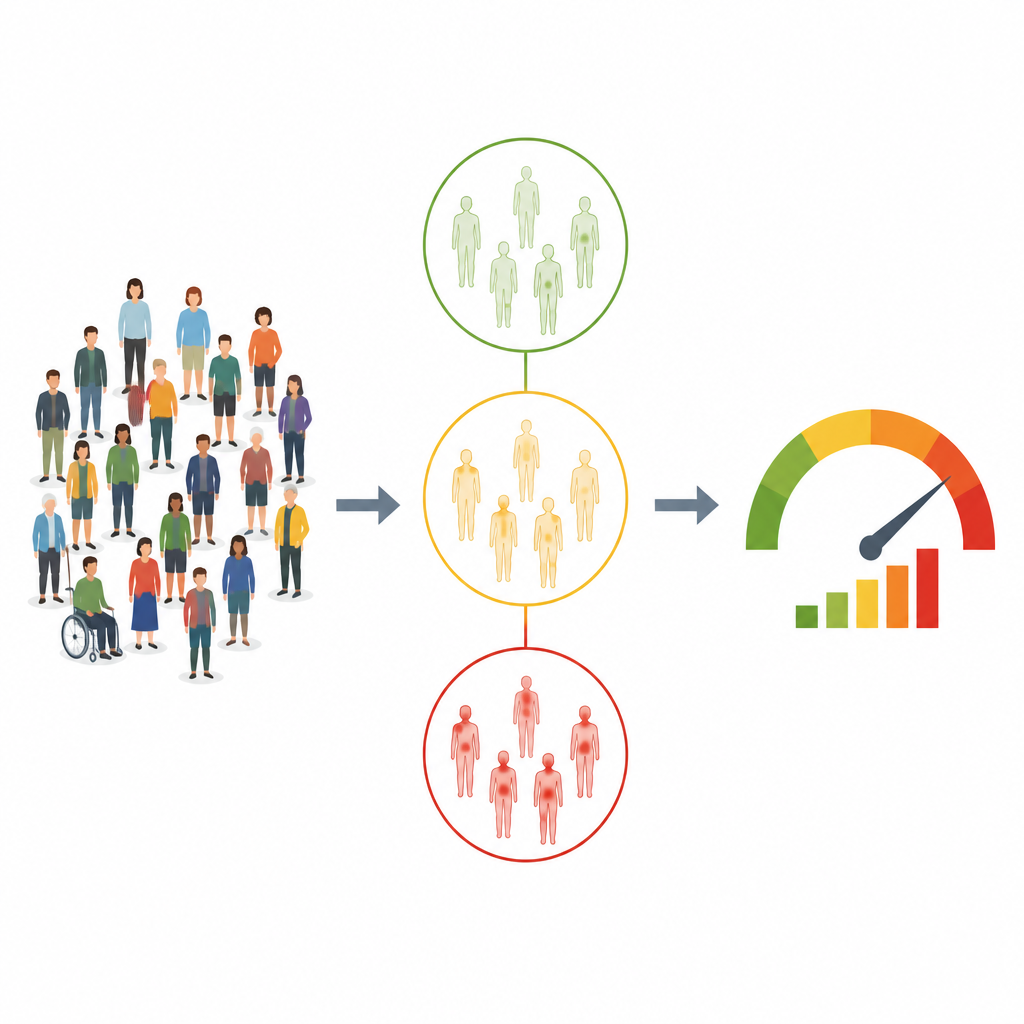
On average, people reported a small decrease in bodily complaints between the first and second survey, and then a renewed increase by the third. Although the changes were statistically clear, they were modest in size. The dip in symptoms early on fits with ideas that people adjust over time to new restrictions and routines during a crisis. The later upswing occurred while the pandemic was still ongoing and coincided with the start of the war in Ukraine, rising worries about energy and safety, and ongoing strain from work and caregiving. Increases were seen across many types of symptoms, especially various forms of pain, fatigue, and sleep problems, suggesting a broad physical response to long-lasting stress rather than a single specific illness.
Who felt worse, and what went with higher symptom scores
Women, people with lower income or at risk of poverty, and those who had necessary medical visits during the pandemic consistently reported more somatic symptoms. Younger adults under 60 had higher scores at the first time point than older adults, a pattern that differs from pre-pandemic surveys where older people typically report more complaints. The authors suggest that lockdowns, disrupted education, job worries, and family care burdens may have weighed especially heavily on younger groups. Higher scores on the SSS-8 were strongly linked with more depressive symptoms, more anxiety, more fatigue, poorer self-rated physical and mental health, and lower quality of life, while higher socioeconomic status was tied to fewer complaints. These patterns match earlier research, supporting the idea that the SSS-8 taps into real and meaningful aspects of overall health.
Putting the scale itself to the test
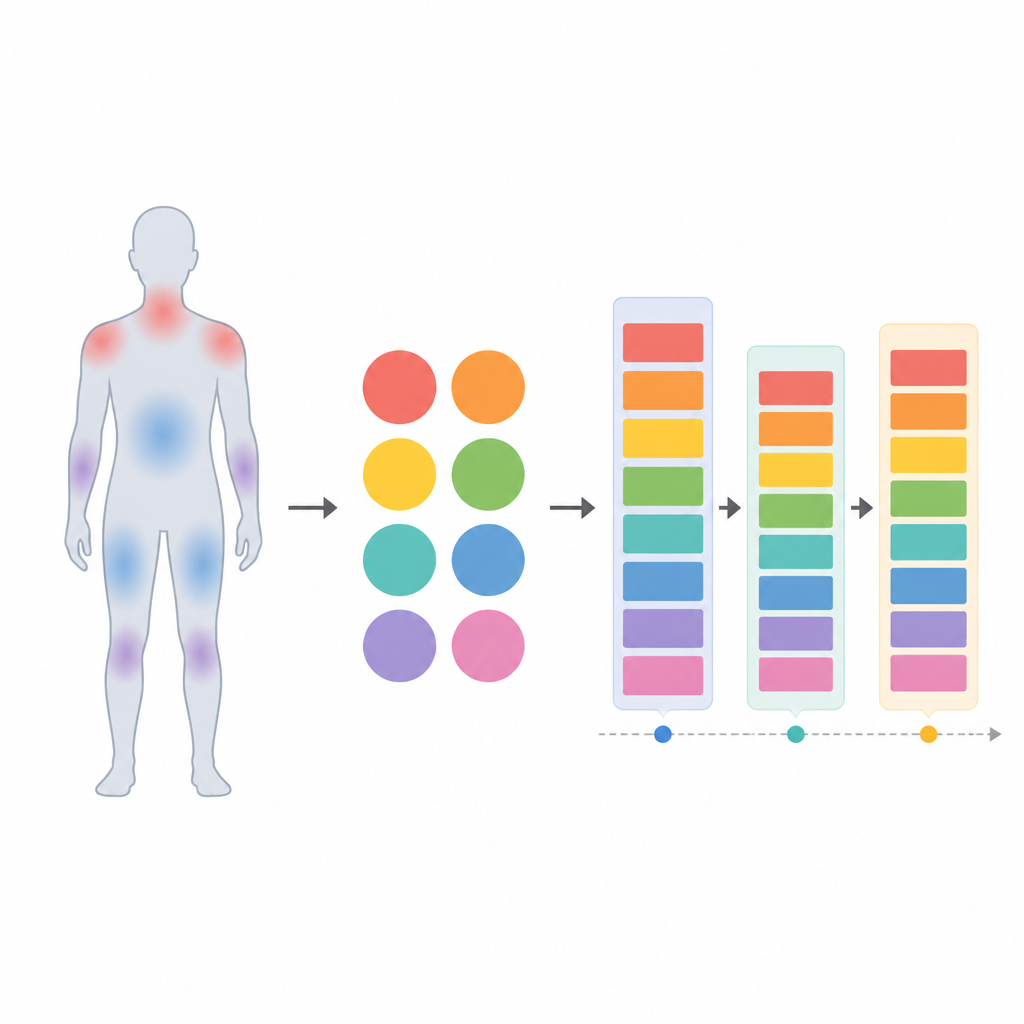
Beyond tracking symptom levels, the team wanted to know whether the SSS-8 itself stays stable and trustworthy over time. They checked whether the eight items “hang together” well at each survey, how similar people’s scores were from one time point to the next, and whether the structure of the scale changed across the three waves. The scale showed good internal consistency, meaning the items worked together as a coherent set. Test–retest correlations were fairly high, indicating that individuals’ relative positions in the distribution were quite stable over many months. Using detailed statistical models, the researchers found that the way the questions related to the underlying burden of symptoms did not change across time. This “measurement invariance” means that differences in scores between time points likely reflect real shifts in symptom burden rather than quirks of the scale.
What this means for tracking public health
To a non-specialist, the main message is that a brief eight-question checklist can reliably monitor how much everyday physical discomfort people experience, even across turbulent years marked by a pandemic and war-related worries. The SSS-8 not only stays stable and consistent over time but also remains sensitive enough to pick up small rises and falls in symptom burden and to highlight more vulnerable groups. This makes it a practical tool for large health surveys and public health agencies that want to follow how crises affect both body and mind, and to identify where support and prevention efforts are most urgently needed.
Citation: Petersen, J., Brähler, E., Hettich-Damm, N. et al. Longitudinal evaluation of the psychometric stability of the somatic symptom scale-8 (SSS-8) in a large German general population sample. Sci Rep 16, 15872 (2026). https://doi.org/10.1038/s41598-026-51808-0
Keywords: somatic symptoms, COVID-19 stress, psychological health, population survey, health questionnaire