Clear Sky Science · en
Interpreting hand grip strength in hospital employees with post-COVID syndrome compared to non-infected controls: a case-control study
Why hand strength after COVID matters
Many people who recover from COVID-19 continue to feel exhausted for months, a condition often called post-COVID syndrome. This lingering fatigue can be hard to measure because it relies largely on how people describe their symptoms. In this study, researchers asked whether a simple hand grip test could provide an objective window into how post-COVID fatigue affects the body, focusing on hospital employees who were among the first hit by the pandemic.
A simple test with a clear question
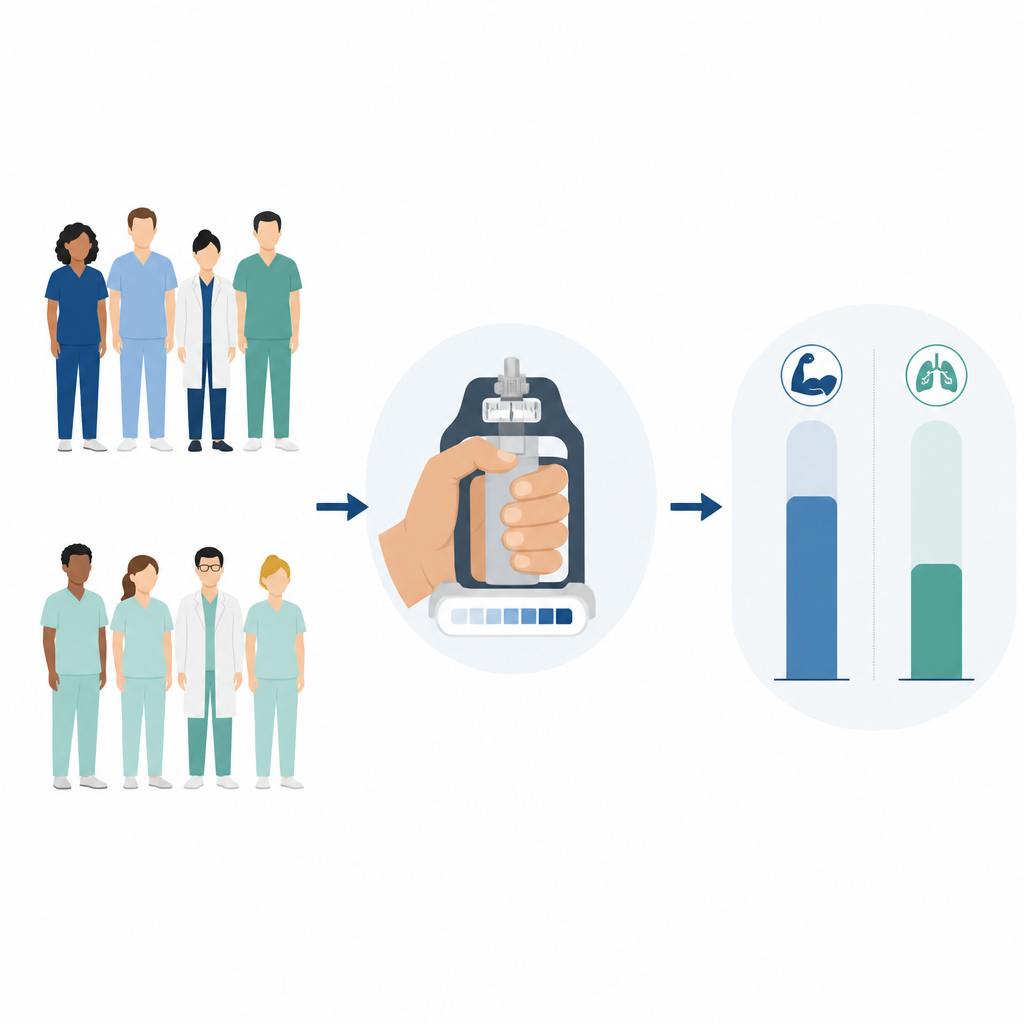
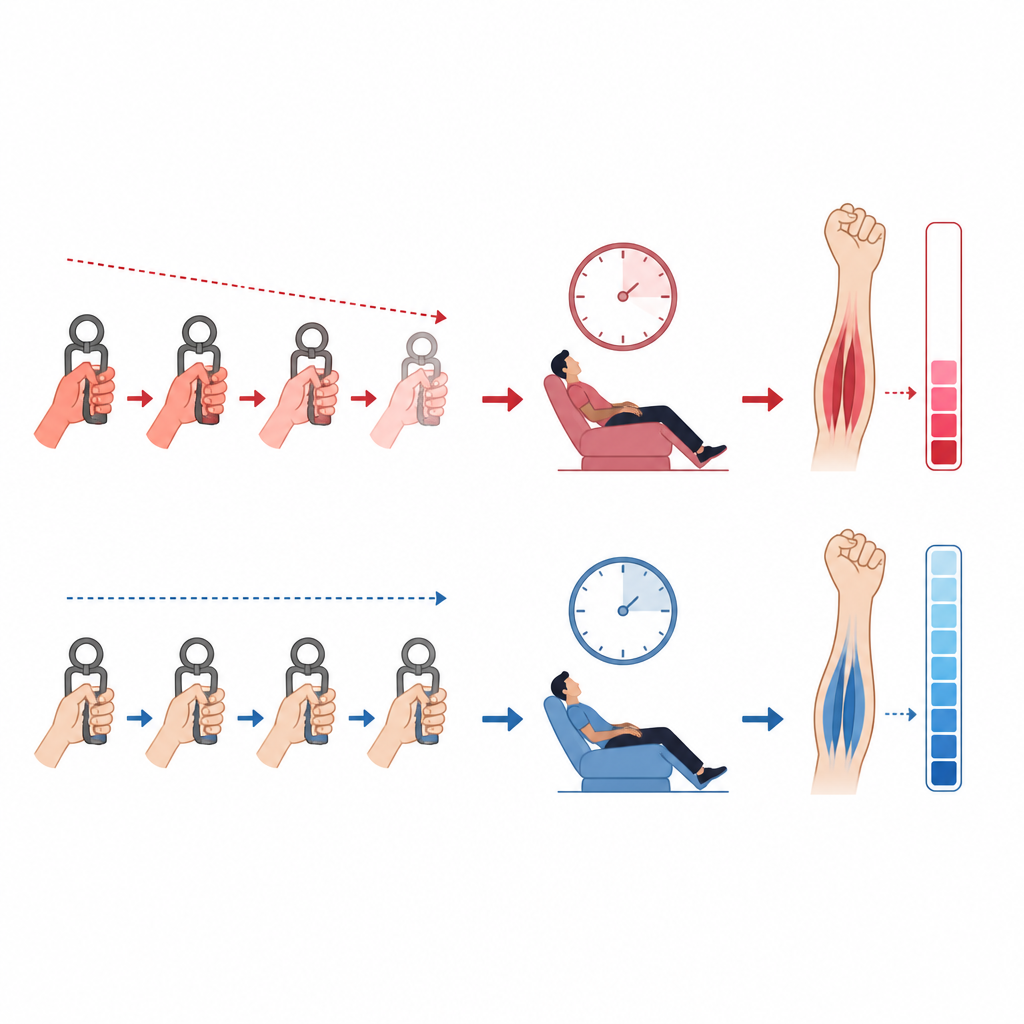
The team studied 19 hospital workers with post-COVID syndrome and ongoing fatigue and compared them with 23 coworkers who had no known SARS-CoV-2 infection. Using a handheld device that measures how hard a person can squeeze, they recorded ten grip attempts in a row, took a one-hour break, and then repeated the sequence. This set-up let them examine not only overall strength, but also how quickly strength declined with effort and how well it recovered after rest. They also collected information on age, sex, daily functioning, and symptoms related to chronic fatigue.
Patterns of strength and tiredness
On first glance, people with post-COVID tended to show weaker hand grips than the control group in both test sessions. Strength dropped from the first to the tenth squeeze for everyone, which is expected as muscles tire. However, when the researchers used a detailed statistical model that took age, sex, and repeated testing into account, the overall difference between the two groups was not strong enough to count as a clear group-wide effect. Instead, differences appeared at particular points: at the very start and the end of each session, predicted grip strength was lower in the post-COVID group, especially in older participants.
Recovery after effort tells an important part of the story
A key finding emerged when the two sessions were compared. In the control group, grip strength in the second session was similar to the first, suggesting their muscles recovered well during the hour of rest. In contrast, people with post-COVID showed reduced strength in the second round, pointing to slower or incomplete recovery after exertion. This pattern fits with the hallmark complaint of many affected patients: feeling significantly worse after even modest physical or mental effort. It hints that the problem may lie less in basic strength and more in how muscles cope with repeated use.
Turning grip data into potential clues
The researchers also explored 30 different ways of summarizing the grip data, such as the highest force, lowest force, average force, and how much values changed between sessions. In female participants, measures based on how strong the best squeeze was and how weak the lowest squeeze became showed the most promise for distinguishing post-COVID cases from controls. These grip-based markers correctly classified participants only moderately well, and they worked better at ruling in healthy controls than at reliably spotting post-COVID cases. Grip strength also showed moderate links with daily functioning scores and the number of fatigue-related symptoms, suggesting it reflects clinical severity to some degree.
What this means for people living with post-COVID
This study suggests that a straightforward hand grip test can reveal signs of functional impairment in people with post-COVID syndrome, particularly when the test is repeated and recovery is observed over time. Still, the differences were modest, the study group was small, and many factors such as age, sex, and other health conditions also shaped the results. For now, hand grip strength should be seen as a helpful add-on rather than a stand-alone diagnostic tool. With larger and more standardized studies, it may become one piece of the puzzle in understanding and tracking the physical impact of long-lasting COVID-related fatigue.
Citation: Tack, M., Gruber, R., Betting, L. et al. Interpreting hand grip strength in hospital employees with post-COVID syndrome compared to non-infected controls: a case-control study. Sci Rep 16, 14725 (2026). https://doi.org/10.1038/s41598-026-51666-w
Keywords: post-COVID syndrome, hand grip strength, chronic fatigue, hospital employees, muscle recovery