Clear Sky Science · en
New strategies for mitigating undesirable odors connected to geosmin and 2-MIB in minced fish muscle: a model system approach
Why Some Fish Taste Muddy
Many affordable, farmed freshwater fish are highly nutritious but turn people away because they sometimes smell and taste like mud or a damp cellar. This off-putting aroma comes mainly from two tiny molecules, geosmin and 2-MIB, that build up in the fish before harvest. The study behind this article explores gentle, foodgrade ways to keep those molecules from reaching our noses, opening the door to tasty, sustainable fish products that more people are willing to eat.
The Problem with Earthy Fish Smells
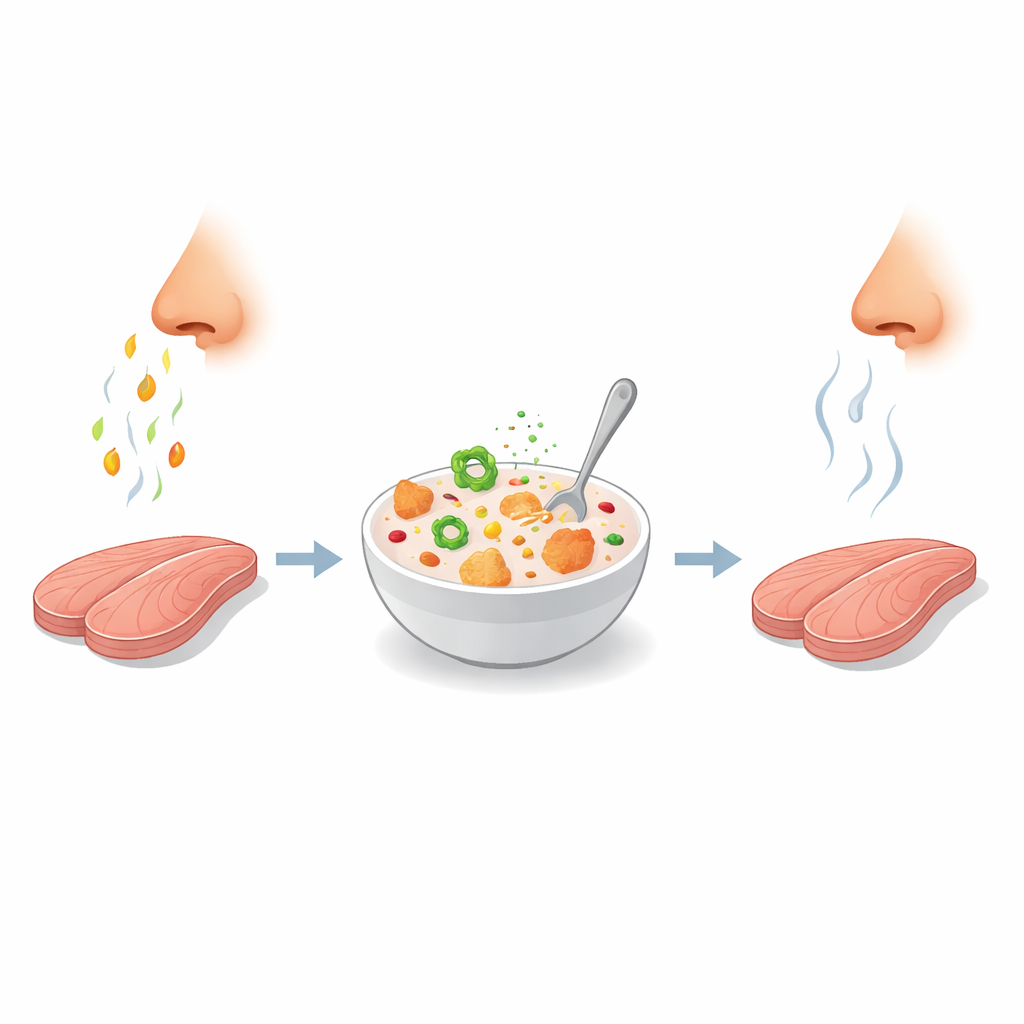
Geosmin and 2-MIB are natural compounds made by microorganisms in ponds and rivers. Fish absorb them through their gills, and the molecules collect in fatty tissues. Even at extremely low levels, they give fish a strong earthy or muddy odor that consumers often reject. Traditional ways to deal with the problem include changing how fish are farmed, washing fillets with acids, or fermenting the fish. While helpful, these methods can be slow, change the taste in unwanted ways, or fit only niche products. The researchers instead asked: can we keep these odor molecules locked inside the fish muscle, or quietly transform them, so they never reach the air above the food?
A Safe Test-Bed for New Ingredients
To answer this, the team built a controlled model system using washed cod mince. Cod does not naturally contain geosmin or 2-MIB, so they could add known amounts of the two odor molecules and then test how different ingredients changed their escape into the air. They focused on three main groups of additives that already appear in many foods: long-chain carbohydrates such as alginate and carrageenan, ring-shaped "molecular cages" called cyclodextrins, and several common organic acids, including vitamin C-like compounds and citric acid. They also tried real food side-streams rich in these substances: dried apple and lingonberry press-cakes from juice production and a red seaweed, Palmaria palmata. All doses were kept at or below safety limits set by European regulators.
What Worked to Tame the Odor
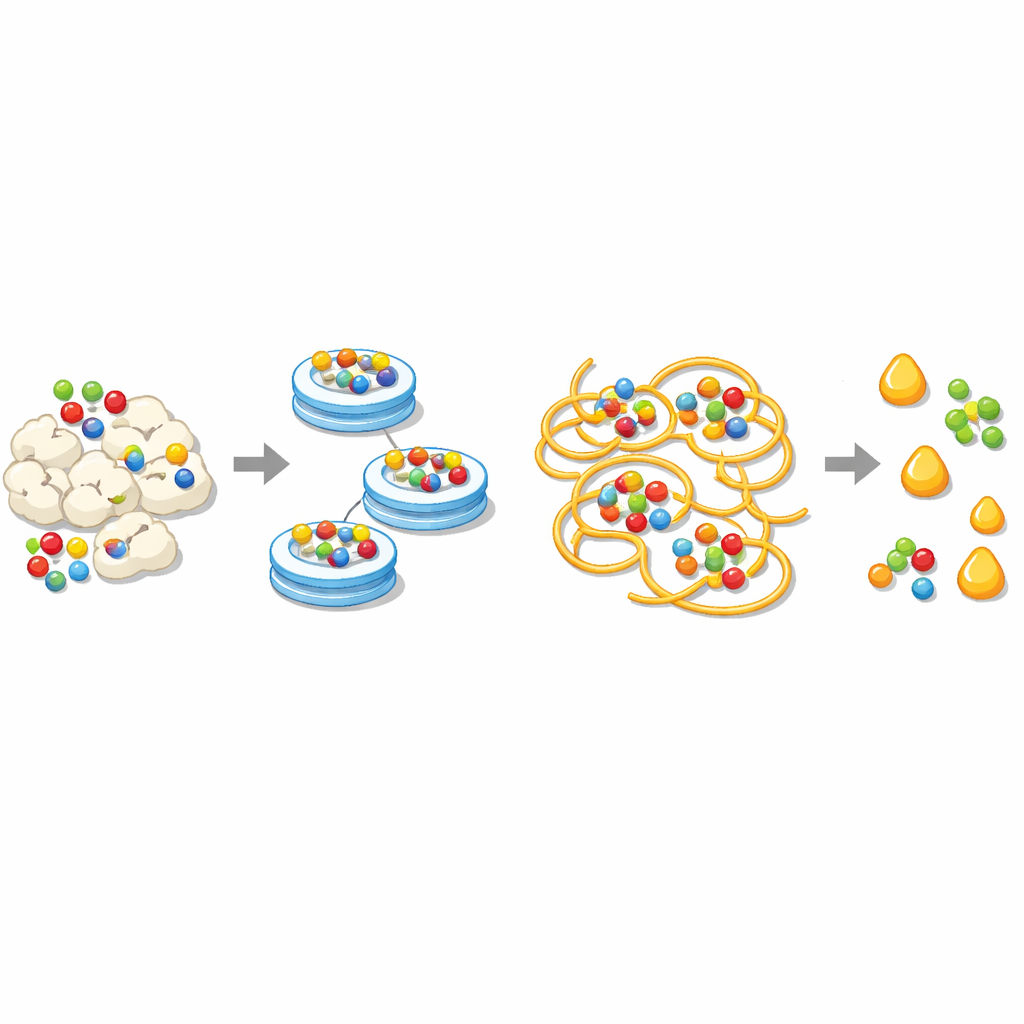
The tests revealed several clear winners. Two seaweed-derived thickeners, alginate and carrageenan, greatly lowered how much geosmin and 2-MIB escaped from the fish mince when added at modest levels, with carrageenan generally holding the odor molecules more strongly. Computer simulations suggested that the main force at work was the tendency of these smell molecules to stick to water-repelling regions of the carbohydrate chains, rather than strong hydrogen bonds. Cyclodextrins, which are donutshaped sugar rings, were even more powerful for 2-MIB: the larger gamma form and the common beta form trapped most of this odor molecule by surrounding it in their internal cavity. For geosmin, they still helped, but somewhat less.
Turning Smelly Molecules into Milder Ones
Organic acids offered another angle. When isoascorbic acid and citric acid were added, they not only reduced the release of both off-odor molecules but also lowered the overall acidity of the fish mixture. By carefully adjusting the pH, the researchers showed that more acidic conditions encourage geosmin and 2-MIB to lose water and turn into related compounds that are less volatile and less noticeable to our noses. Geosmin was more easily transformed this way than 2-MIB. Apple and lingonberry press-cakes, which naturally contain acids and pectin, did not help with geosmin but did cut 2-MIB release, suggesting that upcycled plant residues can contribute to cleaner-smelling fish when used at 5–10% of the product.
From Lab Insights to Better Everyday Fish
Taken together, the findings show that a smart mix of safe food ingredients can dramatically reduce the muddy smell of freshwater fish without harsh processing. Seaweed-based thickeners and cyclodextrins can physically hold onto geosmin and 2-MIB, while gentle acids can convert part of these molecules into less troublesome forms. Fruit press-cakes add a bonus option that both recycles food industry leftovers and helps control certain odors. For consumers, this could mean more pleasant fish burgers, fish balls, and surimi products made from sustainable freshwater species, making it easier to choose affordable, climate-friendly seafood without holding your nose.
Citation: Phetsang, H., Chaijan, M., Panpipat, W. et al. New strategies for mitigating undesirable odors connected to geosmin and 2-MIB in minced fish muscle: a model system approach. Sci Rep 16, 14691 (2026). https://doi.org/10.1038/s41598-026-51482-2
Keywords: fish off-flavor, geosmin, 2-MIB, cyclodextrins, food upcycling